




The Best Reading Path for The Destroyer
With over 150 novels spanning multiple decades, tackling The Destroyer series can seem like a monumental task. Fortunately, the adventure is highly episodic, making it easy to jump in. The recommended reading path is simple: start at the beginning with the original origin story, Created, The Destroyer (1971), and proceed in publication order. This allows you to experience the evolution of Remo Williams from a framed Newark cop to the ultimate government assassin, alongside the gradual development of his relationship with his mentor, Chiun.
While the overall timeline moves forward chronologically, the individual books are designed as self-contained missions. You do not need to worry about complex chronological puzzles or prequels. Reading in publication order is the most natural way to watch the series develop its signature blend of martial arts, espionage, and sharp social satire.
The Core Reading Order: The Original Run and Modern Revival
The main series began in 1971 and represents one of the longest-running action-adventure series in pulp history. The core sequence of books covers Remo's missions for the secret government agency known as CURE. The reading order below is divided into the classic era (books 1-100) and the modern revival releases (represented in our database as books 101-104, which correspond to books #152 through #155 in the overall series bibliography).
The Classic Era (Books 1 to 100)
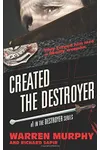
- Created, The Destroyer (1971) – Remo's origin story.
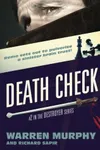
- Death Check (1972) – The introduction of CURE's supercomputer.
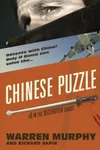
- Chinese Puzzle (1972) – Remo and Chiun travel to China.
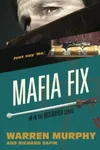
- Mafia Fix (1972) – Remo takes on the Mob and a drug shipment.
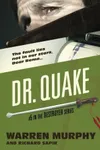
- Dr. Quake (1972) – Pitting Remo against an extortionist using earthquake machines.
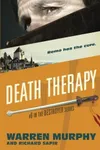
- Death Therapy (1972) – A rogue scientist experiments on human subjects.
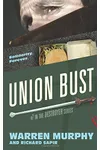
- Union Bust (1972) – Remo infiltrates corrupt labor unions.
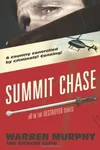
- Summit Chase (1973) – High-stakes protection at an international summit.
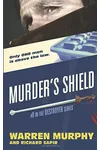
- Murder's Shield (1973) – Remo deals with corrupt police forces.
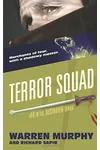
- Terror Squad (1973) – Remo confronts a group of radical militants.
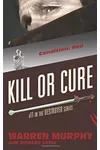
- Kill or Cure (1973) – An internal threat puts CURE in extreme danger.
- Slave Safari (1973) – Remo targets a modern slave trade ring.
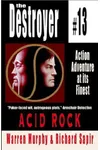
- Acid Rock (1973) – The duo investigates a bizarre cult leader.
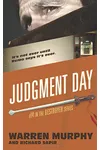
- Judgment Day (1974) – CURE faces a massive blackmail scheme.
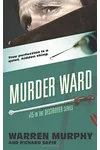
- Murder Ward (1974) – Remo goes undercover in an asylum.
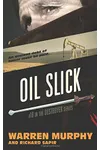
- Oil Slick (1974) – An oil crisis conspiracy threatens global stability.
- Last War Dance (1974) – Remo tackles an uprising of Native American militants.
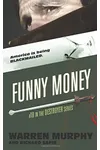
- Funny Money (1975) – Counterfeit money rings threaten the economy.
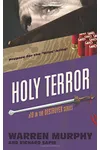
- Holy Terror (1975) – Remo battles a dangerous religious extremist.
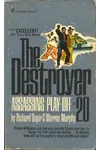
- Assassin's Play Off (1975) – Remo faces off against a rival assassin.
- Deadly Seeds (1975) – A biological threat targeting agriculture.
- Brain Drain (1976) – Scientists are mysteriously disappearing.
- Child's Play (1976) – An elite school hides a deadly conspiracy.
- King's Curse (1976) – Remo goes up against a modern-day pharaoh figure.
- Sweet Dreams (1976) – A drug ring uses dream-inducing substances.
- In Enemy Hands (1976) – Remo is captured and must escape.
- The Last Temple (1977) – A religious artifact sparks international conflict.
- Ship of Death (1977) – A mystery unfolds aboard a luxury cruise liner.
- The Final Death (1977) – A deadly showdown with a relentless foe.
- Mugger Blood (1977) – Gritty urban vigilantes cause chaos in New York.
- The Head Men (1977) – Remo fights a bizarre tribal cult.
- Killer Chromosomes (1978) – Genetic experimentation goes horribly wrong.
- Voodoo Die (1978) – Remo goes south to investigate a voodoo conspiracy.
- Chained Reaction (1978) – A nuclear power plant sabotage plot.
- Last Call (1978) – An assassination attempt on the President.
- Power Play (1979) – Remo battles a corrupt energy magnate.
- Bottom Line (1979) – A financial fraud ring with global reach.
- Bay City Blast (1979) – Remo and Chiun clean up a corrupt California town.
- Missing Link (1980) – An evolutionary biology conspiracy.
- Dangerous Games (1980) – High-tech weapons dealers are targeted.
- Firing Line (1980) – A military conspiracy is uncovered.
- Timber Line (1980) – Ecological terrorism in the Pacific Northwest.
- Midnight Man (1981) – A cat burglar steals classified government secrets.
- Balance of Power (1981) – A struggle for control within the intelligence community.
- Spoils of War (1981) – Mercenaries steal high-grade military hardware.
- Next of Kin (1981) – Family secrets threaten CURE's existence.
- Profit Motive (1982) – Medical corporations exploit patients for profit.
- Skin Deep (1982) – A cosmetic surgery clinic hides a dark secret.
- Killing Time (1982) – Remo goes on the run to clear his name.
- Dying Space (1982) – A conspiracy reaching up to the space program.
- Shock Value (1983) – Media moguls brainwash the public.
- Fool's Gold (1983) – A massive gold heist threatens Wall Street.
- Time Trial (1983) – High-stakes racing hides corporate espionage.
- Last Drop (1983) – A clean water supply is held hostage.
- Master's Challenge (1984) – A rival master of Sinanju emerges.
- Encounter Group (1984) – Self-help gurus build a private army.
- Date with Death (1984) – Dating agencies are used for targeted assassinations.
- Total Recall (1984) – Memory erasure experiments target CURE operatives.
- The Arms of Kali (1984) – Remo battles an ancient cult of assassins.
- The End of the Game (1985) – Remo and Chiun face retirement threats.
- Lords of the Earth (1985) – Underground tunnel conspiracies.
- The Seventh Stone (1985) – Remo seeks a legendary gemstone.
- The Sky Is Falling (1986) – A nuclear threat from the skies.
- The Last Alchemist (1986) – A chemist creates a deadly synthetic drug.
- Lost Yesterday (1986) – An amnesia plot line that threatens Remo's memory.
- Sue Me (1986) – A satire on the litigious nature of American law.
- Look into My Eyes (1987) – Hypnotists take control of local politicians.
- An Old-Fashioned War (1987) – Traditional combat tactics vs modern weapons.
- Blood Ties (1987) – A look into Remo's family history.
- The Eleventh Hour (1987) – Richard Sapir's final contribution before his death.
- Return Engagement (1988) – A theatrical setting hides a deadly trap.
- Sole Survivor (1988) – A search for the last member of a secret lineage.
- Line of Succession (1988) – Political assassinations target the presidency.
- Walking Wounded (1988) – Remo recovers from a near-fatal encounter.
- Rain of Terror (1989) – Weather modification weapons are unleashed.
- The Final Crusade (1989) – Remo battles neo-crusader militants.
- Coin of the Realm (1989) – Financial manipulation on a global scale.
- Blue Smoke and Mirrors (1989) – Magicians and illusionists turn to crime.
- Shooting Schedule (1990) – Hollywood action movie sets hide real danger.
- Death Sentence (1990) – Remo takes on a corrupt judge.
- Hostile Takeover (1990) – Corporate raiders employ literal execution squads.
- Survival Course (1990) – Remo teaches survival skills to a new recruit.
- Skull Duggery (1990) – Archeological discoveries lead to murder.
- Ground Zero (1991) – A nuclear power plant heist.
- Blood Lust (1991) – Vampiric themes are investigated by Remo.
- Arabian Nightmare (1991) – Middle Eastern espionage and oil plots.
- The Ultimate Death (1992) – Remo is pushed to his absolute physical limits.
- Dark Horse (1992) – A dark-horse candidate enters the political arena.
- Ghost in the Machine (1992) – High-tech computer viruses target CURE.
- Mob Psychology (1992) – Hypnosis and mind control experiments.
- Cold Warrior (1993) – Cold War leftovers threaten modern peace.
- The Last Dragon (1993) – Asian triads clash with Remo.
- Terminal Transmission (1993) – Bizarre radio broadcasts cause mass hysteria.
- Feeding Frenzy (1993) – Media sensationalism turns deadly.
- High Priestess (1994) – A cult leader tries to take over Washington.
- Infernal Revenue (1994) – A satire on the tax system and government audits.
- Identity Crisis (1994) – Remo struggles with his true identity.
- Target of Opportunity (1994) – An opportunistic political rival targets CURE.
- The Color Of Fear (1995) – Racial tensions are stoked by a hidden villain.
- Last Rites (1995) – Remo is forced to make a life-or-death choice.
The Modern Revival Releases
After a long hiatus, the series resumed under Warren Murphy's own self-publishing label, Destroyer Books. These entries continue the core numbering and characters, keeping the classic formula alive for a new generation of readers:
- Continental Divide (2018) – Written by R.J. Carter and Warren Murphy, this novel centers on America's crumbling infrastructure and political polarization. (Listed as Book 101 in local files, #152 overall).
- Monumental Terror (2019) – Remo and Chiun must stop a plot that threatens to spark a second civil war. (Listed as Book 102 in local files, #153 overall).
- Blood Brotherhood (2021) – Remo faces off against enemies from his past in a high-stakes conspiracy. (Listed as Book 103 in local files, #154 overall).
- Trial By Fire (2021) – The duo confronts a lethal fire-themed threat that tests Chiun's ancient teachings. (Listed as Book 104 in local files, #155 overall).
The New Destroyer: The Tor Books Era
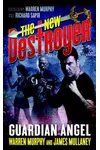
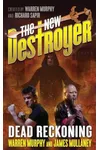
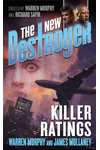
In 2007, co-creator Warren Murphy partnered with Tor Books to breathe new life into the franchise. The books published under The New Destroyer banner served as a soft reset, returning the characters of Remo and Chiun to their core personalities after years of differing ghostwriter styles. Co-written by James Mullaney, this short run should be read in its own publication order:
- Guardian Angel (2007)
- Choke Hold (2007)
- Dead Reckoning (2008)
- Killer Ratings (2008)
Short Stories and Novellas
In addition to the main novels, there are several short stories and novellas that expand the lore of CURE and the art of Sinanju. These can be read at any point, but are best enjoyed after you have a firm grasp of the characters:
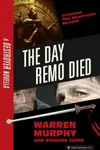
- The Day Remo Died (1982) – A crucial prequel piece that explores the events surrounding Remo's faked execution and transition into CURE.
- Savage Song (2012) – A modern short story highlighting Remo's combat efficiency.
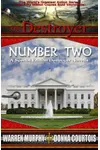
- Number Two (2012) – A quick story focusing on the secondary operators and the politics within CURE.
Spin-offs and Companion Series: Legacy
The success of the franchise led to the creation of the Legacy series, a spin-off co-created by Warren Murphy and Gerald Welch. This series shifts focus to the next generation: Remo Williams' children, Stone Smith and Freya Williams. Raised in the ways of Sinanju by their grandfather, they are eventually recruited by a secret government agency to carry on the family business of saving the world. For fans who want to explore the wider world of Sinanju outside Remo's direct adventures, the Legacy series (beginning with Forgotten Son) is highly recommended.
What to Know Before You Start
Before diving into The Destroyer, it helps to understand its unique production history. The series was created in the late 1960s by journalists Warren Murphy and Richard Sapir, who completed the first manuscript in 1963 before it finally found a publisher in 1971. Because the series eventually grew to over 150 books, it relied on a rotating cast of ghostwriters to maintain its rapid release schedule. Notable contributors include Will Murray, who took over primary writing duties in the late 1980s, and James Mullaney, who penned several books in the 100s and later co-authored the Tor Books revival.
Readers should expect a tone that is very different from standard, self-serious espionage thrillers. The Destroyer is famously satirical, poking fun at the political climates, pop culture, and media sensations of whatever year each book was written. The heart of the series is not just the high-octane action, but the bickering, father-son relationship between the young, brash Remo and the elderly, soap-opera-loving Korean master Chiun. Approach the books as fast-paced, episodic action comedies, and you will find a highly entertaining, decades-spanning adventure.