
The Recommended Reading Order
Taylor Anderson's expansive alternate-history saga is best experienced in publication order. Because the narrative functions as a continuous, highly serialized chronicle, jumping into the middle of the main sequence will leave you lost in a sea of tactical developments, alliance shifts, and character deaths. The main 15-novel sequence follows the crew of the USS Walker, a battered World War II destroyer that slips through a mysterious electrical storm in 1942 and lands on a parallel Earth where humans never evolved.
After completing the core 15 novels, you should dive into the Artillerymen prequel series, and then progress to the sequel series, Destroyermen: Corps of Discovery.
Phase 1: The Core Destroyermen Series (Publication Order)
The main series spans fifteen novels published between 2008 and 2020. Read them in this exact order to experience the full evolution of the global war between the Grand Alliance and the predatory Grik:
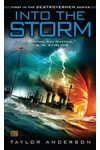
- Into the Storm (2008) – The USS Walker escapes a hopeless battle against superior Japanese forces, only to cross a dimensional threshold. Here, the crew meets the peaceful, lemur-like Lemurians and faces the relentless, reptilian Grik.
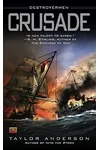
- Crusade (2008) – Matthew Reddy and his crew forge a formal alliance with the Lemurians. The stakes double as they discover their Japanese pursuer, the battlecruiser Amagi, has also crossed over and allied with the Grik.
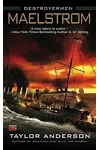
- Maelstrom (2009) – The conflict spreads across the globe. As Reddy tries to organize a unified defense, the raw biological terrors of the alternate Earth become increasingly dangerous.
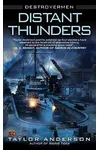
- Distant Thunders (2010) – The crew works to industrialize their allies' primitive society while desperately repairing their aging destroyer before the next massive offensive.
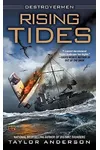
- Rising Tides (2011) – The Grand Alliance faces a multi-front war, testing Matthew Reddy's tactical brilliance and the endurance of his human and Lemurian crew.
- Firestorm (2011) – A turning point in the war, introducing new geological challenges and establishing Taylor Anderson's series as a staple on the New York Times bestseller list.
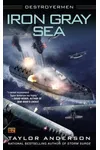
- Iron Gray Sea (2012) – Matthew Reddy faces threats not just from the Grik, but from internal divisions and the emergence of other human factions who crossed over in different eras.
- Storm Surge (2013) – Alliance forces attempt to push back against the Grik heartland, resulting in massive, high-stakes naval engagements.
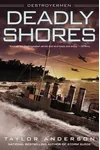
- Deadly Shores (2014) – The focus shifts to new theaters of war as the crew makes contact with the Dominion, a powerful and problematic human civilization.
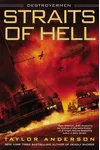
- Straits of Hell (2015) – Naval battles intensify in narrow, dangerous waterways where tactical positioning and sheer grit decide the survival of entire species.
- Blood in the Water (2016) – A brutal chapter focusing on the staggering cost of prolonged total warfare in this alien world.
- Devil's Due (2017) – The conflict builds toward its ultimate resolution as Reddy coordinates a massive, multi-species counter-offensive.
- River of Bones (2018) – The narrative expands deeper into unexplored continents, revealing hidden dangers and forgotten factions.
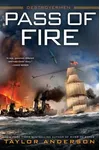
- Pass of Fire (2019) – The penultimate book, setting the stage for the final clash by resolving long-standing character arcs and military campaigns.
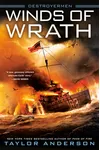
- Winds of Wrath (2020) – The explosive finale to the primary USS Walker storyline, wrapping up the war that began with a single storm in 1942.
Phase 2: The Artillerymen Prequel Series
Once you finish the main saga, step back in time with the Artillerymen series. While this serves as a prequel, it is best read after the main sequence because it expands on the world-building, lore, and dimensional anomalies established in the original novels. It follows American soldiers from the 1847 Mexican-American War who are swept into the same alternate Earth, showing what this world looked like nearly a century before the USS Walker arrived:
- Purgatory's Shore (2021)
- Hell's March (2022)
- Devil's Battle (2023)
- Inferno's Shadow (2025)
Phase 3: Destroyermen: Corps of Discovery (The Sequel Era)
For readers wanting to know what happens after the peace established at the end of Winds of Wrath, Taylor Anderson launched a sequel series focusing on exploration and rebuilding. The USS Walker returns as a school ship for a new generation of explorers:
- Fleet of Ghosts (2026) – Naturalist Courtney Bradford leads the "Corps of Discovery" into uncharted regions of the Pacific to investigate missing vessels and mysterious lights, only to uncover a fleet of displaced ships from another world.
Chronological vs. Publication Order: Which is Best?
Because the Artillerymen series is set in 1847 and the Destroyermen series begins in 1942, some readers contemplate a chronological reading path (starting with Purgatory's Shore). However, doing so is highly discouraged for first-time readers.
The alternate-Earth setting, the biology of the Lemurians and Grik, and the strange rules governing the temporal storms are all introduced and unpacked assuming the reader starts with Into the Storm. Starting chronologically with Artillerymen may spoil certain mystery elements of the main series and lacks the grand, established scale that makes the universe so compelling. Save the prequels for a secondary, historical deep dive once you have finished the main 15 books.
What to Know Before You Start
Taylor Anderson is a professional historian, gunsmith, and technical consultant, and it shows. The series is celebrated for its meticulous attention to historical detail, especially regarding early 20th-century naval technology, ballistics, and military doctrine. The USS Walker (DD-163) was a real Wickes-class destroyer, and its portrayal in the book reflects the actual capabilities and limitations of these aging "four-stackers."
However, the series is not just dry military history. It is a vibrant work of speculative biology. The two major native sapient species are central to the story's charm: the Lemurians (Mi-Arak), a peaceful, cooperative species resembling large, lemur-like cats who live in massive sea-going "Homes," and the Grik, a violent, swarm-based reptilian species descended from theropod dinosaurs. The clash of human technology, Lemurian cooperation, and Grik ferocity forms the core dynamic of the early books.
Be prepared for a long commitment. These books cannot be read as standalones. Each novel picks up almost immediately after the events of the previous one, forming a single, continuous 15-volume epic.