
How to Read the Detective’s Daughter Series in Order
For readers looking to dive into Lesley Thomson’s intricate mystery series, the recommended path is simple: follow the publication order. While the novels frequently feature dual timelines that jump back to various decades—including the 1940s, 1960s, and 1980s—the present-day lives, relationships, and emotional growth of the core characters progress sequentially. Starting with the first book ensures you appreciate the slow-burn evolution of Stella and Jack's partnership and their complex family backgrounds.
The Detective’s Daughter Publication Order
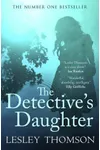
- The Detective’s Daughter (2013): The novel that started it all. Stella Darnell, sorting through her deceased detective father's attic, reopens a 1981 cold case involving the murder of Kate Rokesmith. She forms an unlikely crime-solving alliance with Jack Harmon.
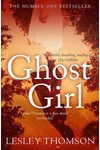
- Ghost Girl (2014): Stella and Jack delve into a series of mysterious modern-day road accidents that seem linked to a tragic event in 1966.
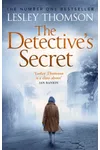
- The Detective’s Secret (2015): A 1987 cold case involving a missing girl collides with a modern railway death, drawing Jack and Stella back into the shadows of the London transit system.
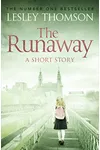
- The Runaway (2015): A standalone e-book short story. This prequel features a seven-and-a-half-year-old Stella running away from home, providing valuable insight into her early relationship with her detective father, Terry.
- The House With No Rooms (2016): Set around the leafy landscape of Kew Gardens, this mystery links a contemporary murder to an old family tragedy and a house with a hidden past.
- The Dog Walker (2017): When a body is discovered, Stella’s cleaning business, Clean Slate, becomes the key to unlocking the victim’s secret life, with a dog walker at the center of the puzzle.
- The Death Chamber (2018): Moving the action temporarily to the Cotswolds, this book explores two missing-person cases separated by decades, focusing on memory and dark secrets.
- The Playground Murders (2019): Stella investigates a brutal double murder from 1981 in a London playground, forcing her to confront long-held local secrets.
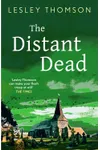
- The Distant Dead (2021): Also published under the title The Hollow House. Stella moves to Tewkesbury for a quiet life, but the death of a man in her arms connects her to a Blitz-era murder of a police pathologist in 1940.
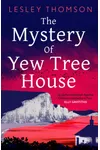
- The Mystery of Yew Tree House (2023): Stella and Jack investigate a historic cottage and the dark secrets of a family tragedy that occurred decades earlier.
- The Shrine (2026): The latest installment. Stella is drawn into a Gloucestershire village mystery after a body is discovered at a local shrine, threatening to expose old community sins.
Chronological Order vs. Publication Order
While the publication order is the best way to experience the series, readers often wonder how to handle The Runaway. Because this short story is a prequel featuring Stella as a child in the 1960s, you could theoretically read it first. However, doing so might spoil the mystique of Stella's father, Terry Darnell, whose shadow looms large over the first few novels. The safest and most rewarding approach is to read The Runaway after the first three books, once you are already familiar with the characters' adult dynamics.
Furthermore, Lesley Thomson's books are famous for their dual-timeline structures. The stories switch back and forth between past crimes (such as the 1940 London Blitz or mid-century tragedies) and modern investigations. Trying to read the series in a purely chronological order is not practical due to these interwoven timelines, making the publication order the absolute default choice.
What to Know Before You Start: Setting and Tone
The series is deeply rooted in West London, particularly the neighborhoods of Hammersmith, Kew, and the banks of the River Thames. The London Underground also plays a massive role in the setting, serving as a atmospheric backdrop that represents both connection and hidden danger. The tone of the series has often been compared to the psychological depth of Ruth Rendell, balancing dark, generational secrets with a realistic, everyday British setting.
The central partnership between Stella Darnell and Jack Harmon is the beating heart of the books. Stella runs "Clean Slate," a cleaning company that gives her unique access to crime scenes and peoples' private spaces. She is practical, emotionally guarded, and uses her cleaning precision to spot inconsistencies. Jack, an Underground train driver, is intuitive, quirky, and acts as the perfect foil to Stella’s meticulous nature. Together, they form one of modern British crime fiction's most original duos.