


The Recommended Reading Paths
Loren D. Estleman's Detroit Crime series (also known simply as the Detroit Novels or the Detroit Historical Cycle) is a brilliant collection of seven standalone novels. Each book focuses on a specific decade of Detroit's turbulent 20th-century history, tracing the rise and fall of the city's automotive empire, political machinery, and criminal underworld. Because these books jump around the timeline, readers generally choose between two distinct reading paths: chronological order or publication order.
1. Chronological Reading Order
Reading the series chronologically allows you to watch the city of Detroit evolve from the carriage-era start of the automotive industry in the early 1900s all the way to the post-industrial political landscape of the 1990s. This is the recommended path for readers who want to treat the city itself as the primary, developing protagonist.
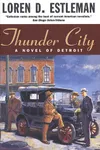
- Thunder City (Set in the 1900s–1910s): The chronological starting point explores the dawn of the automobile era. It follows Harlan Crownover, a carriage manufacturer's son, as he aligns with political boss Big Jim Dolan and visionary mobster Sal Borneo to finance the early, struggling automotive dreams of Henry Ford.
- Whiskey River (Set in the 1920s–1930s): Set during the height of Prohibition, this entry chronicles the notorious Purple Gang and Lake Erie rum-running. The story is told through the eyes of Connie Minor, a young and ambitious newspaper reporter who finds himself dangerously close to local gangster Jack Dance.
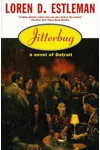
- Jitterbug (Set in 1943): Set during World War II when Detroit was the "Arsenal of Democracy," the city faces wartime rationing, a black market, and severe racial tensions. Police Lieutenant Maximilian Zagreb leads a ragtag Racket Squad hunting a serial killer known as "Kilroy" who targets ration-stamp hoarders, while journalist Connie Minor makes a brief cameo appearance.
- Edsel (Set in the 1950s): The era of the post-war auto boom. A jaded, older Connie Minor returns, now working as an advertising copywriter hired to promote the ill-fated Ford Edsel. He becomes entangled in a web of mob muscle, political corruption, and union struggles involving Walter Reuther.
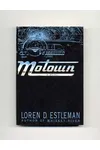
- Motown (Set in 1966): Set on the cusp of the late-1960s racial conflicts, the story follows ex-cop Rick Amery. Working security for an auto manufacturer, he is tasked with investigating consumer advocates and activists (inspired by Ralph Nader) while navigating mafia power plays and police corruption.
- Stress (Set in 1972): Centering on the controversial, real-life STRESS (Stop the Robberies, Enjoy Safe Streets) undercover police unit, this novel explores systemic corruption and racial strife. When an off-duty cop kills three Black men during an attempted robbery, African American officer Charlie Battle is caught between his badge and his conscience during the investigation.
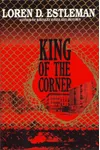
- King of the Corner (Set in 1990): The chronological conclusion of the cycle. Former Detroit Tigers pitcher Kevin "Doc" Miller is paroled after a seven-year prison sentence. Looking to rebuild his life, he takes a job with a bail bondsman and is pulled into the city's complex political machine under Mayor Coleman Young.
2. Publication Reading Order
Reading in publication order allows you to experience the series exactly as Estleman wrote it. He originally conceived the project as a trilogy beginning with the Prohibition era before expanding it to cover the entire century, finally writing the turn-of-the-century prequel last.
- Whiskey River (Published in 1990)
- Motown (Published in 1991)
- King of the Corner (Published in 1992)
- Edsel (Published in 1995)
- Stress (Published in 1996)
- Jitterbug (Published in 1998)
- Thunder City (Published in 1999)
Understanding the Detroit Series: What to Know Before You Start
Before diving into the gritty streets of the Motor City, it is helpful to understand the unique structure of Estleman's project. The series functions as an "alternative underworld history" of Detroit. Estleman, a native Michigander and former journalist, utilized meticulous historical research to anchor his fictional characters alongside real historical figures like Henry Ford, Walter Reuther, and Coleman Young, and real events such as the 1943 race riots and the rise of the auto unions.
A common point of confusion for new readers is distinguishing this historical cycle from Estleman's other famous Detroit-based works: the Amos Walker series. Amos Walker is a long-running, character-driven private investigator series that began in 1980 with Motor City Blue and spans over thirty books. Unlike the historical Detroit series, the Amos Walker books follow a single detective in a contemporary setting that ages in real-time. While both series share Estleman's signature hard-boiled prose and deep love for Detroit, they do not feature character crossovers and can be read completely independently.
Meet the Characters: Connecting the Decades
Because the Detroit Crime novels span an entire century, the cast of characters shifts dramatically from book to book. However, Estleman weaves subtle threads of continuity throughout the cycle. The most prominent recurring figure is Connie Minor. Introduced as a young, hungry journalist in the 1920s setting of Whiskey River, he makes a brief cameo in the 1940s-based Jitterbug before returning as the main protagonist in the 1950s-set Edsel, where his career has transitioned into advertising. Other books feature distinct protagonists representing different facets of Detroit life—from police officers like Max Zagreb and Charlie Battle to paroled athlete Doc Miller and carriage scion Harlan Crownover—giving readers a kaleidoscopic perspective on the city's shifting social classes.
Practical Reading Guidance: Where Should You Start?
Because each novel is written to stand on its own, you do not need to worry about cliffhangers or strict narrative continuity. If you prefer a traditional narrative progression, starting with Whiskey River (the first published book) is highly recommended. It immediately establishes Estleman’s noir tone and introduces Connie Minor, who serves as the structural anchor for several of the books. Alternatively, if you want a linear history of Detroit's rise and fall, starting with the prequel Thunder City offers a perfect introduction to the birth of the Motor City.