

The Recommended Reading Order for Devil's Guard
If you are dive-bombing into Eric Meyer’s high-stakes, action-heavy military fiction, you have two primary ways to navigate the series: chronological order or release order. Because the series spans multiple historical eras—from the frozen Eastern Front of World War II to the modern valleys of Afghanistan—the route you choose changes how you experience protagonist Jurgen Hoffman's character arc.
Chronological Reading Order
Reading chronologically is the most popular path for fans who want a seamless timeline. It allows you to watch Jurgen Hoffman grow from a fresh, combat-tested young German officer in the snows of Stalingrad into a battle-hardened veteran facing guerrilla forces in Indochina and Vietnam. Here is the chronological sequence:
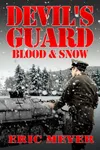
- Devil's Guard: Blood & Snow (Set in 1943 during the WWII Eastern Front)
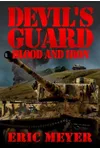
- Devil's Guard: Blood & Iron (Set in 1943 during the Battle of Kursk)
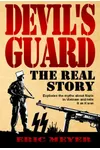
- Devil's Guard: The Real Story (Set post-1945, focusing on the French Foreign Legion in Indochina)
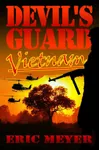
- Devil's Guard: Vietnam (Set during the Vietnam War in the late 1960s)
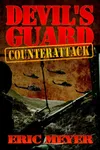
- Devil's Guard: Counterattack (Set during the 1968 Tet Offensive in Vietnam)
- Devil's Guard: Afghanistan (Set in the modern war in Afghanistan, focusing on Max Hoffman)
Release Date Reading Order
While the chronological timeline is highly satisfying, some readers prefer the original release order. When Eric Meyer first launched the series, he kicked off the story directly in the jungles of French Indochina with The Real Story, establishing the premise of ex-SS soldiers joining the French Foreign Legion before later writing WWII prequels to explain Hoffman’s origins. The release sequence is as follows:
- Devil's Guard: The Real Story (2010)
- Devil's Guard: Vietnam (2010)
- Devil's Guard: Counterattack (2011)
- Devil's Guard: Blood & Snow (2011)
- Devil's Guard: Blood & Iron (2011)
- Devil's Guard: Afghanistan (2012)
Understanding the Devil's Guard Universe: Book by Book
1. Devil's Guard: Blood & Snow
Set in February 1943, this prequel places readers on the brutal Eastern Front immediately following the catastrophic German defeat at Stalingrad. Jurgen Hoffman is a newly commissioned officer in the Deutschland Regiment of the SS Division Das Reich. Facing the relentless Red Army, Hoffman must not only survive the frozen wasteland but also navigate the treacherous internal politics and deadly schemes of the SD and the Gestapo. It provides crucial context for how Hoffman became the lethal survivor seen in later books.
2. Devil's Guard: Blood & Iron
Continuing the WWII prequel arc, this novel centers on the legendary Battle of Kursk in July 1943. Jurgen Hoffman and his comrades find themselves in the middle of the largest tank battle in history. The combat is visceral and intense, showing the raw machinery of war and the psychological pressure on soldiers fighting a losing campaign. Meyer uses Hoffman's tactical struggles to highlight the transition from professional military execution to desperate survival tactics.
3. Devil's Guard: The Real Story
This is the book that started it all. Following the collapse of Nazi Germany in 1945, Hoffman and a group of former Waffen-SS soldiers escape capture and enlist in the French Foreign Legion. They are quickly shipped out to the dense, unforgiving jungles of French Indochina. Tasked with fighting the Viet Minh, these veterans apply their brutal Eastern Front combat experience to asymmetric jungle warfare. This entry introduces the core themes of moral grayness, survival, and the psychological burden of a past that cannot be washed away.
4. Devil's Guard: Vietnam
Moving forward in time, the action shifts to the late 1960s. The French have departed, and the Americans are now fully embroiled in the Vietnam War. Hoffman and his veteran comrades are drawn back into the fray, confronting the Viet Cong. The book contrasts the rigid tactics of the American military command with the unorthodox, ruthless survival skills of the aging Legionnaires, who understand the Vietnamese jungle all too well.
5. Devil's Guard: Counterattack
Set during the chaos of the 1968 Tet Offensive, Hoffman has transitioned to civilian life, operating a local charter airline. However, when his business is attacked and his wife is kidnapped by Viet Cong guerillas, he is forced to gather his old combat brothers for one more bloody mission. Note that this book is a solo effort by Eric Meyer; it should not be confused with another military book titled Counterattack co-authored by Eric Meyer and Todd McLeod, which belongs to the unrelated Heroes of the 82nd Airborne series.
6. Devil's Guard: Afghanistan
The final novel in the series shifts the perspective to a new generation. Max Hoffman, a civilian pilot and descendant of Jurgen, is recruited by the CIA for a high-risk covert operation in the mountains of Afghanistan. Facing the Taliban and navigating modern counter-insurgency tactics, Max must rely on the lethal instincts and tactical heritage passed down by the original Devil's Guard veterans to survive.
Eric Meyer vs. George Robert Elford: A Crucial Distinction
When searching for these books, it is highly common to run into George Robert Elford's classic 1971 novel, also titled Devil's Guard. It is important to know that these are entirely separate works. Elford's book (which spawned its own sequels, Devil's Guard II and Devil's Guard III) purports to be a true account of Hans Josef Wagemueller, a real former SS officer in the French Foreign Legion. Most military historians consider Elford’s book to be a work of creative fiction. Eric Meyer's series, while inspired by the same legends of ex-SS soldiers in the Legion, is openly presented as historical military fiction and focuses on the fictional character Jurgen Hoffman.
Practical Reading Guidance & Standalone Status
Can you read these books out of order? While each book tells a self-contained story focusing on a specific battle or campaign, they are not designed to be read as standalones. Jurgen Hoffman's character arc, his changing relationships with his comrades, and his evolving disillusionment with war build progressively from book to book. Skipping around will spoil major plot points and diminish the impact of his journey. For the best experience, start with either the historical beginning in Blood & Snow or the release-order starting point in The Real Story.