
The Recommended Reading Order for the Emperor Series
To fully experience the drama, political maneuvering, and military triumphs of ancient Rome, Conn Iggulden’s Emperor series must be read in its chronological order. Because the narrative is highly serialized, following the timeline of Julius Caesar's life is the only logical path. Fortunately, the chronological order matches the publication order exactly, making it straightforward for new readers to jump in.
The Main Emperor Sequence
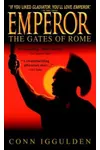
- The Gates of Rome (2003): The story begins in the Roman countryside, introducing the young patrician Gaius Julius Caesar and his companion Marcus Brutus. As Rome is pulled into a brutal civil war between the factions of Marius and Sulla, the boys are trained in the arts of war by the fierce gladiator Cabera, setting them on a path toward destiny.
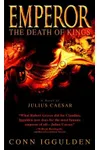
- The Death of Kings (2004): Following the upheaval in Rome, Caesar flees the city and joins the Roman legions in the Mediterranean. This installment follows his capture by Cilician pirates, his swift rise through the military ranks in Greece, and his growing tactical genius, while Brutus navigates the dangerous politics of Rome.
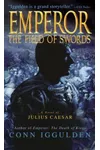
- The Field of Swords (2005): Caesar returns to Rome as a powerful general, forming the First Triumvirate. The focus shifts to his legendary military campaigns in Spain and Gaul, and the historic crossing into Britain. As his power grows, the political strain begins to test his childhood bond with Brutus.
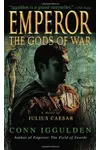
- The Gods of War (2006): The climax of Caesar's personal journey. Having conquered Gaul, Caesar defies the Senate and crosses the Rubicon, sparking a final civil war against his former ally, Pompey. The novel leads directly to the fateful conspiracy on the Ides of March, culminating in Caesar's assassination.
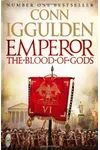
- The Blood of Gods (2013): The final book serves as a sequel, picking up immediately after the assassination of Caesar. The narrative shifts focus to his young adoptive heir, Octavian, who allies with Mark Antony to hunt down the conspirators—led by Brutus and Cassius—and secure the future of the Roman Empire.
Publication Order vs. Chronological Flow
Since the publication order of the Emperor series aligns perfectly with the timeline of events, readers do not need to juggle complex chronologies. However, there is a significant real-world timeline caveat: the seven-year publication gap between The Gods of War (2006) and The Blood of Gods (2013). Originally, the series was conceived and received as a four-book cycle tracing Julius Caesar's life from youth to death. When Iggulden returned to the universe in 2013, he shifted the focus to Octavian's rise. Readers should expect a slight shift in tone and protagonist focus in the final volume, though it remains a direct continuation of the overarching plot.
What to Know Before You Start: Fact vs. Fiction
Before diving into the Roman forum with Iggulden, it is crucial to understand his approach to historical accuracy. The Emperor series is celebrated for its cinematic battle scenes and rich characters, but it takes massive liberties with the actual historical timeline. Iggulden himself openly discusses these departures in the historical notes at the end of each book. Knowing these beforehand helps set the right expectations:
- The Caesar and Brutus Friendship: In the novels, Caesar and Brutus are portrayed as age-matched peers raised together like brothers on the Caesar estate. In reality, Julius Caesar was roughly fifteen to twenty years older than Marcus Brutus, making a childhood companionship historically impossible.
- Octavian's Military Presence: The series depicts Octavian as a young adult participating actively as a military commander under Caesar during his final campaigns. Historically, Octavian was a child or young teenager during these events and was not serving on the active battlefronts in the way the books describe.
- Character Timelines: Key Roman figures, including the dictators Sulla and Cato, have their deaths and political actions shifted or compressed to heighten the dramatic tension of the early novels.
Practical Reader Guidance
For the best experience, start directly with The Gates of Rome. Because each book builds heavily on the relationships and political alliances established in the previous entries, the novels cannot be read as standalones without losing significant context. There are no official short stories, companion novellas, or spin-offs set in this specific universe. If you finish the saga and crave more historical fiction in a similar style, you can transition to Iggulden’s other acclaimed series, such as the Conqueror series (following Genghis Khan) or the Athenian series, though they are entirely separate in setting and continuity.