



Where to Start with Conn Iggulden
Conn Iggulden is one of the modern giants of historical fiction, known for translating meticulous research into visceral, action-packed military epics. Because his series focus on distinct, self-contained historical eras, there is no single timeline connecting his entire bibliography. You can start with whichever period of history fascinates you most.
For the absolute best introduction to his style, most readers recommend starting with either the Conqueror series or the Emperor series. Conqueror is widely regarded by fans as Iggulden's masterpiece, detailing the rise of Genghis Khan and the Mongol Empire with raw, unmatched intensity. Alternatively, the Emperor series represents his breakout success, charting the legendary life and dramatic fall of Julius Caesar.
The Conqueror Series: Genghis Khan and the Mongol Empire
Spanning five novels, this epic saga follows the brutal childhood of Temüjin, his unification of the warring steppe tribes, and the subsequent expansion of the Mongol Empire across Asia and Europe. While the first three books focus on Genghis Khan, the final two explore the reigns of his successors, including Ogedei and Kublai Khan. These books must be read in strict chronological and publication order.
Conqueror Reading Order:
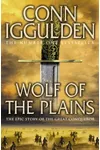
- Wolf of the Plains (2007) – Published in the US as Genghis: Birth of an Empire
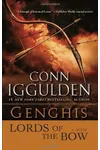
- Lords of the Bow (2008) – Published in the US as Genghis: Lords of the Bow
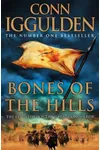
- Bones of the Hills (2008) – Published in the US as Genghis: Bones of the Hills
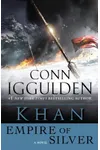
- Empire of Silver (2010) – Published in the US as Genghis: Empire of Silver
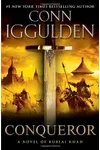
- Conqueror (2011) – Published in the US as Genghis: Conqueror
If you are reading in North America, keep an eye out for the "Genghis:" prefix used on covers. The narrative flow between books is linear, making it essential to start with Wolf of the Plains to appreciate Genghis Khan's evolution from an outcast boy to an emperor.
The Emperor Series: The Rise and Fall of Julius Caesar
This series launched Iggulden's writing career. It offers a fictionalized, highly dramatic retelling of Julius Caesar's life, from his youth alongside his childhood friend Marcus Brutus to his campaigns in Gaul, the Roman Civil War, and his ultimate assassination. The first four books form a tight, continuous narrative. The fifth book, published seven years later, serves as a sequel focusing on the aftermath of Caesar's death.
Emperor Reading Order:
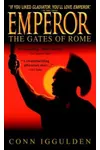
- The Gates of Rome (2002)
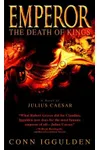
- The Death of Kings (2004)
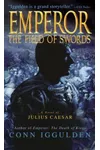
- The Field of Swords (2005)
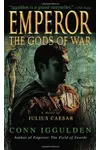
- The Gods of War (2006)
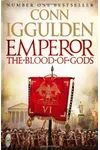
- The Blood of Gods (2013)
Note on Continuity: The Blood of Gods acts as an epilogue and transition, following Marcus Antonius (Mark Antony) and Caesar's adopted son, Octavian, as they hunt down the conspirators responsible for the Ides of March. While Caesar is no longer the protagonist, it is a satisfying conclusion to the Roman saga.
The Nero Trilogy: Imperial Rome Under the Mad Emperor
Returning to ancient Rome, Iggulden's Nero Trilogy tackles one of history’s most infamous and misunderstood rulers. Unlike the military-focused Emperor series, this trilogy is a masterclass in political maneuvering, family betrayal, and the corrupting nature of absolute power.
Nero Trilogy Reading Order:
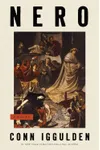
- Nero (2024)
- Tyrant (2025)
- Inferno (2026)
This series should be read sequentially, beginning with Nero's early life under his scheming mother, Agrippina, and tracing his descent into the legendary madness that culminated in the Great Fire of Rome.
Ancient Greece: The Athenian & Golden Age Series
Iggulden's work in Ancient Greece is divided into two distinct duologies. While published as separate series, they are chronologically linked and share key historical figures. To experience the rise of Greek democratic power and the defense of Athens against Persia, they should be read as a continuous four-book sequence.
Athenian and Golden Age Reading Order:
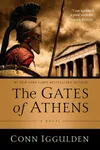
- The Gates of Athens (2020) – Athenian Series Book 1
- Protector (2021) – Athenian Series Book 2
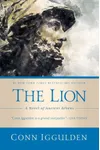
- The Lion (2022) – Golden Age Series Book 1
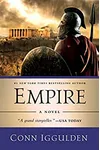
- Empire (2023) – Golden Age Series Book 2
The first two books (the Athenian duology) dramatize the legendary battles of Marathon and Thermopylae, focusing on figures like Xanthippus and Themistocles. The Golden Age duology picks up the timeline immediately afterward, following Xanthippus's son, Pericles, as he shapes the golden era of the Athenian Empire.
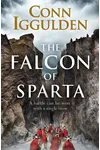
For readers who want more Greek history, Iggulden’s standalone novel The Falcon of Sparta (2018) is set roughly 50 years after the events of Empire, focusing on the famous retreat of the Ten Thousand Greek mercenaries from Persia. It can be read at any time.
Wars of the Roses: Medieval England's Bloody Civil War
This four-book series tackles the dynastic conflict between the House of Lancaster and the House of York. It covers the decline of King Henry VI, the political genius of Margaret of Anjou, and the brutal military engagements that reshaped the English monarchy.
Wars of the Roses Reading Order:
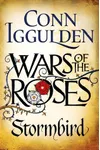
- Stormbird (2013)
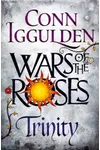
- Trinity (2014) – Published in some markets as Margaret of Anjou
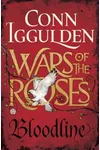
- Bloodline (2015)
- Ravenspur (2016)
Like his other historical works, this series must be read in order. If you enjoy this era, you can pair the series with Iggulden's standalone novel Dunstan (2017) (published in the US as The Abbot's Tale), which is set in 10th-century Anglo-Saxon England and serves as a fascinating prequel of sorts to the wider medieval setting.
The Empire of Salt: Fantasy as C.F. Iggulden
Writing under the pen name C.F. Iggulden, the author stepped away from historical realism to craft a gritty, low-fantasy trilogy set in the ancient city of Darien. The series features political intrigue, street-level magic, and complex moral dilemmas.
Empire of Salt Reading Order:
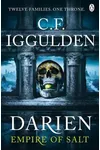
- Darien (2017)
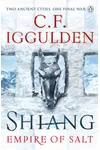
- Shiang (2018)
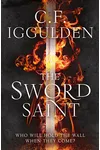
- The Sword Saint (2019)
What to Know Before You Start
Conn Iggulden takes creative liberties to ensure his pacing remains cinematic and engaging. Most notably, in the Emperor series, he compresses timelines and alters relationships (such as making Caesar and Brutus childhood peers, which is historically inaccurate). To account for this, Iggulden includes an invaluable Historical Note at the end of every novel, detailing exactly where he stuck to the historical record and where he altered facts for the sake of the story. Readers are highly encouraged to read these notes to separate fact from fiction.