



The Recommended Reading Path
The Empire of Man series—often referred to by fans as the Prince Roger series or the March Upcountry saga—follows a strict, linear narrative. Because the books form one continuous adventure, there is only one logical way to read them. You should start at the very beginning and follow the publication order. Skipping any volume will leave you lost, as each book picks up right where the previous one left off.
Here is the recommended reading path for the core series:
- March Upcountry (2001) – The adventure begins as Prince Roger's ship is sabotaged, leaving him and his loyal Bronze Battalion stranded on the deadly, humid planet of Marduk.
- March to the Sea (2001) – The grueling journey continues across hostile terrain as the prince and his surviving marines trek toward the planet's primary port city.
- March to the Stars (2003) – Reaching the spaceport is only the beginning, as Roger and his troops must capture a functional vessel from the hands of the Empire's enemies.
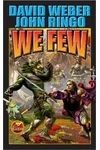
- We Few (2005) – The final stretch shifts back to the galactic home world, where Roger must navigate political treachery and organize a counter-coup to protect the throne.
Publication Order vs. Chronological Order
Unlike some sprawling science fiction franchises, the Empire of Man series does not feature prequels, side novels, or companion short story collections. The publication order matches the chronological order perfectly. The story begins on the surface of Marduk in March Upcountry and progresses continuously until its resolution in the capital city in We Few. Read the series chronologically to experience Prince Roger's coming-of-age transformation and the tactical evolution of his marines in the order the authors intended.
The Core Books Breakdown
March Upcountry (2001)
Prince Roger MacClintock is the third in line to the throne, widely viewed as a spoiled, useless fop. However, when his spaceship is sabotaged, he finds himself marooned on the obscure, swampy planet of Marduk. Roger, along with the Bronze Battalion of the Empress's Own Regiment, must survive a hostile ecosystem. Under the guidance of seasoned commanders like Captain Pahner, Roger begins to learn the harsh realities of survival and leadership.
March to the Sea (2001)
Stranded thousands of kilometers from the planet's sole spaceport, the remnants of the Bronze Battalion continue their march. As they encounter local Mardukan civilizations, they must negotiate alliances, fight off barbaric hordes, and adapt their high-tech warfare tactics to the low-tech, gunpowder-era combat of the natives. Through these trials, Roger's character begins to mature, earning him the genuine respect of his battle-hardened troops.
March to the Stars (2003)
The battalion finally reaches their objective: the spaceport held by the treacherous Saint and Temple forces. Securing a way off the planet requires cunning diplomacy, urban warfare, and raw grit. As the stakes rise, Roger and his allies uncover a massive galaxy-spanning conspiracy that threatens his mother, the Empress, and the core of the Empire itself.
We Few (2005)
Returning to the galactic capital, Roger and his surviving marines are forced to launch a counter-coup against the conspirators who sought to kill him. This final volume blends planetary military operations with high-stakes political intrigue and fleet actions, concluding the main narrative arc of Roger's rise to leadership.
What to Know Before You Start
The series is a unique collaboration between two giants of the military science fiction genre. David Weber, best known for his Honor Harrington space opera series, outlined the narrative arcs and developed the universe. John Ringo, a veteran of the U.S. Army's 82nd Airborne Division, wrote the gritty, tactical combat sequences and injected the books with dark military humor. This synergy delivers a story that has both strategic depth and visceral action.
The central premise of the series is heavily inspired by classical military history. Specifically, the authors drew from Xenophon's Anabasis, which tells the true story of ten thousand Greek mercenaries stranded deep in hostile Persian territory, forced to march their way back home. This classic dynamic of a long, desperate retreat through unknown lands shapes the entire narrative structure of the first three novels.
Readers should also prepare for detailed world-building. Marduk is not just a backdrop; it is an active threat. The planet is filled with extreme humidity, constant rain, and terrifying local wildlife like "damnbeasts" and "killerpillars." The native Mardukans, who are four-armed, horned, amphibian-like creatures, are fully fleshed-out with distinct languages, religions, and varying levels of technological development, ranging from primitive tribes to advanced feudal empires.
The Future: Will There Be a Book 5?
The series currently concludes with We Few. Although the ending of the fourth book leaves room for further adventures within the Empire, no fifth book has ever been published. In 2012, John Ringo wrote a synopsis for a fifth novel and shared it with David Weber, but the project never went into active development. Given the decades that have passed since the release of the fourth book, the series is widely considered by the fan community to be a completed tetralogy.