
The Recommended Reading Order for Empire of Salt
The Empire of Salt series is a fantasy trilogy written by Conn Iggulden under the pen name C.F. Iggulden. Unlike some expansive fantasy sagas that feature complex webs of prequel novellas, companion stories, and spin-off series, the reading path for this world is refreshingly straightforward. To experience the overarching story, character arcs, and world-building as the author intended, you should read the trilogy in its original publication order.
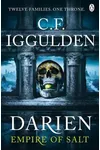
- Darien (2017)
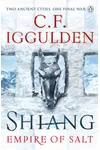
- Shiang (2018)
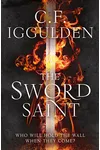
- The Sword Saint (2019)
Understanding the Empire of Salt Trilogy
Darien (2017)
The series begins with Darien, introducing readers to a decaying, ancient city that stands at the end of a golden age. The city of Darien is ostensibly ruled by a puppet king, but the true power lies in the hands of twelve competing noble families whose political machinations threaten to tear the kingdom apart. Amidst a raging plague and rising tensions, an assassination plot unfolds. The story tracks six strangers who arrive in the city, each carrying their own secrets and unique talents: Elias Post, a hunter with premonitions; Tellius, an aging, retired swordsman; Arthur, a mute boy discovered by Tellius; Vic Deeds, a cold-blooded mercenary; Daw Threefold, a cynical gambler; and Nancy, a young woman with the rare ability to dampen magic. As their paths collide, their choices begin to reshape the fate of the empire.
Shiang (2018)
The second installment, Shiang, shifts the focus to the eastern city of Shiang. In this highly disciplined society, a young king rules under the watchful eyes of elite swordsmen. The fragile peace is shattered by a sudden coup, plunging the city into violence and awakening an ancient, dark threat. Meanwhile, four martial masters—including a legendary "sword saint"—journey west to Darien. Their objective is to track down and capture an old man for punishment, bringing them into direct conflict with the forces residing in Darien. While Shiang introduces new characters and a very different setting, it continues the threads established in the first book, using Tellius and others to bridge the two cities.
The Sword Saint (2019)
The trilogy reaches its epic conclusion in The Sword Saint. With Darien facing an existential threat from a false king invading from the north, the city is pushed to the brink of absolute desolation. Tellius steps forward to orchestrate a desperate defense, assembling a rag-tag group of defenders. This group unites characters from both Darien and Shiang—including a hunter, a gambler, the sword saint of Shiang, and Nancy—to stand against the oncoming army. The novel resolves the political power struggles and magical conflicts that have built up across the trilogy, bringing a definitive end to the story of the Empire of Salt.
Publication Order vs. Chronological Order
Because the publication order of the trilogy matches its chronological timeline, there is no need to jump around the series. However, some readers have noted that Shiang initially feels like a standalone novel due to its shift in perspective and geographic focus. Despite this stylistic shift, reading the books out of order is highly discouraged. The character arcs of key figures, such as the aging swordsman Tellius, and the gradual explanation of the magic-dampening system are designed to build sequentially. Skipping Darien to read Shiang first will leave you missing crucial context regarding the world's history, the political factions, and the underlying relationships that culminate in the final book.
What to Know Before You Start
Before diving into the series, there are a few unique aspects of the Empire of Salt that help frame the reading experience:
The Author's Pen Name
Conn Iggulden is widely celebrated as a master of historical fiction, famous for his bestselling Emperor and Conqueror series. When he decided to write epic fantasy, he adopted the pen name C.F. Iggulden. He did this to help readers distinguish his historical works from this fantasy project, ensuring fans knew they were stepping into a fictional world with active magic rather than a reimagining of historical events.
The Genre and Tone
While the trilogy features magic, it is not a traditional medieval fantasy. The setting of the Empire of Salt leans closer to a mercantile-era aesthetic, reminiscent of the 16th to 18th centuries, where commerce, guild dynamics, and city-state politics drive the plot. The narrative style draws heavy inspiration from classic heroic fantasy authors like David Gemmell. It focuses on tight, character-driven struggles within defined city walls rather than sprawling, continent-spanning journeys.
The Magic System
The magic in this world is treated as a rare, often dangerous force. Rather than flash-and-bang spells, it manifests through specific, localized talents—such as Nancy's ability to absorb or nullify magical energy. This gives the battles a grounded, tactical feel where physical combat and political schemes remain just as lethal as supernatural elements.
Practical Reading Guidance
The entire Empire of Salt trilogy is complete, making it an excellent candidate for a quick, self-contained binge read. There are no companion novellas, short stories, or co-authored spin-offs that you need to track down. Simply pick up Darien and read straight through to The Sword Saint for the complete story. The books are relatively fast-paced and tightly structured, offering a satisfying conclusion to the arcs of all six original strangers and the fate of the cities themselves.