
The Recommended Reading Path
For readers diving into the massive military science fiction universe of Exodus: Empires at War, the best path forward is to follow the main series in publication order. Written by the late Doug Dandridge, the series is designed to build on both the technological evolution of the New Terran Empire and the escalating galactic war against the genocidal Ca'cadasan Empire.
However, newcomers should be aware of a common numbering discrepancy. While many online databases and retailers list the series as containing 16 books, there are actually 17 novels in the core sequence. This confusion arises because the eleventh book, Day of Infamy (published in 2016), is frequently omitted from retail lists or skipped in numbering, causing later novels like Time Strike and Retaliation to be shifted down. To get the full story without missing critical plot points, you should ensure that Day of Infamy is included in your reading schedule after Book 10.
Alongside the main fleet battles, Dandridge wrote two companion spin-offs: Exodus: Machine War and Exodus: Tales of the Empire. These side series are best read after you have finished the first few main books and are comfortable with the universe's mechanics and factions. They can be read as standalone blocks or integrated concurrently based on publication years.
Exodus: Empires at War Series in Order
Here is the complete chronological publication order of the main series, restoring the missing eleventh volume to its rightful place:
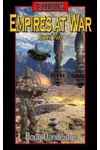
- Exodus: Empires at War: Book 1 (2012): The New Terran Empire has enjoyed a millennium of peace since fleeing Earth, only to discover their ancient, genocidal alien enemy—the Ca'cadasan Empire—has found them again.
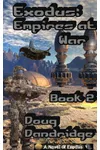
- Exodus: Empires at War: Book 2 (2012): Escaped prince Sean Lee Ogden Romanov must navigate complex imperial politics and conspiracies while preparing for the inevitable alien onslaught.
- The Rising Storm (Book 3) (2013): The Ca'cadasan war machine arrives at the Empire's outer gates, pushing humanity to deploy experimental new war technologies.
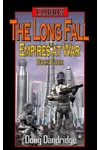
- The Long Fall (Book 4) (2013): The war intensifies as both empires experience massive casualties and tactical stalemates in deep space.
- Ranger (Book 5) (2013): A focused look at the scout and vanguard forces operating on the dangerous frontier of the conflict.
- The Day of Battle (Book 6) (2014): Major fleet actions decide the fate of entire star systems as the New Terran Navy struggles to hold the line.
- Counter Strike (Book 7) (2014): Seeking to shift the momentum, the Terran forces launch their first major offensive operations into enemy territory.
- Soldiers (Book 8) (2015): A gritty, ground-level perspective on the planetary invasions and infantry combat defining the war.
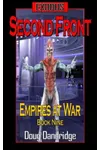
- Second Front (Book 9) (2015): The theatre of war expands as new alliances and hidden star systems become critical tactical objectives.
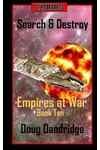
- Search and Destroy (Book 10) (2016): Terran fleets conduct high-stakes hunting missions to neutralize key Ca'cadasan naval assets and supply lines.
- Day of Infamy (Book 11) (2016): The crucial, often-overlooked turning point where unexpected strikes threaten to dismantle Terran defensive networks.
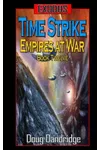
- Time Strike (Book 12) (2018): Desperate tactical maneuvers and temporal considerations shake up standard fleet strategies.
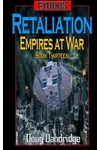
- Retaliation (Book 13) (2018): Humanity coordinates massive counter-offensives, showcasing highly evolved military doctrine and technological adaptations.
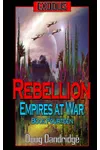
- Rebellion (Book 14) (2018): Internal political friction and uprisings within occupied territories complicate the galactic war.
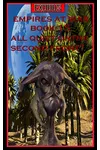
- All Quiet on the Second Front? (Book 15) (2019): A temporary lull in major fleet engagements leads to tense diplomatic standoffs and covert operations.
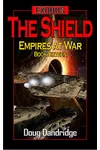
- The Shield (Book 16) (2019): Terran forces establish desperate planetary and orbital bastions to protect the core imperial worlds.
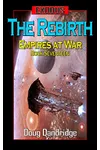
- The Rebirth (Book 17) (2020): The final novel published before the author's passing, focusing on the rebuilding of fleets and the ongoing struggle for survival.
The Spin-Off Series: Exploring the Exodus Universe
To flesh out your understanding of the setting, Doug Dandridge expanded the universe with two distinct subseries focusing on different aspects of Terran space life:
Exodus: Machine War
This five-book spin-off series explores the Terran Empire's conflict against ancient, automated "death machines" (the Gorgansha/machine civilizations). It is highly recommended for fans who want a break from the Ca'cadasan conflict to focus on a different type of sci-fi threat. The books should be read in this order:
- Supernova
- Bolthole
- Death From Above
- Retribution
- The Code
Exodus: Tales of the Empire
This side series focuses on "Exploration Command"—the scientific, scouting, and exploratory branch of the Imperial Navy. These stories take place away from the primary front lines and detail the discovery of new worlds and alien species. The series consists of:
- Exploration Command (2015)
- Beasts of the Frontier (2016)
What to Know Before You Start
Doug Dandridge's universe is built on realistic physics and historical military analogies. Most notably, the series incorporates an "age of sail" communication system. Because messages cannot travel faster than starships (which navigate hyperspace at finite speeds) or sluggish hyperwave signals, commanders on the front lines must make critical tactical decisions without real-time instructions from the capital. This communication lag creates immense tension and rewards operational strategy.
Tragically, Doug Dandridge passed away in 2021. Because of this, the overarching conflict between the New Terran Empire and the Ca'cadasans remains unfinished. However, the 17 published core books and their spin-offs offer a complete, richly detailed military sandbox that stands as a monumental achievement in modern self-published space opera.
Finally, readers should note that despite occasional online metadata errors listing external names like "TurtleMe" on retail platforms, Doug Dandridge is the sole creator and author of all works in this universe.