
How to Read Fafhrd and The Gray Mouser
Fritz Leiber’s iconic sword-and-sorcery series presents a classic dilemma for fantasy readers. Because the stories were written and published out of order across five decades (from 1939 to 1988), the order in which they were originally printed is very different from the internal timeline of the characters' lives. Fortunately, Leiber himself eventually helped organize the stories into a structured chronological order. Most modern readers agree that the chronological sequence is the best way to experience the saga, as it provides a clear narrative arc from the duo's individual origin stories to their final adventures.
The Recommended Chronological Order
To follow the lives of the characters from their separate youths to their shared retirement, you should read the main collections in this order:
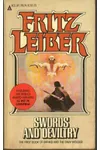
- Swords and Deviltry (1970) – Introduces the separate origins of Fafhrd and the Gray Mouser, ending with their first meeting in the award-winning novella 'Ill Met in Lankhmar'.
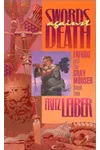
- Swords Against Death (1970) – A collection of ten stories detailing their early adventures as thieves, wizard-troublers, and wanderers trying to escape their grief.
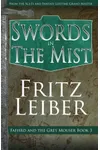
- Swords in the Mist (1968) – Contains six stories, including the classic travelogue 'Lean Times in Lankhmar' and the cosmic, dream-like adventure 'Adept's Gambit'.
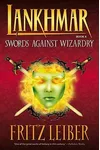
- Swords Against Wizardry (1968) – Collects four longer adventures, including the climb up the mountain Stardock and their descent into the mysterious realm of Quarmall.
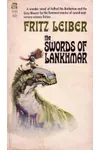
- The Swords of Lankhmar (1968) – The only full-length novel written by Leiber in the original run, pitting the duo against an invasion of intelligent, sinister rats.
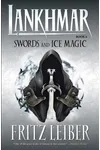
- Swords and Ice Magic (1977) – Collects later episodic stories, introducing the personifications of Death and Loki, and sending the heroes to the frosty Rime Isle.
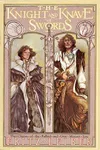
- The Knight and Knave of Swords (1988) – The final collection by Leiber, offering a more mature, reflective look at the aging heroes as they settle down on Rime Isle.
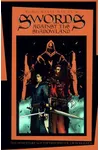
- Swords Against the Shadowlands (1994) – An authorized continuation novel written by Robin Wayne Bailey. In terms of internal timeline, it actually fits between the first two books (often called book #1.5), though it was published long after the original series concluded.
Publication Order vs. Chronological Order
If you choose to read the series in the order the books were compiled and published, the experience changes slightly. The collections were printed out of sequence in the late 1960s and 1970s. The publication order of the books is as follows:
- The Swords of Lankhmar (1968)
- Swords in the Mist (1968)
- Swords Against Wizardry (1968)
- Swords and Deviltry (1970)
- Swords Against Death (1970)
- Swords and Ice Magic (1977)
- The Knight and Knave of Swords (1988)
- Swords Against the Shadowlands (1994)
Reading in publication order can be confusing for newcomers. It drops you straight into a full-length novel (The Swords of Lankhmar) before you have read the origin stories and the early adventures that establish their unique bond. Furthermore, because individual short stories were written at vastly different times—for example, 'Adept's Gambit' was drafted in the 1930s but not published in a book until 1947, and later collected in 1968—a publication-order read-through does not trace the development of Leiber's writing style in a straight line. For these reasons, sticking to the chronological path is highly recommended.
Chronological Caveats and Tonal Shifts
While the chronological order is the standard path, readers should be prepared for significant shifts in tone. Because Leiber compiled older stories alongside newly written material to fill in historical gaps, a single chronological volume can contain stories written decades apart. For instance, in Swords and Deviltry, the opening stories were written in the late 1960s to establish the heroes' youth, while the stories in Swords Against Death date back to the late 1930s and 1940s. As a result, you may notice the characters' personalities, the complexity of the prose, and the style of magic shifting back and forth as you turn the pages. This is a natural side effect of Leiber retroactively piecing together a lifelong biography for his characters.
The Core Collections and What They Contain
To navigate the books successfully, it helps to understand how they are structured. The series is primarily episodic, consisting of short stories and novellas rather than long serialized epics. Here is a breakdown of the key elements in each book:
Swords and Deviltry
This book is the absolute starting point. It contains three main pieces: 'The Snow Women' (focusing on Fafhrd's youth among his clan), 'The Unholy Grail' (detailing the Gray Mouser's apprenticeship under a black magician), and the masterpiece 'Ill Met in Lankhmar'. The latter won both the Hugo and Nebula awards and describes the tragic night the two rogues met and lost their first loves, prompting them to leave Lankhmar behind.
Swords Against Death
Widely considered one of the best collections in the series, this book gathers ten early stories. It contains pulp fantasy essentials like 'The Jewels in the Forest' and 'Thieves' House'. Here, the characters are at their peak as daring thieves, dealing with ancient curses, supernatural horrors, and the corrupt guilds of Lankhmar.
Swords in the Mist
This volume takes the heroes away from their home city. They travel across the southern seas and even slip into other worlds. The highlight of this volume is 'Lean Times in Lankhmar', a humorous satirical tale where the two temporarily split up and try their hand at starting new religions, alongside 'Adept's Gambit', which features a curse from a bizarre, ancient demon.
Swords Against Wizardry
This book features four adventures, most notably the quest to scale the icy peak of Stardock and the novella 'The Lords of Quarmall', which Leiber co-authored with his friend Harry Otto Fischer. It features an underground empire where brothers use death-magic to fight for the throne.
The Swords of Lankhmar
The fifth book stands out because it is a cohesive, singular novel. Set entirely in and around Lankhmar, it features the duo defending the city from a bizarre threat: a vast, civilized society of white rats who seek to overthrow the human rulers. It is fast-paced, filled with witty banter, and showcases Leiber's imagination at its most playful and bizarre.
Swords and Ice Magic & The Knight and Knave of Swords
These final two volumes contain stories written in the late 1970s and 1980s. They are characterized by a slower pace and a more mature, introspective tone. The heroes spend much of their time on Rime Isle, dealing with the struggles of aging, the changes in their relationships, and the shifting nature of their heroic deeds. While some fans find these stories less thrilling than the early Lankhmar capers, they provide a rare, satisfying conclusion to a fantasy hero's journey.
Co-Authorship, Spin-offs, and Tie-ins
The creation of Fafhrd and the Gray Mouser was a collaborative effort from the start. Fritz Leiber and his friend Harry Otto Fischer dreamed up the characters in their correspondence during the 1930s. The characters were even modeled on their creators: Leiber was tall and athletic like Fafhrd, while Fischer was short and sharp-witted like the Gray Mouser. Fischer wrote the early drafts of several stories, including the opening portion of 'The Lords of Quarmall'. He also penned the story 'The Childhood and Youth of the Gray Mouser', which was published in The Dragon magazine in 1978.
After Leiber's death in 1992, Robin Wayne Bailey was authorized to continue the series. His novel, Swords Against the Shadowlands (published in 1998, though some databases list the copyright or publication year as 1994), tells the story of how the duo dealt with the immediate aftermath of the tragedy in 'Ill Met in Lankhmar'. It is a faithful tribute that fits snugly into the early continuity of the series.
The influence of Lankhmar extends into other media as well. In 1976, TSR published a board game called Lankhmar, designed by Leiber and Fischer themselves. The city also became a classic campaign setting for the Dungeons & Dragons roleplaying game, cementing the characters' archetypes as the definitive Barbarian and Rogue of modern fantasy. Additionally, the series was adapted into a celebrated comic book miniseries in 1990 by Howard Chaykin and Mike Mignola, which is highly recommended for fans of the visual arts.
What to Know Before You Start
Before diving into the world of Nehwon, keep in mind that Fritz Leiber coined the very term 'sword and sorcery'. The tone of these books is decidedly different from epic high fantasy. There is no dark lord to defeat, no ring to destroy, and no grand destiny to fulfill. Fafhrd and the Gray Mouser are mercenaries, thieves, and survivalists who are driven by the search for gold, wine, and adventure. Their relationship is built on deep mutual respect and survival, making their friendship the emotional anchor of the entire series. If you appreciate witty banter, dark humor, and self-contained, high-stakes adventures, you will find Lankhmar to be an unforgettable destination.