
Where to Start Your Journey in Fairacre
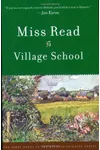
If you are looking to escape the hustle and bustle of modern life, the fictional English village of Fairacre is the perfect literary retreat. Created by Dora Jessie Saint under the pen name Miss Read, the series spans forty years of publication, offering a gentle, humorous, and deeply comforting look at rural post-war England. The absolute best place to start reading is with the very first book, Village School (1955). This novel introduces the unnamed schoolmistress narrator (referred to as Miss Read) and establishes the primary cast of characters, including the grumpy school cleaner Mrs. Pringle, the vicar Mr. Partridge, and the delightful pupils who bring life to the two-room schoolhouse. While many of the books can technically be read as standalones, starting at the beginning allows you to watch the village, its relationships, and its seasonal rhythms evolve naturally over the decades.
The Core Fairacre Novels in Publication Order
For the complete and most satisfying reading experience, we highly recommend following the original publication order. Miss Read wrote twenty core novels in this series, tracing the slow changes in rural education, village traditions, and the lives of the characters from the mid-1950s through to the late 1990s:
- Village School (1955) – The definitive introduction to the series, focusing on a year in the life of the village school.
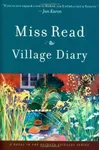
- Village Diary (1957) – Miss Read details her life outside the classroom, navigating community gossip and a brief, gentle romance.
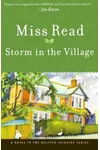
- Storm in the Village (1958) – The community unites when modern housing developments threaten the local landscape.
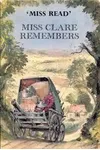
- Miss Clare Remembers (1962) – A beautiful, retrospective look at the life of Dolly Clare, a beloved retired schoolteacher.
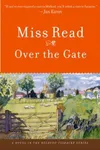
- Over the Gate (1964) – A collection of village tales and memories shared over garden gates.
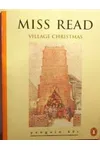
- Village Christmas (1966) – A festive, heartwarming tale about a new family arriving in the village just in time for the holidays.
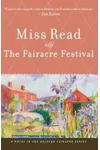
- The Fairacre Festival (1968) – The village rallies to raise funds to repair the church roof after a severe storm.
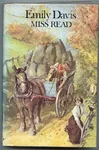
- Emily Davis (1971) – A companion piece to Dolly Clare's memoir, detailing the life and impact of Dolly's lifelong friend and fellow retired teacher.
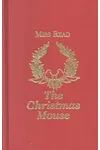
- The Christmas Mouse (1973) – A charming holiday story focusing on a run-away child and a mouse on Christmas Eve.
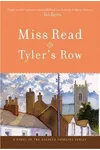
- Tyler's Row (1973) – A newcomer couple moves into a row of old cottages, leading to classic village friction.
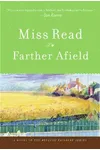
- Farther Afield (1973) – Miss Read takes a rare vacation to Crete to recuperate after an injury, expanding the horizon of the series.
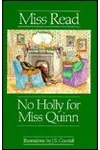
- No Holly for Miss Quinn (1976) – A standalone holiday tale about a career woman who is called back to Fairacre to take care of her sick brother's family.
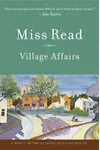
- Village Affairs (1977) – The school faces the threat of closure, causing concern throughout the close-knit community.
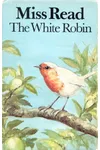
- The White Robin (1979) – A mystery unfolds in the village when a rare white robin is sighted and suddenly disappears.
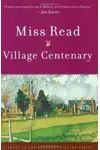
- Village Centenary (1980) – Fairacre celebrates the hundredth anniversary of its school building with nostalgic looking-back.
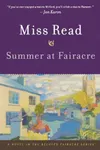
- Summer at Fairacre (1984) – Miss Read enjoys a sunny summer while managing the usual school dynamics and domestic chores.
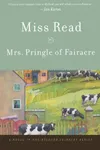
- Mrs. Pringle of Fairacre (1989) – A closer look at the life and stubborn personality of the school's long-serving cleaner.
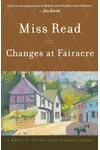
- Changes at Fairacre (1991) – New faces and modern challenges test the resilience of the village school.
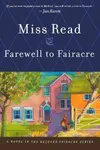
- Farewell to Fairacre (1993) – Miss Read prepares to step away from her teaching career, starting the transition to retirement.
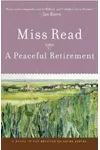
- A Peaceful Retirement (1996) – The final novel in the series, showing Miss Read adapting to a slower, peaceful pace of life outside the classroom.
Chronological Caveats and Special Themes
While the publication order is straightforward, there are a few chronological nuances to keep in mind. Specifically, Miss Clare Remembers (1962) and Emily Davis (1971) are heavily retrospective. Rather than moving the timeline forward, they dive deep into the past, recounting the childhoods, early careers, and wartime experiences of the village's elder teachers. These books serve as extended character studies, providing rich historical context to the community. They are frequently published together in omnibus editions and can be read at any point, though they fit beautifully in their publication slots. Additionally, the holiday-themed novels—Village Christmas, The Christmas Mouse, and No Holly for Miss Quinn—are often collected under titles like Christmas at Fairacre. While they fit nicely into the ongoing timeline, they make wonderful seasonal reads that can be enjoyed out of order during the winter holidays.
Spin-offs and Sister Series: The Thrush Green Connection
Dora Jessie Saint also wrote a second major series set in the same rural universe: the Thrush Green series. Thrush Green is a fictional Cotswold village located near Fairacre, and the two series share a sisterly connection, capturing the same idyllic, comforting atmosphere. However, they differ significantly in style. While the Fairacre books are written in the intimate, first-person perspective of Miss Read, the Thrush Green novels are written in the third person, offering a broader, ensemble-cast view of the village residents. You do not need to read one series to understand the other, but they complement each other perfectly. Many readers switch between the two to experience different facets of Miss Read's cozy world.
What to Know Before You Start
Before diving into Fairacre, it helps to understand the tone and context of the series. Dora Jessie Saint drew heavily on her own background as a schoolteacher in rural England to write these books. Her writing is characterized by dry wit, sharp observations of human nature, and a deep love for the natural world. Although the stories are cozy and gentle, they do not shy away from the real-world challenges of rural life, such as poverty, changing traditions, and the bureaucratic struggles of running a village school. As a testament to her literary contributions, Dora Saint was awarded an MBE in 1998. Fun trivia for music fans: the Irish singer-songwriter Enya was so inspired by the pastoral charm of these books that she named two instrumental tracks on her early albums after them—'Miss Clare Remembers' on Watermark (1988) and 'No Holly for Miss Quinn' on Shepherd Moons (1991).