
How to Read the Father Brown Books
For the best reading experience, it is highly recommended to read the Father Brown stories in publication order. While the stories are largely episodic and can be enjoyed as standalones, G.K. Chesterton introduced a subtle overarching narrative through the character of Hercule Flambeau, a towering French master thief. Flambeau begins as Father Brown's cunning nemesis, transforms into a reformed ally and private detective, and eventually retires. Reading the collections out of order will spoil Flambeau’s fascinating redemption arc.
If you want to experience the complete detective cases of the unassuming priest, here is the recommended reading path through the five primary collections and the uncollected stories:
- The Innocence of Father Brown (1911) – The essential starting point containing 12 classic stories, including the character's debut in “The Blue Cross.”
- The Wisdom of Father Brown (1914) – A collection of 12 stories deepening Father Brown's theological and psychological methods.
- The Incredulity of Father Brown (1926) – Comprising 8 stories where the priest tackles seemingly supernatural mysteries.
- The Secret of Father Brown (1927) – Features 8 stories bookended by a framing narrative where Father Brown explains his unique empathetic methodology to an associate.
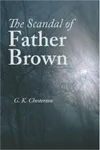
- The Scandal of Father Brown (1935) – The final collection published during Chesterton's lifetime, featuring 8 stories (or 9 in modern editions).
The Core Canon: The Five Main Collections
Between 1910 and 1936, G.K. Chesterton wrote 53 short stories featuring the round-faced, umbrella-wielding Catholic priest. These were originally published in magazines like The Story-Teller, The Saturday Evening Post, and The Strand Magazine, before being compiled into five core anthologies:
1. The Innocence of Father Brown (1911)
This is where the legend begins. It introduces Father Brown as an apparently naive cleric whose quiet observations of human nature allow him to solve baffling crimes. Key stories include “The Blue Cross,” which introduces Hercule Flambeau, “The Secret Garden,” “The Queer Feet,” “The Flying Stars” (a pivotal moment in Flambeau's arc), and “The Invisible Man.”
2. The Wisdom of Father Brown (1914)
Published just before the outbreak of World War I, this anthology contains 12 stories. It showcases a more experienced Father Brown who travels internationally, including to the United States and Italy. Notable cases include “The Absence of Mr. Glass,” “The Paradise of Thieves,” and “The Strange Crime of John Boulnois.”
3. The Incredulity of Father Brown (1926)
After a twelve-year hiatus, Chesterton returned to the character. This collection of 8 stories focuses heavily on the theme of skepticism and the supernatural. Father Brown routinely disproves mystical or ghostly explanations in favor of rational, human solutions. Important stories include “The Resurrection of Father Brown” and “The Oracle of the Dog.”
4. The Secret of Father Brown (1927)
This collection is unique because it is framed by a conversation between Father Brown and a friend in Spain, where the priest explains his investigative secret: he puts himself inside the mind of the criminal to understand the sin. It compiles stories like “The Mirror of the Magistrate” and “The Chief Mourner of Marne,” ending with “The Secret of Flambeau,” which reveals the former thief's peaceful retirement.
5. The Scandal of Father Brown (1935)
Chesterton's final Father Brown volume contains stories like “The Quick One,” “The Blast of the Book,” and “The Insoluble Problem.” Depending on the publisher, modern editions of this book also include “The Vampire of the Village,” a story published shortly after the collection's release.
The Uncollected Stories: Expanding the Case Files
Three Father Brown stories fell outside the five original collections published during Chesterton's lifetime:
- “The Donnington Affair” (1914): A unique experiment published in The Premier Magazine. Sir Max Pemberton wrote the first half of a mystery, challenging other writers to solve it. Chesterton stepped up to provide the resolution in the next issue, using Father Brown to deduce the culprit.
- “The Vampire of the Village” (1936): First printed in the August 1936 issue of The Strand Magazine, shortly after Chesterton's death. It is now commonly appended to reprints of The Scandal of Father Brown.
- “The Mask of Midas” (Written 1936, Published 1991): Written in Chesterton's final months but left in his papers. It remained unpublished until a limited edition was printed in 1991. It is now included in The Complete Father Brown Stories.
What to Know Before You Start
Before diving into the cases, it helps to understand what makes Father Brown different from his contemporaries, particularly Arthur Conan Doyle's Sherlock Holmes:
- Intuition Over Logic: While Holmes relies on physical clues (like cigarette ash and footprints) and cold deduction, Father Brown focuses on moral theology and psychology. He solves crimes by understanding how people think, feel, and fall into sin.
- Real-Life Inspiration: Chesterton based Father Brown on his close friend, Father John O'Connor, a Catholic priest in Yorkshire who helped guide Chesterton’s conversion to Catholicism in 1922. O'Connor's familiarity with the dark realities of human nature, gained through confessions, surprised Chesterton and inspired the character's hidden wisdom.
- Poetic and Paradoxical Style: Chesterton was a philosopher and essayist, and his Father Brown stories are filled with social commentary, religious insight, and literary paradox. They read less like procedural mysteries and more like ethical parables.
Adaptations and Companion Works
The popularity of Father Brown has led to several adaptations, the most famous being the BBC's long-running television series Father Brown, starring Mark Williams. While the show is highly entertaining, readers should be prepared for major differences. The TV series moves the setting to the fictional Cotswold village of Kembleford in the 1950s, introduces recurring side characters who do not exist in the books, and presents a much more lighthearted, cozy atmosphere compared to the deeper, philosophical tone of Chesterton's original Edwardian and interwar stories.