
How to Read Paul Lindsay’s FBI Novels: The Recommended Path
If you want to experience the authentic, gritty, and rebellious world of former FBI Agent Paul Lindsay, the best way to read his novels is in publication order. While the books are largely standalone crime thrillers set in the same cynical universe of federal bureaucracy, the first three novels form a cohesive trilogy centered on the rebellious Special Agent Mike Devlin. Reading them in order allows you to see the evolution of Devlin's career and the mounting tension between street-level agents and the "suits" running the show.
Here is the recommended reading path for the main FBI series:
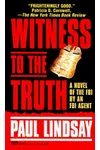
- Witness to the Truth (1992) – The essential starting point that introduces Mike Devlin.
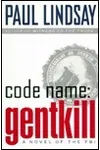
- Code Name: Gentkill (1995) – The second Devlin case, following a serial killer targeting FBI agents.
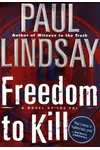
- Freedom to Kill (1997) – The third and final installment focusing on Mike Devlin.
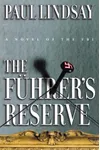
- The Fuhrer's Reserve (2000) – A shift to a new protagonist, Taz Fallon, hunting Nazi treasures.
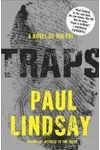
- Traps (2002) – Features bomb expert Jack Kincade and his partner Ben Alton.
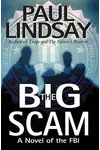
- The Big Scam (2005) – Follows undercover agent Nick Vanko targeting the Brooklyn mob, with supporting appearances from characters in the Devlin books.
The Complete Novels of the FBI in Publication Order
For readers who want to follow the exact sequence in which Paul Lindsay penned his books, the publication order matches the chronological setting of the novels. Lindsay wrote these thrillers over a span of thirteen years, drawing directly from his active-duty experiences as an FBI agent in Detroit. Below is the detailed breakdown of the publication order, showing how the series transitioned from a character-centric trilogy into broader procedural standalones.
1. Witness to the Truth (1992)
This is where it all begins. Introducing Special Agent Mike Devlin, a brilliant but insubordinate agent who has been banished to wiretap duty in Detroit as punishment for his rebellious behavior. When he discovers a Mafia mole operating inside the FBI, Devlin must bypass official channels, risk his career, and work with rookie agent Edgar Livingston to rescue a kidnapped girl and expose the corruption. It is a cynical, fast-paced debut that established Lindsay’s trademark critique of Bureau leadership.
2. Code Name: Gentkill (1995)
Mike Devlin returns in a high-stakes investigation when a serial killer begins targeting and executing active FBI agents. As panic spreads through the ranks, Devlin is tasked with finding the murderer. The pressure is compounded by bureaucratic red tape and interference from self-serving superiors who are more concerned with public relations than agent safety. Devlin is forced to use unorthodox methods to track a killer who seems to know the Bureau's tactics inside and out.
3. Freedom to Kill (1997)
The final book to feature Mike Devlin as the primary protagonist. In this thriller, a ruthless extortionist threatens to poison patients in a Detroit hospital unless a massive ransom is paid. Devlin must navigate a web of blackmails, medical ethics, and standard FBI protocols that hinder rather than help the investigation. The novel provides a satisfying conclusion to Devlin's primary arc as a rebellious street agent.
4. The Fuhrer's Reserve (2000)
Lindsay departs from Detroit and Mike Devlin to introduce a new protagonist, FBI Special Agent Taz Fallon. Fallon is sent on a high-stakes international mission to locate a cache of priceless art masterpieces looted by the Nazis during World War II. The treasure is sought by a dangerous neo-fascist group aiming to fund a new political movement. This book leans more heavily into adventure and espionage than the previous Detroit-based police procedurals.
5. Traps (2002)
This entry shifts focus to a pair of new protagonists: FBI bomb investigator Jack Kincade and his partner, agent Ben Alton. Set in Chicago, the agents are forced to deal with a sophisticated bomber who is holding the city hostage while trying to force the FBI to reopen a cold case involving a child kidnapping. The book is highly praised for its technical details regarding explosives, reflecting Lindsay's research and real-world Bureau experience.
6. The Big Scam (2005)
The final book published under Paul Lindsay's real name. It features Special Agent Nick Vanko, who runs an undercover FBI squad disguised as a seafood business called "Global Fish" in Manhattan. Vanko and his team of misfit agents work to bring down a powerful Brooklyn mob boss. The novel brings back Edgar Livingston (Devlin’s former sidekick) in a supporting role, linking the universe back to the early books and offering a return to the gritty, humorous tone of the original trilogy.
The Noah Boyd Pseudonym and the Steve Vail Books
After a five-year hiatus following The Big Scam, Paul Lindsay returned to the thriller genre under the pen name Noah Boyd. Lindsay wanted to launch a new, highly serialized character-driven project that would appeal to a broader readership. Under this pseudonym, he wrote two highly successful novels featuring a new protagonist, Steve Vail:
- The Bricklayer (2010)
- Agent X (2011) – Also published under the title Last Chance to Die.
Unlike the original FBI series, which features active street agents, Steve Vail is an ex-FBI agent who left the Bureau under a cloud of insubordination and works as a bricklayer in Chicago. However, his unique skills make him indispensable when the FBI faces crises they cannot solve internally. While these books are technically a separate series, they are spiritual successors to the FBI novels, sharing the same authentic tradecraft, cynical attitude toward management, and rebellious hero archetype. A feature film adaptation of The Bricklayer was released in 2024, starring Aaron Eckhart as Vail.
What to Know Before You Start: The Real-Life FBI Background
To fully appreciate the tone of the FBI series, readers should understand the background of the author. Paul Lindsay was not just a novelist; he was a highly decorated FBI Special Agent who served in the Detroit division for twenty years. During his career, he worked on major cases, including the hunt for the Green River Killer, and was key in apprehending Detroit serial killer Benjamin Atkins. Lindsay wrote his first two novels at night while still working as an active-duty agent.
His novels caused significant controversy within the Bureau. Lindsay’s depictions of incompetent supervisors, political infighting, and the frustration of street-level agents angered FBI leadership, leading to internal investigations and threats of disciplinary action. However, this friction is exactly what gives the books their unique realism. When you read a Paul Lindsay novel, you are getting a genuine look at how street agents operate, communicate, and circumvent red tape to get the job done.
Reading Guidance and Standalone Nature
The FBI series does not have complex timeline jumps or prequel novels, making it incredibly straightforward to navigate. Here is some practical advice for readers:
- Can the books be read as standalones? Yes. Each novel has a self-contained plot, a distinct investigation, and a resolution. However, reading the Mike Devlin trilogy (Books 1–3) in order is highly recommended to understand character relationships, particularly the dynamic between Devlin and Edgar Livingston.
- The Big Scam Connection: While The Big Scam focuses on Nick Vanko, Edgar Livingston's presence makes it feel like a loose sequel to the Devlin trilogy. Reading the first three books first will make his character arc more rewarding.
- Tone shift: Be prepared for a shift in setting and tone after Freedom to Kill. The later three books explore different aspects of law enforcement (international art recovery, bomb threats, and deep undercover work) with completely different lead characters.