
Where to Start with the Fifth Millennium Series
The Fifth Millennium is a collaborative post-apocalyptic fantasy universe created by S.M. Stirling, Shirley Meier, and Karen Wehrstein. Set roughly five thousand years after a global collapse, the world features medieval-level technology, subtle, low-powered magic, and rare psionic abilities. Because the series was written by three different authors combining their distinct settings and characters, it is divided into two primary narrative threads that cross over in the later books. You have two main options for diving into this gritty, ground-breaking series.
Option 1: The Publication Order (Recommended)
Reading the books in the order they were published allows you to experience the world as it expanded in real-time, transitioning from S.M. Stirling's solo introduction to the collaborative city-states and political struggles. Under this path, the recommended order is:
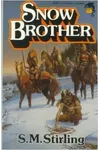
- Snowbrother (1985)
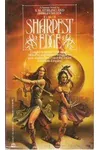
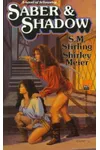
- Saber and Shadow (1992) – Note: Read this revised and expanded edition in place of the original second book, The Sharpest Edge (1986).
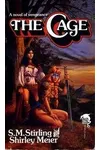
- The Cage (1989)
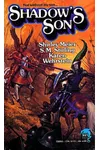
- Shadow's Son (1991)
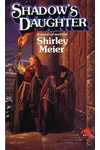
- Shadow's Daughter (1991)
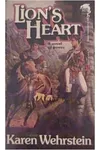
- Lion's Heart (1991)
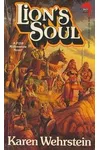
- Lion's Soul (1991)
Option 2: Thread-Based Reading Path
Because the books focus on different protagonist groups, you can split your reading into two major character arcs before they converge:
- The Shkai'ra & Megan Arc: Follows the fierce warrior Shkai'ra and the mercenary Megan Thanesdoom. Read Snowbrother, Saber and Shadow, The Cage, and then the crossover novel Shadow's Son. You can read the companion novel Shadow's Daughter (Megan's backstory) either before or after Shadow's Son.
- The Chevenga / Yeola-e Saga: Follows Fourth Chevenga, a brilliant child-prodigy general destined to lead his nation while facing a prophesied early death. Read Lion's Heart and Lion's Soul. His story intersects with Megan's in the crossover novel Shadow's Son, meaning you will get the most out of the narrative by reading his duology before or alongside Shadow's Son.
The Shkai'ra and Megan Books
This arc represents the core collaboration between S.M. Stirling and Shirley Meier, notable for its groundbreaking inclusion of prominent lesbian protagonists in 1980s fantasy fiction.
- Snowbrother (1985): S.M. Stirling's debut novel introduces Shkai'ra, a young warrior of the nomadic Komarr. Faced with the choice of enslaving a resistant village or facing death, her journey establishes the gritty, uncompromising moral stakes of the Fifth Millennium universe.
- Saber and Shadow (1992): Co-authored by Stirling and Meier, this is the definitive, expanded version of their 1986 novel The Sharpest Edge. It introduces Megan Thanesdoom and the corrupt city of Illizbuah, detailing how she and Shkai'ra form their fierce alliance. It includes new opening chapters and extensive appendices on the languages and cultures of the setting.
- The Cage (1989): Megan and Shkai'ra return to Illizbuah, seeking vengeance against the corrupt rulers who enslaved them, forcing them to navigate complex underworld alliances and high-stakes combat.
- Shadow's Son (1991): A massive crossover written by Stirling, Meier, and Wehrstein. Megan Thane joins the mercenary army of the general Chevenga to rescue her kidnapped son, who has been taken to the besieged city of Arko.
- Shadow's Daughter (1991): A solo novel by Shirley Meier that focuses on Megan's early life, explaining how she grew up in the city and the events that shaped her before she met Shkai'ra.
The Chevenga / Yeola-e Saga
Written solely by Karen Wehrstein, this duology shifts the focus to a democratic nation and its struggle for survival against overwhelming odds.
- Lion's Heart (1991): Introduces Fourth Chevenga, a brilliant warrior-general who must defend his nation, Yeola-e, from invasion. He is a tragic figure, driven by duty but haunted by a prophecy of his own early demise.
- Lion's Soul (1991): The direct conclusion to Chevenga's story, dealing with the aftermath of war, the toll of leadership, and the ultimate resolution of his destiny.
Chronological Caveats and Author Collaborations
Understanding the collaborative nature of the Fifth Millennium is key to enjoying it. The authors did not write a single linear story; instead, they combined their individual world-building notes to create a shared sandbox. S.M. Stirling developed the northern barbarian cultures, Shirley Meier focused on the urban, Middle-Eastern-influenced city-state of Illizbuah, and Karen Wehrstein created the democratic, highly organized society of Yeola-e.
Because of this, chronological order overlaps significantly. Shadow's Daughter serves as a prequel to Megan's journey, meaning it takes place chronologically before The Sharpest Edge / Saber and Shadow, yet it is best appreciated after you are already familiar with Megan's character from The Cage. Similarly, Chevenga's rise in Lion's Heart occurs around the same general era as the events in Illizbuah, culminating in the siege of Arko in Shadow's Son.
What to Know Before You Start
This series is a unique blend of post-pocalyptic science fiction and gritty medieval fantasy. Though the setting is five thousand years in the future, the collapse of modern society has left behind a world that is functionally medieval. Relics of the past—such as references to "Uncle Sam" transformed into a legendary figure of ill-omen—provide subtle nods to our own world. Magic exists but is low-powered, mostly limited to psionic abilities like empathy, telepathy, and telekinesis. The tone is highly realistic, prioritizing survival, military strategy, and complex human relationships over grand magical battles.
Themes and Legacy
The Fifth Millennium series is highly regarded by fans of retro fantasy for its progressive themes, particularly its representation of LGBTQ+ characters. Writing lesbian protagonists as active, capable mercenaries and heroes in the mid-1980s was rare in mainstream speculative fiction. The series also stands out for its sociological and anthropological depth, exploring how language, culture, and religion adapt over thousands of years after the collapse of technological civilization. Rather than focusing on relic-hunting, the stories examine the rise of new feudal systems, nomadic tribes, and early democratic societies, making it a precursor to modern post-apocalyptic fantasy.