


How to Read the Herald Spy Series: Recommended Reading Order
If you want to experience the complete story of Mags, the orphan-turned-spy who revitalized Mercedes Lackey’s legendary Valdemar universe, you cannot simply start and end with the Herald Spy trilogy. Mags' journey is a continuous narrative spanning three distinct subseries. To fully appreciate his evolution, the development of his Mindspeech gifts, and the formation of Valdemar's intelligence network, you should follow his life chronologically. Here is the recommended reading path:
Phase 1: The Collegium Chronicles (Mags' Origins)
Before Mags can become the King's Herald Spy, he must survive his youth. The five-book Collegium Chronicles introduces Mags as a neglected, enslaved child working in a coal mine before being Chosen by his Companion, Dallen. This phase is essential because it establishes his relationships, his unique magic, and the foundational lore of the Collegium. Skip this, and the emotional stakes of the later series will not hit the same way.
- Foundation (2009) — Introducing Mags, his rescue from the mines, and his bumpy integration into the Valdemar Collegium.
- Intrigues (2010) — Mags begins to realize his potential and catches the attention of those who need a eyes-and-ears agent in the city.
- Changes (2011) — The political landscape shifts as Mags navigates the perils of foreign assassins and internal rivalries.
- Redoubt (2012) — Highlighting Mags' training in spycraft under the guidance of the kingdom's mentors.
- Bastion (2013) — The final chapter of Mags' student years, setting up his transition into official adult duties.
Phase 2: The Herald Spy (The Core Trilogy)
This is the main event. Now a full Herald, Mags operates in the shadows of the court alongside his partner (and eventual wife) Amily, the King’s Own Herald. The trilogy shifts the focus from coming-of-age training to high-stakes political intrigue, espionage, and domestic threats. The publication order matches the internal chronology perfectly:
- Closer to Home (2014) — Focuses on Mags establishing his spy network in Haven and protecting the Heralds from early conspiracies.
- Closer to the Heart (2015) — Expands the scope to international borders as Valdemar faces allegations of funding foreign rebellions.
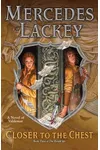
- Closer to the Chest (2016) — Deals with domestic terror and personal vendettas targeting women of the court, culminating Mags and Amily's early adult arc.
Phase 3: Family Spies (The Next Generation)
After the events of The Herald Spy, Mags and Amily settle into their roles as mentors, leaders, and parents. This follow-up trilogy shifts the spotlight to their three talented children, each inheriting unique magical Gifts and finding themselves drawn into the family business of espionage:
- The Hills Have Spies (2018) — Follows their eldest son, Peregrine (Perry), who uses his Animal Mindspeech to investigate mysterious disappearances in the Pelagirs.
- Eye Spy (2019) — Centers on their daughter, Abidela (Abi), as she uncovers a conspiracy using her unique investigative talents.
- Spy, Spy Again (2020) — Focuses on their youngest son, Tory, and his farsight connection with the Crown Prince.
The Evolution of Espionage in Valdemar
One of the most fascinating aspects of the Herald Spy trilogy is how it shows the institutionalization of spycraft within Valdemar. Before Mags, intelligence gathering was informal, decentralized, and often reactive. Through the Herald Spy trilogy, readers witness the creation of the system that later generations of Heralds take for granted.
Mags relies on a network of street urchins, servants, and laborers—people who are normally invisible to the nobility. Amily complements this by coordinating the "Queen's Handmaidens," a network of highly placed noblewomen who gather intelligence within the court. Together, they form a two-tier information network that bridges the lowest and highest echelons of Valdemar society. This structure adds a layer of social commentary to the fantasy setting, highlighting the value of marginalized voices in protecting the realm.
Chronological Order vs. Publication Order in Valdemar
Mercedes Lackey’s larger Valdemar universe spans thousands of years, and she has written prequels, sequels, and midquels in a non-linear fashion for decades. Because of this, readers often debate whether to tackle the entire universe chronologically or by publication order.
For the specific Mags Arc (composed of the eleven books listed above), chronological order and publication order align perfectly. You should read them in the order they were published, starting with Foundation (2009) and ending with Spy, Spy Again (2020). However, if you are looking at the grand timeline of Valdemar, the Mags Arc sits in the middle of the timeline—centuries after the founding of Valdemar (explored in the Founding of Valdemar trilogy) but centuries before the events of the original Heralds of Valdemar trilogy (beginning with Arrows of the Queen).
Reading the entire Valdemar universe in strict chronological order is generally discouraged for newcomers, as it back-loads the most iconic books and forces you to jump between vastly different writing styles and eras. Instead, treating the Mags Arc as a self-contained mega-series is one of the most popular and rewarding ways to experience this world.
What to Know Before You Start
If you are planning to dive into Mags' story, there are a few practical pieces of advice to keep in mind:
- Can you read The Herald Spy as a standalone? Technically, yes—Mercedes Lackey provides enough exposition in Closer to Home to fill in the blanks. However, we strongly advise against it. The depth of Mags and Amily’s relationship, Mags’ trauma from the mines, and his bond with Dallen are all earned over the five books of the Collegium Chronicles. Starting with Closer to Home feels like starting a movie halfway through.
- A slower, cozy pace: Unlike the high-action, magic-heavy style of early Valdemar books (like The Last Herald-Mage), Mags' story is more character-driven and deliberate. It focuses on the day-to-day logistics of the Collegium, political maneuvers, espionage tradecraft, and building a community. Fans often describe it as having a "cozy fantasy" feel.
- Key tie-ins and cameos: Keep an eye out for characters like King Kyril, Weapons Master Alberich, and various teachers at the Collegium. If you have read other Valdemar books, seeing the origins of Valdemar's structured spy network provides wonderful context for the state of the kingdom in later chronological eras.