


How to Start Reading Hercule Poirot
Agatha Christie wrote over 30 novels and dozens of short stories featuring Hercule Poirot, spanning more than half a century. Because most of these mysteries function as standalone cases, you do not need to follow a strict book-by-book chronological sequence. However, choosing the right entry point makes a massive difference in how you experience the evolution of both Poirot and Christie's writing style.
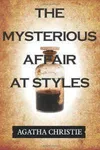
The Classic Starting Point: The Mysterious Affair at Styles
The best place to start is Poirot’s very first case, The Mysterious Affair at Styles (1920). This debut novel introduces Poirot as a Belgian war refugee settling in England, alongside his loyal friend Captain Arthur Hastings. Reading this first provides the foundational setup for Poirot’s detective methods, his relationship with Hastings, and his classic obsession with order, symmetry, and the 'little grey cells.'
Alternative Entry Points for New Readers
If you prefer to dive straight into the absolute peaks of the franchise, you can start with one of Poirot's most famous cases:
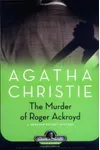
- The Murder of Roger Ackroyd (1926): Famous for its groundbreaking, genre-defining twist. It is best read early in your journey.
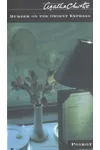
- Murder on the Orient Express (1934): The ultimate train-bound mystery featuring an international cast of suspects.
- Death on the Nile (1937): A lavish, exotic travel mystery that showcases Poirot's deep psychological insight into human nature.
The Golden Rules of Poirot Continuity
While Christie's mysteries are largely self-contained, she occasionally dropped references to past cases or characters that evolved over time. To avoid spoilers and maintain narrative logic, you should keep these essential continuity rules in mind:
The Ultimate Rule: Read Curtain Last
You must always read Curtain: Poirot’s Last Case (1975) at the very end of your reading journey. Written by Christie during World War II but held in a bank vault until the end of her life, Curtain brings Poirot back to the scene of his first case (Styles) for a final, emotionally heavy farewell. Reading this out of order will ruin the ending of the entire series.
Crucial Mini-Orders and Character Links
Several books refer back to previous cases. To get the best experience and avoid spoilers, follow these specific sequences:
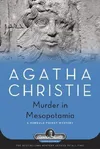
- Read Murder on the Orient Express before Murder in Mesopotamia, as the ending of the former is briefly referenced in the opening of the latter.
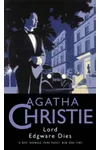
- Read Lord Edgware Dies before After the Funeral.
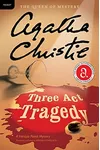
- Read Three Act Tragedy before Hercule Poirot's Christmas.
- Read Mrs. McGinty's Dead before both Hallowe'en Party and Elephants Can Remember, as they share recurring characters and subplots.
- Read Five Little Pigs before Elephants Can Remember.
- Read Cat Among the Pigeons before Hallowe'en Party.
Publication Order vs. Chronological Order
For most readers, the official publication order is the most satisfying path. Trying to read the series in a fictional 'chronological' sequence is highly discouraged. Poirot's age is famously inconsistent; he is already introduced as a retired detective in 1920, yet he continues active investigations into the 1970s. Reading by publication date allows you to enjoy Christie's evolving style as she adapts Poirot to the shifting social realities of the mid-20th century.
The Core Hercule Poirot Novels
Here is the recommended reading sequence for the primary novels written by Agatha Christie, maintaining their general publication order while keeping continuity intact:
- The Mysterious Affair at Styles (1920)
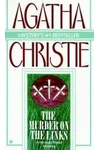
- The Murder on the Links (1923)
- The Murder of Roger Ackroyd (1926)
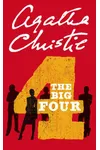
- The Big Four (1927)
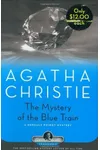
- The Mystery of the Blue Train (1928)
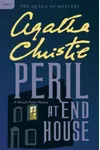
- Peril at End House (1932)
- Lord Edgware Dies (1933)
- Murder on the Orient Express (1934)
- Three Act Tragedy (1934)
- Death in the Clouds (1935)
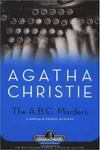
- The A.B.C. Murders (1936)
- Murder in Mesopotamia (1936)
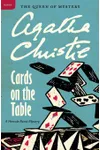
- Cards on the Table (1936)
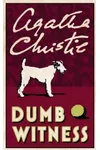
- Dumb Witness (1937)
- Death on the Nile (1937)
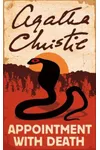
- Appointment with Death (1938)
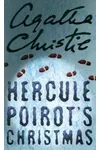
- Hercule Poirot's Christmas (1938)
- Sad Cypress (1940)
- One, Two, Buckle My Shoe (1940)
- Evil Under the Sun (1941)
- Five Little Pigs (1942)
- The Hollow (1946)
- Taken at the Flood (1948)
- Mrs. McGinty's Dead (1952)
- After the Funeral (1953)
- Hickory Dickory Dock (1955)
- Dead Man's Folly (1956)
- Cat Among the Pigeons (1959)
- The Clocks (1963)
- Third Girl (1966)
- Hallowe'en Party (1969)
- Elephants Can Remember (1972)
- Curtain (1975)
Short Stories and Unique Editions
In addition to her novels, Christie wrote numerous short stories featuring Poirot. These are best read via collections to avoid missing individual tales:
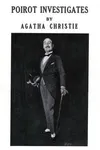
- Poirot Investigates (1924): The earliest collection, heavily featuring Captain Hastings.
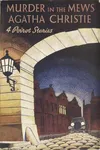
- Murder in the Mews (1937): A collection of four long novellas.
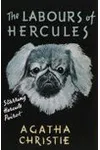
- The Labours of Hercules (1947): A themed collection where Poirot tackles twelve cases inspired by the classical myth.
- Hercule Poirot and the Greenshore Folly: A novella written in 1954 for a church charity, but ultimately expanded into the full-length novel Dead Man's Folly (1956). The original novella was finally published in 2013.
Co-Authored Works, Novelizations, and Continuations
Beyond Christie's main library, the Poirot canon includes official continuation novels and adaptations that fans should know about:
The Charles Osborne Novelization
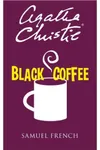
Originally written by Christie as a stage play in 1930, Black Coffee was later officially adapted into a novel by Charles Osborne in 1998 with the permission of the Christie estate. It features Captain Hastings and fits comfortably alongside Christie's early works.
Sophie Hannah's Continuation Novels
Author Sophie Hannah was authorized by the Agatha Christie estate to write brand-new Hercule Poirot mysteries. These are set during the 'interwar' years (between the events of Christie's early novels) and should be read after you have familiarized yourself with Christie's original works:
- The Monogram Murders (2014)
- Closed Casket (2016)
- The Mystery of Three Quarters (2018)
- The Killings at Kingfisher Hill (2020)
- Hercule Poirot's Silent Night (2023)
- The Last Death of the Year (2025)