
The Recommended Reading Order for Inspector O
The Inspector O series is best experienced in its publication order. While the books occasionally jump back and forth in time, the character development of Inspector O, his changing status within the North Korean regime, and the escalating geopolitical landscape build directly from one novel to the next. Reading them in sequence allows you to fully appreciate the subtle shifts in O's character and the complex web of domestic and international politics that surrounds him.
Here is the recommended reading path for the series:
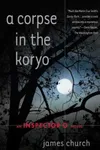
- A Corpse in the Koryo (2006) – The series debut introduces Inspector O of the Ministry of People’s Security. He is ordered to stand on a hill near the Chinese border and photograph a passing car. This seemingly mundane task plunges him into a deadly web of smuggling, international conspiracy, and bureaucratic turf wars between rival ministries, starting with a murder at Pyongyang's Koryo Hotel.
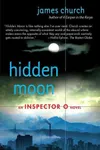
- Hidden Moon (2007) – Returning to North Korea after a mysterious assignment abroad, O is assigned to investigate a bank robbery in Pyongyang. Because bank robberies are officially impossible in the socialist state, O must navigate a surreal case that entangles him with powerful local politicians, Chinese operatives, and British diplomats.
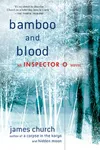
- Bamboo and Blood (2008) – This installment shifts the timeline backward to the winter of 1997, during the heights of the North Korean famine (known as the Arduous March). O travels from the frozen countryside to Geneva, Switzerland, and back, investigating the death of a young woman while navigating high-stakes diplomatic maneuvering and a missing American official.
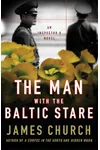
- The Man with the Baltic Stare (2010) – After years of surviving internal conflicts, O is living in self-imposed exile on a remote mountain. He is dragged back to duty to investigate a murder and a high-profile disappearance at a luxury hotel in Macau, putting him in the crosshairs of Chinese triads, North Korean factions, and Western intelligence agencies.
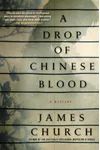
- A Drop of Chinese Blood (2012) – The perspective shifts across the border to Yanji, China, focusing on Major Bing Zong-yuan, Inspector O’s nephew and a Chinese state security officer. A retired Inspector O plays a critical role as an enigmatic mentor and collaborator as Bing investigates the disappearance of a beautiful, mysterious woman amid cross-border tensions.
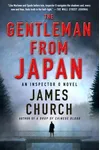
- The Gentleman from Japan (2016) – The final entry takes the action from Yanji to a factory in Barcelona, Spain, where nuclear components are being illicitly manufactured. Inspector O is drawn into a double-blind intelligence game where murders are staged to frame Japanese criminal syndicates, masking a deeper nuclear conspiracy.
Understanding the Chronological Timeline & Caveats
While the publication order is the most satisfying way to watch the characters grow, the internal timeline of the series is notably non-linear. The most prominent shift occurs in Bamboo and Blood, which serves as a prequel of sorts, diving back into the bleak winter of 1997. The rest of the series moves forward in time, tracking O’s progression from an active-duty state investigator to an exiled outcast, and eventually to a retired operative operating from a small office near the Chinese border.
Readers should also be prepared for a setting that is intentionally fluid. James Church does not write conventional police procedurals with neat resolutions. Instead, the novels capture a Kafkaesque reality where facts are malleable, characters speak in metaphors and double-meanings, and the truth is rarely revealed in full. The setting is less about real-world historical dates and more about capturing the heavy, paranoid atmosphere of North Korea's closed society.
Meet Inspector O: A Different Kind of Detective
Inspector O is not your typical literary detective. He is cynical, quiet, and deeply pragmatic, surviving in a totalitarian state by keeping his head down and his eyes open. He has a dry, understated sense of humor and a deep appreciation for good tea and wood ear mushrooms.
O is protected by a unique political shield: his grandfather was a legendary anti-Japanese guerrilla fighter and a comrade-in-arms to the nation’s founders. This lineage makes O nearly untouchable, allowing him to push boundaries, cross powerful bureaucrats, and survive situations that would lead to the execution of ordinary citizens. Despite this heritage, O remains a target of constant surveillance and political plotting, which eventually forces him into retirement and exile in the later books.
About the Author: Who is James Church?
The realism and rich detail of the series stem from its author. "James Church" is a pseudonym for a former Western intelligence officer with decades of experience working in East Asia. His background is evident in the novels' nuanced portrayal of diplomatic negotiations, the inner workings of Asian intelligence agencies, and the stark realities of daily life in North Korea. Church’s writing avoids the caricatures often found in Western media, offering instead a humanized, atmospheric portrait of the people living under the DPRK regime.
Practical Reading Advice for Newcomers
If you are planning to start the Inspector O series, keep these tips in mind:
- Start at the beginning: Although the mysteries themselves are self-contained, the relationships, political alliances, and O's personal life are continuous. Starting with A Corpse in the Koryo is essential to understanding the background of his family, his rivalry with other ministries, and his relationship with his nephew, Major Bing.
- Embrace the ambiguity: Do not expect clear-cut answers at the end of each book. In O's world, cases are rarely closed with a neat trial; instead, they are swept under the rug, bartered away in diplomatic negotiations, or buried under layers of state secrecy. The joy of the series lies in the atmosphere and the subtext.
- Pay attention to the side characters: Figures like Major Bing and O’s elusive supervisors recur throughout the series. Their changing ranks and shifting loyalties mirror the shifting power dynamics of the regions they operate in.