

The Recommended Reading Order for Joe Ryker
For readers looking to dive into the hard-boiled world of Detective Sergeant Joe Ryker, the best approach is to follow the publication order. The series was released in rapid succession during the mid-1970s, capturing the raw, gritty atmosphere of New York City during a time of high crime and urban decay. Because the books function primarily as standalone episodic thrillers rather than a tightly serialized narrative, you won't lose crucial plot points if you skip around, but reading them in order allows you to experience the evolution of the character's relentless drive and the shifting styles of the authors behind the pages.
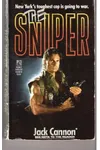
- The Sniper (1974) - The debut novel where Joe Ryker hunts down a highly trained Vietnam War veteran who is picking off targets in NYC with chilling precision. This is the essential starting point for the series.
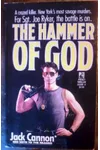
- The Hammer of God (1974) - Ryker faces a religious fanatic dressed in monk robes who is murdering women he deems to be "witches."
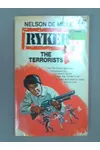
- The Terrorists (1974) - Ryker goes up against a group of radical political extremists plotting a major attack on the city. This book was ghostwritten by Leonard Levinson.
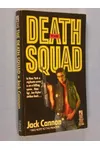
- The Agent of Death / The Death Squad (1975) - An intense hunt for a rogue organization taking the law into their own hands, showing Ryker's complex moral boundaries when dealing with vigilantes.
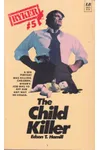
- Child Killer (1975) - Ryker is tasked with tracking down a child murderer. This book was published under the Edson T. Hamill pseudonym and written by Paul Hofrichter.
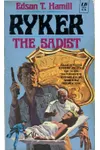
- Ryker the Sadist (1975) - Ryker hunts down a sadistic killer, showcasing the increasingly dark and violent themes of the series. Another entry written by Paul Hofrichter as Edson T. Hamill.
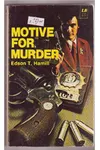
- Motive For Murder (1975) - A classic detective mystery setup where Ryker must untangle a web of lies to find a killer's motive. Published under the Hamill pseudonym.
- Cannibal (1975) - Ryker hunts down a grotesque killer under the neon lights of Manhattan. Originally published as a "Joe Keller" book before later editions changed the protagonist's name to Ryker.
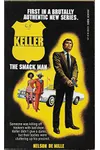
- The Smack Man (1975) - Ryker takes on a deadly, poison-laced heroin ring and the drug lords behind it. Originally featured Joe Keller and was co-authored by Nelson DeMille and Leonard Levinson.
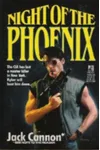
- The Night of the Phoenix (1975) - A high-stakes plot that weaves international espionage and murder together, forcing Ryker to deal with federal authorities. Originally featured Joe Keller.
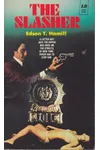
- The Slasher (1976) - The final book in the classic run, putting Ryker on the trail of a serial slasher terrorizing the city's streets. Published under the Edson T. Hamill pseudonym.
Publication Order vs. Chronological Order
Fortunately for readers, there is no need to untangle a convoluted timeline. The chronological order of the Joe Ryker series aligns directly with its publication order. Each novel is set in the immediate timeframe of its release (roughly 1974 to 1976). Joe Ryker's investigations are episodic "monster-of-the-week" style cases. While minor references to his reputation and his abrasive relationship with the NYPD hierarchy carry over, there are no overarching multi-book subplots or massive character arcs that mandate strict continuity. You can pick up almost any book in the series and understand the stakes immediately.
The Shifting Identity: Joe Ryker vs. Joe Keller
One of the most fascinating aspects of this series is its complex publication history, which Nelson DeMille himself has famously referred to as a "bibliographer's nightmare." In the 1970s, DeMille was writing paperback originals for multiple competing publishers. While books like The Sniper and The Hammer of God were published by Leisure Books featuring Detective Joe Ryker, other novels written for Manor Books (specifically The Smack Man, The Cannibal, and The Night of the Phoenix) originally starred a near-identical detective named Joe Keller. When Pocket Books reissued the series in the late 1980s and early 1990s, they consolidated the books under the "Joe Ryker" banner to streamline the character's legacy. This resulted in Keller's name being changed to Ryker in reprints, merging two parallel pulp worlds into one.
Behind the Pseudonyms: Jack Cannon and Edson T. Hamill
The name on the cover of these books has changed almost as much as the protagonist's. DeMille originally wrote his contributions under the pseudonym Jack Cannon. In addition, the rapid-fire nature of the 1970s men's adventure paperback market meant that publishers frequently utilized ghostwriters and shared house names to keep up with demand. While Nelson DeMille created the series and wrote the core novels, other authors contributed significantly:
- Leonard Levinson: Ghostwrote The Terrorists when DeMille fell behind schedule, and co-authored The Smack Man.
- Paul Hofrichter: Wrote Child Killer and Ryker the Sadist under the publisher-owned house name "Edson T. Hamill."
- Edson T. Hamill: The house name used for several of the later volumes (including Motive For Murder and The Slasher) which DeMille did not write, although they are frequently included in complete series lists today due to their inclusion in the original paperback runs.
What to Know Before You Start
Before stepping onto Joe Ryker's beat, modern readers should prepare for a very different style of thriller than Nelson DeMille's later bestsellers. These novels were written as quick, cheap pulp paperbacks, heavily influenced by the gritty, cynical cop films of the era like Dirty Harry and The French Connection. Joe Ryker is not a traditional hero—he is abrasive, uses brutal and highly questionable methods, and frequently clashes with his NYPD colleagues. The tone is raw, uncompromising, and firmly rooted in the mid-1970s. For fans of DeMille's later work, Ryker acts as a fascinating, unpolished blueprint for the author's famous John Corey character, sharing the same sarcastic humor and rebellious streak, but with a much darker, pulpier edge.