

How to Read the John J. Malone Series
The John J. Malone series, written by pioneering mystery author Craig Rice (the pen name of Georgiana Ann Randolph Craig), is best enjoyed in original publication order. While each mystery functions as a self-contained case, the relationships between Malone and his wealthy, thrill-seeking partners-in-crime—Jake Justus and Helene Brand—evolve significantly over time. Reading the books chronologically allows you to follow Jake and Helene’s courtship, their chaotic wedding, and their subsequent married life as they repeatedly drag a reluctant Malone into trouble.
John J. Malone Books in Publication Order
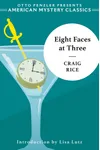
- Eight Faces at Three (1939) – Also published under the title Death at Three, this debut novel introduces John J. Malone, press agent Jake Justus, and wealthy heiress Helene Brand. Malone must defend a young woman accused of murdering her tyrannical aunt in a mansion where all the clocks have mysteriously been stopped at exactly 3:00.
- The Corpse Steps Out (1940) – Malone is hired by a glamorous radio singer who is being blackmailed. When the blackmailer is murdered, Malone finds himself scrambling to clear his client while dodging bullets in Chicago's glitzy nightlife scene.
- The Wrong Murder (1940) – During the pre-Christmas shopping rush in Chicago, the fearless Helene Brand bets Malone that she can commit the perfect murder that he cannot solve. The stakes get dangerously high when a real corpse turns up.
- The Right Murder (1941) – Picking up right after the events of The Wrong Murder, Malone is hired by a mysterious man who is murdered before he can reveal his secret. Malone must dive into the Chicago underworld to finish the case.
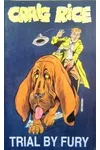
- Trial by Fury (1941) – Jake and Helene head to a quiet town in rural Wisconsin for their honeymoon, only to stumble upon a local senator's murder. When Jake is jailed, Helene quickly summons Malone from Chicago to save them.
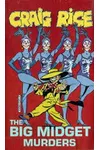
- The Big Midget Murders (1942) – Malone investigates the backstage murder of a wealthy, highly disliked performer at a Chicago nightclub. The case drags the trio through the eccentricities of the theatrical world.
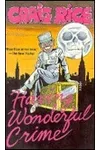
- Having a Wonderful Crime (1943) – Also published as Having Wonderful Crime, this installment sees Jake, Helene, and Malone travel to New York for a vacation, only to immediately stumble upon a headless corpse hidden in a trunk.
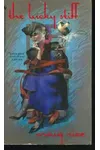
- The Lucky Stiff (1945) – Malone works to clear a nightclub singer who was wrongfully convicted of murder. Believed by the public to have been executed, she is very much alive and plotting revenge with Malone’s help.
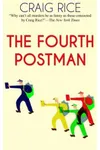
- The Fourth Postman (1948) – Set in a suburban Chicago neighborhood, this novel follows Malone as he investigates a bizarre series of murders where three mail carriers are killed on the exact same route.
- The Double Frame / Knocked for a Loop (1957) – When a prominent anti-vice crusader is found dead in Malone's office, the rumpled attorney becomes the police's primary suspect and must clear his own name. (Note: The Double Frame was the title used for the UK edition).
- My Kingdom for a Hearse (1957) – Malone is hired by a cosmetics queen who has received packages containing pieces of a mannequin. The case takes a lethal turn when actual bodies begin to accumulate.
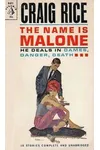
- The Name is Malone (1958) – A collection of ten short stories focusing primarily on Malone's solo adventures, showing his quick-thinking legal mind and chaotic sleuthing style.
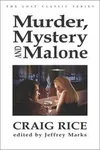
- Murder, Mystery and Malone (1963) – A posthumously released collection of short stories that gathers several of Malone's classic magazine appearances.
- But the Doctor Died (1967) – The final book-length work associated with the series. Published a decade after Craig Rice's death, this spy-thriller hybrid is widely regarded by scholars to have been ghostwritten by another author.
The Essential Crossover: Withers and Malone
For fans of classic mystery team-ups, the collaboration between Craig Rice and Stuart Palmer is a must-read. Palmer was famous for his schoolteacher-sleuth Hildegarde Withers, and the two authors decided to crossover their respective characters. The resulting short stories were collected in The People Vs. Withers and Malone (1963).
This collection features the sharp, respectable, and tea-drinking Hildegarde Withers working alongside the chaotic, hard-drinking Chicago defense attorney. The clash of their opposing personalities and investigative styles makes this one of the most celebrated crossovers in classic detective fiction.
The Continuation Novel
In 1960, author Laurence Mark Janifer (writing under the pseudonym Larry M. Harris) published The Pickled Poodles. This book is a direct continuation of the series featuring Craig Rice’s characters—John J. Malone, Jake Justus, and Helene Brand. While not written by Rice, it captures some of the screwball energy of the original novels and is sought after by series completists.
Adaptations on Screen and Radio
The massive popularity of John J. Malone in the 1940s and 1950s led to several adaptations across other media:
- Radio: Malone starred in a popular radio crime drama titled The Amazing Mr. Malone (also broadcast as Murder and Mr. Malone) which ran from 1947 to 1951. Frank Lovejoy, Gene Raymond, and George Petrie all took turns playing the lead. Notably, Malone's heavy drinking was toned down for the radio waves, and Jake and Helene were omitted.
- Film: Having Wonderful Crime (1945) starred Pat O'Brien as the attorney (renamed Michael J. Malone for the film), alongside George Murphy and Carole Landis. The Lucky Stiff (1949), produced by Jack Benny, starred Brian Donlevy as Malone.
- Mrs. O'Malley and Mr. Malone (1950): This MGM film was based on the crossover short story "Once Upon a Train" by Rice and Palmer. Due to character rights issues, Hildegarde Withers was replaced by a similar character named Mrs. O'Malley, played by Marjorie Main.
What to Know Before You Start
The John J. Malone series represents the peak of screwball mystery. Craig Rice blended the gritty atmosphere of hard-boiled detective fiction with the fast-paced comedy of 1930s cinema. Readers should expect an abundance of alcohol consumption, chaotic situations, and characters who treat police investigations with a surprising amount of levity. It is a nostalgic trip to a bygone era of Chicago noir, written by the very first mystery author ever featured on the cover of Time magazine.