








The Recommended Reading Order: The Integrated Universe
To fully experience the depth of FBI profiler Karen Vail’s character development and her complicated relationships, reading the series in publication order is highly recommended. However, because Vail crosses over extensively with Alan Jacobson's OPSIG Team Black thriller series, the absolute best way to read these books is in an integrated order. This combined list weaves the core profiling mysteries together with the covert operations of OPSIG, showing how Vail's path intersects with operative Hector DeSantos.
Here is the recommended integrated reading order for the Karen Vail and OPSIG Team Black universe:
- False Accusations (2002) – Standalone / Universe Prequel. While not a Karen Vail novel, this psychological thriller introduces characters and elements that establish the atmosphere of Jacobson's thriller universe.
- The Hunted (2001) – OPSIG Team Black #1. This high-octane thriller introduces federal agent Hector DeSantos, who will later become a pivotal figure in Karen Vail’s life.
- The 7th Victim (2008) – Karen Vail #1. Karen Vail makes her explosive debut, working with the FBI's Behavioral Analysis Unit to track down the elusive "Dead Eyes" serial killer in Virginia.
- Crush (2009) – Karen Vail #2. Vail travels to Napa Valley to profile a killer targeting vineyard workers, unaware that her past is catching up to her.
- Velocity (2010) – Karen Vail #3. The direct sequel to Crush. When Vail's boyfriend disappears, she must join forces with Hector DeSantos in a desperate search that cements their partnership.
- Hard Target (2012) – OPSIG Team Black #2. Hector DeSantos takes center stage in a covert intelligence mission, with profiling support and appearances from Karen Vail.
- Inmate 1577 (2011) – Karen Vail #4. Vail heads to Alcatraz to investigate a cold case linked to an elderly inmate, uncovering dark secrets about the island's prison past.
- Fatal Twist (2011) – Karen Vail #4.5. A suspenseful novella where Vail assists on a Washington, D.C. sniper case that collides with her profiling work.
- No Way Out (2013) – Karen Vail #5. Vail travels to London to assist British intelligence in tracking down a brilliant and ruthless fugitive.
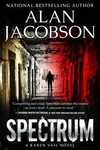
- Spectrum (2014) – Karen Vail #6. A dual-timeline investigation that explores Vail's rookie days as a patrol officer in the NYPD during the mid-1990s alongside a modern-day hunt for the serial killer "Hades."
- The Lost Codex (2015) – OPSIG Team Black #3. Vail and DeSantos team up to decipher an ancient biblical manuscript that holds deadly modern secrets.
- The Darkness of Evil (2017) – Karen Vail #7. Karen is drawn back to Napa Valley when the serial killer she captured years ago escapes, threatening to finish what he started.
- Dark Side of the Moon (2018) – OPSIG Team Black #4. Hector DeSantos and the OPSIG team tackle an international conspiracy, relying on Vail's profiling to anticipate their enemies' moves.
- Red Death (2020) – Karen Vail #8. Vail is called to assist on a high-stakes case that borders on international terrorism, testing her profiling limits.
- Die Trying (2023) – OPSIG Team Black #5. The OPSIG team faces their most dangerous mission yet, with Vail providing crucial intelligence support.
- Only the Killer Knows (2026) – Karen Vail #9. A collection of three psychological suspense stories featuring Vail solving intricate new puzzles.
Core Karen Vail Books: Publication Order Only
If you prefer to skip the international black-ops missions of the OPSIG series and focus exclusively on Karen Vail's FBI profiling cases, you can read her core novels in this straight publication sequence:
- The 7th Victim (2008)
- Crush (2009)
- Velocity (2010)
- Inmate 1577 (2011)
- Fatal Twist (2011, Novella #4.5)
- No Way Out (2013)
- Spectrum (2014)
- The Darkness of Evil (2017)
- Red Death (2020)
- Only the Killer Knows (2026, Story Collection)
Chronological Caveats and Timeline Structure
While the publication order functions smoothly, there are a few timeline quirks that readers should keep in mind:
The Prequel Timelines
Spectrum (Book 6) serves as both a sequel and a prequel. Large portions of the narrative are set in 1995 New York, depicting Karen Vail's rookie NYPD days. While it offers rich backstory on her temperament, ex-husband, and initial experience with serial offenders, it contains spoilers for her career trajectory. It is best enjoyed in its publication position rather than first.
The Napa Valley Duology
Crush and Velocity were originally envisioned by Alan Jacobson as a single, massive novel. Because of their length, they were split into two books. As a result, Velocity picks up immediately after the cliffhanger ending of Crush. You should never read Velocity without having read Crush first.
Practical Reader Advice
Where is the best place to start?
Without a doubt, new readers should start with The 7th Victim. It establishes Karen Vail's entry into the FBI's Behavioral Analysis Unit (BAU) and introduces her complex personal life, including her struggles as a mother and her abusive ex-husband. Jumping in later will lessen the impact of her long-term character development.
Can the books be read as standalones?
While the central mystery of each novel is resolved by the final page, the character dynamics, recurring villains, and Vail's relationship with Hector DeSantos build continuously from book to book. Reading them out of order is possible, but you will miss the emotional weight of her journey.
What to Know Before You Start: Authenticity and Tone
Alan Jacobson spent over seven years researching with the FBI's Behavioral Analysis Unit and real-world profilers, specifically veteran agent Mark Safarik. This dedication gives the Karen Vail series an exceptional level of realism. The tone is gritty, procedural, and intense, detailing the psychological toll of investigating horrific crimes while maintaining Vail's sharp wit and resilience.