














Where Should You Start Reading Alan Jacobson's Books?
If you are new to Alan Jacobson's thrillers, the absolute best starting point is The 7th Victim (2008). This novel introduces FBI profiler Karen Vail, Jacobson's signature protagonist. As Vail hunts a notorious serial killer, readers are treated to a masterclass in psychological suspense that draws heavily on the author's real-world research at Quantico. Starting here establishes the foundational character relationships and personal stakes that carry through the rest of the series.
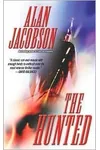
Alternatively, if you prefer high-octane covert operations and military thriller elements over serial killer profiling, you can start with The Hunted (2001). This thriller introduces Hector DeSantos and lays the groundwork for the OPSIG Team Black series. However, since the two series eventually merge into a shared universe, starting with the Karen Vail books is highly recommended for the most rewarding character arcs.
The Connected Universe: Karen Vail & OPSIG Team Black
One of the most exciting aspects of Alan Jacobson's bibliography is how his two flagship series—the Karen Vail FBI Profiler series and the OPSIG Team Black series—intertwine. OPSIG (Operational Support Group) is a covert, off-the-books government unit sanctioned by the President to handle global crises. Hector DeSantos, a key operative, eventually crosses paths with Karen Vail, and Vail herself becomes an integral part of the team in later missions.
To experience this shared universe seamlessly, readers can choose between two main reading orders: the publication order or the integrated crossover order.
Option 1: The Integrated Crossover Order (Recommended)
This reading path blends both series chronologically by publication, ensuring you do not miss any character developments, crossover cameos, or overlapping storylines. In particular, the transitions between Hard Target, No Way Out, and The Lost Codex flow beautifully in this order.
- The Hunted (2001) – OPSIG Team Black #1. Introduces Hector DeSantos and establishes the covert ops team.
- The 7th Victim (2008) – Karen Vail #1. The debut of FBI profiler Karen Vail as she hunts the Dead Eyes killer.
- Crush (2009) – Karen Vail #2. Vail travels to Napa Valley, untangling a dark mystery in wine country.
- Velocity (2010) – Karen Vail #3. The direct sequel to Crush, raising the stakes and personal danger.
- Inmate 1577 (2011) – Karen Vail #4. A historical-tinged mystery tying modern murders to the dark history of Alcatraz.
- Fatal Twist (2011) – Karen Vail #4.5. A fast-paced novella that bridges the gap between Vail's major investigations.
- Hard Target (2012) – OPSIG Team Black #2. A high-stakes political conspiracy involving a presidential candidate.
- No Way Out (2013) – Karen Vail #5. The official crossover novel where Karen Vail's investigation in London brings her face-to-face with the OPSIG team.
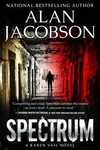
- Spectrum (2014) – Karen Vail #6. A deeply personal case that forces Vail to confront secrets from her childhood in Queens, New York.
- The Lost Codex (2015) – OPSIG Team Black #3. Karen Vail officially joins Hector DeSantos and Aaron Uziel in a race to recover ancient biblical documents.
- The Darkness of Evil (2017) – Karen Vail #7. Vail returns to her profiling roots, dealing with a mastermind serial killer she put away years ago.
- Dark Side of the Moon (2018) – OPSIG Team Black #4. The team goes up against a high-tech threat targeting the nation's critical infrastructure.
- Red Death (2020) – Karen Vail #8. Vail is sent to Hawaii to assist on a case involving an elusive killer and deep-seated cultural tensions.
- Die Trying (2025) – OPSIG Team Black #5. The covert unit faces another global threat in this action-packed installment.
- Only the Killer Knows (2026) – Karen Vail #9. A recent collection of stories and psychological suspense that deepens the Vail lore.
Option 2: Series-by-Series Publication Order
If you prefer to focus on one protagonist at a time before moving to the next, you can read the series individually. However, keep in mind that characters from the other series will appear, which might spoil certain plot points if read out of order.
The Karen Vail FBI Profiler Series
- The 7th Victim (2008)
- Crush (2009)
- Velocity (2010)
- Inmate 1577 (2011)
- Fatal Twist (2011)
- No Way Out (2013)
- Spectrum (2014)
- The Darkness of Evil (2017)
- Red Death (2020)
- Only the Killer Knows (2026)
The OPSIG Team Black Series
- The Hunted (2001)
- Hard Target (2012)
- The Lost Codex (2015)
- Dark Side of the Moon (2018)
- Die Trying (2025)
The Mickey Keller Thriller Series
In 2021, Jacobson introduced a new protagonist with The Lost Girl, kicking off the Mickey Keller series. Keller is an ex-detective turned professional "fixer." When he is hired to manage a highly sensitive, tragic situation involving a widow named Amy Robbins, he finds himself in a morally grey battle of wits. The situation becomes even more complicated with the intervention of Robbins' sister-in-law, FBI Agent Loren Ryder. This series stands separate from the Vail/OPSIG universe, making it a great entry point for readers looking for a fresh story that focuses on street-level detective work, fixer dynamics, and complex moral dilemmas.
Standalones, Novellas, and Short Stories
Beyond his major series, Jacobson has penned standalones and shorter fiction that showcase his signature pacing and forensic detail:
- False Accusations (1999): Jacobson’s standalone debut. This gripping thriller follows Dr. Phillip Madison, a successful orthopedic surgeon who finds himself wrongfully accused of a double homicide after a hit-and-run. It is a classic legal/medical thriller that shows early signs of Jacobson's trademark realistic research.
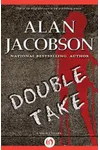
- Double Take (2012): A standalone short story featuring NYPD Lieutenant Carmine Russo and SFPD Inspector Lance Burden as they investigate a bizarre case.
- "12:01 AM" (2020): A short story featured in the anthology Nothing Good Happens After Midnight, edited by Jeffery Deaver. This story captures the suspenseful, ticking-clock energy that Jacobson is known for.
What to Know Before You Start
Alan Jacobson's writing is highly praised for its authenticity, which stems from the author's extensive preparation. To write the Karen Vail series, Jacobson spent years auditing courses and interviewing profilers at the FBI's Behavioral Analysis Unit in Quantico. He has also collaborated with Scotland Yard, the DEA, and various SWAT teams. When you read his books, you are getting a highly accurate depiction of profiling techniques, law enforcement protocols, and forensic science, rather than Hollywood-style embellishments. Keep in mind that his books do not shy away from the dark, psychological realities of serial crime, making them intense but deeply rewarding reads for true thriller fans.