







How to Read the Kate Fansler Series
For readers diving into the cerebral world of Kate Fansler, the recommended reading path is simple: follow the publication order. Because the books were written and published sequentially, Kate's personal life, her evolving relationships, and the shifting landscape of feminist academia develop chronologically. Reading the books out of order can spoil key character milestones, such as her marriage to assistant district attorney Reed Amhearst or her changing relationship with Columbia University (and the wider academic establishment).
The Kate Fansler Books in Publication Order
Below is the complete bibliography of the series. While the series consists of 14 core novels, a collection of short stories published in 1997 brings the total number of books in the Kate Fansler universe to 15.
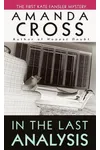
- In the Last Analysis (1964): This Edgar Award-nominated debut introduces Kate Fansler, a charismatic English literature professor at a prestigious New York university. When a student is murdered on a psychoanalyst's couch after Kate recommended him, she must use her literary acumen to solve the crime. This book also introduces Reed Amhearst, the assistant D.A. who becomes a major figure in Kate's life.
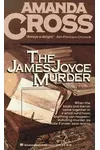
- The James Joyce Murder (1967): Kate spends a summer in rural Massachusetts cataloging the papers of a deceased publisher, only for a neighbor to be found dead. The plot is heavily layered with references to James Joyce's Dubliners.
- Poetic Justice (1970): Set against the backdrop of university politics and student protests, this mystery revolves around the poetry of W.H. Auden. By the end of this novel, Kate and Reed decide to get married.
- The Theban Mysteries (1971): Kate returns to the classroom, this time teaching a seminar on Sophocles's Antigone at her old private girls' school in New York, which leads to a tragic family mystery.
- The Question of Max (1976): Kate is asked to act as a literary executor for a deceased writer, leading to a mystery that challenges her ideas about class, gender, and friendship.
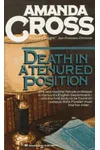
- Death in a Tenured Position (1981): Winner of the Nero Award, this novel is one of the most overtly feminist in the series. Kate investigates the death of the first tenured female professor in Harvard's English department, exposing deep-seated institutional misogyny.
- Sweet Death, Kind Death (1984): Kate looks into the supposed suicide of a brilliant historian and academic who was exploring the concept of aging and rebirth for women.
- No Word from Winifred (1986): Kate investigates the disappearance of an independent woman who chose a quiet life instead of chasing academic glory in the shadow of a famous writer.
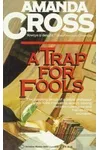
- A Trap for Fools (1989): When a widely disliked professor is pushed out of a university window, Kate is asked to investigate to keep the campus from erupting into scandal.
- The Players Come Again (1990): Kate is hired to write a biography of the wife of a famous modernist writer, uncovering secrets about who actually wrote the author's masterpiece.
- An Imperfect Spy (1995): Set at a law school, Kate investigates the suspicious death of a professor's wife while navigating themes of institutional corruption and gender bias.
- The Collected Stories of Amanda Cross (1997): The 15th book in the Fansler universe. This volume gathers ten intellectual, literary short stories, nine of which feature Kate Fansler solving smaller mysteries.
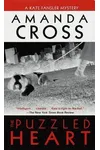
- The Puzzled Heart (1998): In a rare action-oriented plot, Reed Amhearst is kidnapped by political opponents who want to force Kate to cease her public feminist activism.
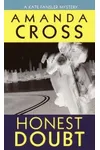
- Honest Doubt (2000): Kate is hired by an investigator who dislikes both feminism and academia to help solve a murder at a literary conference.
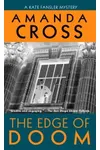
- The Edge of Doom (2002): The final novel in the series. Kate's personal history comes to the forefront as a mysterious stranger forces her to uncover secrets about her own family.
A Crucial Note on Database Discrepancies and Book Order
If you search for the series online or look at older catalog databases, you may run into a common chronological mix-up. Some listings erroneously place A Trap for Fools in 1998 and order it after An Imperfect Spy. In reality, A Trap for Fools was published in 1989, filling the chronological gap between No Word from Winifred (1986) and The Players Come Again (1990). To experience Kate's character arc as Carolyn Gold Heilbrun intended, make sure to read A Trap for Fools ninth, right after No Word from Winifred.
Where to Start Reading
For most readers, the best starting point is the first book, In the Last Analysis (1964). It establishes Kate's personality, her intellectual sleuthing style, and her partnership with Reed Amhearst. However, if you are looking for a standalone novel that showcases the series' famous academic satire and sharp feminist critique at its peak, the Nero Award-winning Death in a Tenured Position (1981) is an excellent alternative starting point. It functions beautifully as a standalone look into the politics of Harvard's English department during the late 20th century.
What to Know Before You Start
The Kate Fansler mysteries are "cozy" in the sense that they lack graphic violence, but they are highly intellectual. Carolyn Gold Heilbrun wrote these books under the pseudonym Amanda Cross to protect her tenure as a Columbia University professor. As a result, the books are deeply autobiographical in their academic settings. Do not expect fast-paced action or forensic science; instead, Kate solves crimes through literary analysis, deep conversations, and sharp dialogue. Her relationship with Reed Amhearst is also unconventional: even after they marry, Kate maintains her fierce independence, refusing to take his name or wear a wedding ring, keeping their lives beautifully distinct.