





How to Read the Kate Fansler Series: Recommended Reading Path
If you are planning to join Kate Fansler on her intellectual and academic investigations, the best way to read Amanda Cross's novels is in their original publication order. While the murder mysteries in each book are self-contained, reading them chronologically allows you to watch the characters grow, see relationships evolve, and trace the history of feminist thought from the 1960s to the early 2000s.
As Carolyn Gold Heilbrun (writing under her pen name, Amanda Cross) was a pioneer in academic feminism, she wove contemporary societal shifts directly into her mysteries. Kate Fansler starts as a single, childless professor at a traditional university and matures over the course of four decades, adjusting to the changing waves of feminism, marriage, and academic politics. Starting from the beginning gives you the full, rich context of this journey.
The Publication Order of Kate Fansler Books
Here is the list of all 14 novels featuring Kate Fansler in their recommended reading order:
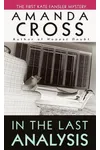
- In the Last Analysis (1964) - The brilliant debut introducing Kate Fansler as she investigates a student's murder linked to a close psychoanalyst friend.
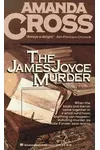
- The James Joyce Murder (1967) - Set in a rural retreat where Kate sorts through the papers of a deceased publisher, only for a neighbor to be found dead.
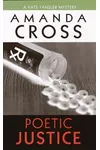
- Poetic Justice (1970) - Rich with the poetry of W.H. Auden, this book plunges Kate into intense university politics during student protests.
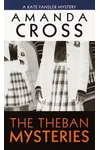
- The Theban Mysteries (1971) - Kate returns to her alma mater, a private girls' school in New York, to teach Antigone, leading to a clash over the Vietnam War draft and a suspicious death.
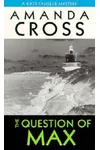
- The Question of Max (1976) - A country estate setting where Kate looks into the death of a writer and the secrets of her aristocratic colleague, Max Reston.
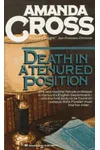
- Death in a Tenured Position (1981) - Also published as Death in a Tenured Post in the UK, this Nero Award-winning novel follows Kate's investigation of the mysterious death of Harvard's first tenured female English professor.
- Sweet Death, Kind Death (1984) - Set at a prestigious women's college, Kate investigates the supposed suicide of a prominent middle-aged historian.
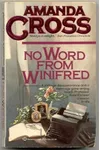
- No Word From Winifred (1986) - Kate investigates the disappearance of Winifred, an honorary niece of a late, famous English novelist.
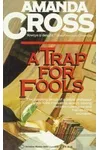
- A Trap for Fools (1989) - When a widely disliked professor is pushed out of a university window, Kate is asked to investigate amidst rising campus racial and social tensions.
- Players Come Again (1990) - Kate is hired to write a biography of the wife of a famous modernist author, uncovering a collaborative literary secret.
- An Imperfect Spy (1995) - Set at a conservative law school, this entry explores institutional sexism and a mysterious woman working behind the scenes.
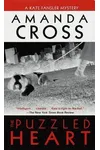
- The Puzzled Heart (1998) - A deeply personal case where Kate's husband, Reed Amhearst, is kidnapped by political extremists aiming to force Kate into renouncing her feminist beliefs.
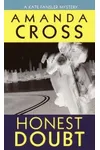
- Honest Doubt (2000) - Kate teams up with private investigator Estelle "Woody" Woodhaven to solve the murder of a tyrannical Tennyson scholar.
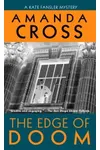
- The Edge of Doom (2002) - The final novel in the series, where a man claiming to be Kate's biological father approaches her, forcing her to confront her own family history.
Chronological Caveats and Publication Discrepancies
While the publication order is straightforward, there are a few minor discrepancies in digital databases and library catalogs that can confuse readers. Most notably, A Trap for Fools is sometimes listed with a publication date of 1998 instead of its original 1989 release. This error shifts it down the reading order list in some automated catalogs, placing it after An Imperfect Spy. For the correct narrative flow, make sure to read A Trap for Fools before Players Come Again.
Additionally, No Word From Winifred was published in late 1986 in some markets and early 1987 in others, though this does not affect its relative order in the series. Following the list above ensures that Kate's relationship with her husband, Reed Amhearst (who starts as an assistant district attorney in the first book), develops naturally.
Short Stories, Anthologies, and Companion Works
Beyond the 14 core novels, Amanda Cross penned several short stories that were initially published in multi-author anthologies before being compiled into a single volume. If you want to read these shorter, nonviolent puzzles, look for The Collected Stories of Amanda Cross (1997).
This collection includes ten stories, nine of which feature Kate Fansler. The remaining story, "The Baroness," is Cross's only non-Fansler mystery. The short stories originally appeared in the following notable anthologies:
- Female Sleuths (1993)
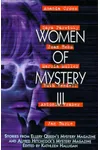
- Women of Mystery II (1994)
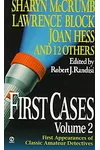
- First Cases, Volume 2 (1997)
- Canine Crimes (1998)
- Women of Mystery III (1998)
- Malice Domestic 8 (1999) - features the story "My Dinner with Aunt Kate"
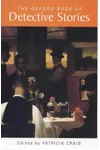
- The Oxford Book of Detective Stories (2000)
Because these stories are standalone puzzles, they can be read at any point in your journey, though they are best enjoyed after you have established a familiarity with Kate and Reed in the early novels.
What to Know Before You Start
Amanda Cross's mysteries are highly intellectual, academic, and dialogue-driven. You will not find gritty action sequences, high-speed chases, or graphic violence here. Instead, Kate Fansler solves crimes through sharp conversation, deductive reasoning, and literary analysis. The novels are filled with references to classic literature, poetry, and academia, reflecting Carolyn Gold Heilbrun's real-life career as the first tenured female English professor at Columbia University.
If you are looking for a starting point, In the Last Analysis is the natural beginning. However, if you want to sample the absolute peak of the series' social satire, Death in a Tenured Position is widely considered the best standalone entry. It offers a scathing, witty critique of Harvard University's treatment of women and won the Nero Award in 1981.