





The Recommended Lindsay Gordon Reading Path
If you want to dive into Val McDermid's pioneering crime fiction, the best path is simple: read the Lindsay Gordon series in publication order. Because the character's personal life, career struggles, and relationships evolve chronologically from book to book, reading them out of sequence will spoil major character developments and shifts in her status.
Fortunately, the chronological timeline matches the publication order exactly. The only challenge readers face is tracking down the books under their different international titles. Below is the recommended sequence to follow Lindsay's journey from a cynical freelance journalist in the late 1980s to a seasoned investigator in the early 2000s.
Lindsay Gordon Books in Order
The series consists of six distinct novels. Here is a detailed breakdown of each book, their plot lines, settings, and alternative titles:
1. Report for Murder (1987)
In her debut outing, Lindsay is hired to cover a high-profile fundraising gala at an elite, traditional girls' boarding school in Derbyshire. The atmosphere turns dark when the star performer—celebrated cellist Lorna Smith-Couper—is found garrotted with her own cello strings. When Lindsay's close friend, a housemistress at the school, is accused of the crime by the police, Lindsay teams up with a playwright and school alumna named Cordelia to search for the truth. This book marks a watershed moment in British crime writing, introducing one of the UK's first openly lesbian detectives.
2. Common Murder (1989)
Set against the backdrop of late-1980s political protests, Lindsay's second case takes place at a women's peace camp protesting military expansion. When Rupert Crabtree, a local solicitor leading a campaign to evict the protestors, is found murdered on the camp grounds, suspicion immediately falls on the activist women. The stakes become deeply personal when Lindsay's ex-lover is accused of the murder. As Lindsay tries to report on the events, she must navigate her past feelings and search for the real killer while dealing with escalating hostility against the camp.
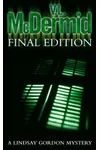
3. Final Edition (1991)
Also published as: Open and Shut / Deadline for Murder
Returning to the UK after a period in Italy, Lindsay finds her personal life shattered when she discovers her partner has moved on. Her focus is quickly diverted when a former colleague is imprisoned for the murder of one of Lindsay's ex-lovers. Convinced that the police have jailed the wrong person, Lindsay launches a dangerous investigation of her own, digging into a web of blackmail, stolen documents, and journalistic corruption that threatens to destroy her career.
4. Union Jack (1993)
Also published as: Conferences Are Murder
This installment places Lindsay at a bustling trade union conference in Sheffield. While dealing with old acquaintances and the intense politics of the union movement, Lindsay clashes with Tom Jack, a powerful and highly corrupt union leader. When Tom Jack falls to his death from the window of Lindsay's tenth-floor hotel room, she becomes the primary suspect in a murder investigation. To save herself from prison, she has to expose the underbelly of union politics and locate the true killer.
5. Booked for Murder (1996)
Nominated for a Lambda Literary Award, this book takes readers inside the highly competitive and cutthroat world of London publishing. Penny Varnavides, a bestselling author of teen fiction, dies in what is initially ruled a tragic accident. However, Lindsay discovers that Penny was killed using a highly specific method described in the manuscript of her unpublished novel. With only three people having access to the draft—Penny's editor, her agent, and her ex-girlfriend—Lindsay must determine which of them turned fiction into reality.
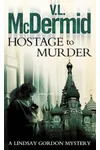
6. Hostage to Murder (2003)
Following a seven-year publishing gap, the final novel finds Lindsay jobless and struggling in Glasgow. She forms an uneasy partnership with Rory McLaren, an ambitious young freelance journalist. What starts as an investigation into local political corruption takes a dramatic turn when the stepson of a wealthy local car dealer is kidnapped. Lindsay's search for the boy drags her from the streets of Glasgow into a dangerous, high-stakes rescue operation in St. Petersburg, Russia, testing her survival skills to the absolute limit.
What to Know Before You Start
Before diving into the series, it is helpful to understand the context in which these books were written. Val McDermid, drawing from her own background as a socialist feminist journalist from Fife, created Lindsay Gordon in the mid-1980s as a direct response to the lack of feminist and queer representation in British crime fiction. Influenced by American authors like Sara Paretsky, McDermid wanted to write a realistic, gritty female sleuth who challenged the status quo.
Because the books span a sixteen-year publication period, they also serve as a fascinating cultural time capsule. You will see Lindsay navigate the Thatcher era, trade union struggles, the peace movement, and the evolution of technology and media from 1987 to 2003. Her identity as a lesbian is treated matter-of-factly, which was highly progressive for the era and helped pave the way for modern queer crime fiction.
Navigating the Publication History and Alternate Titles
One of the most confusing aspects of collecting the Lindsay Gordon books is the overlapping and duplicate titles. Depending on whether you are reading UK or US editions, several books have completely different names. Specifically:
- Book 3: Originally published as Final Edition in 1991, this novel has also been released under the titles Open and Shut and Deadline for Murder. Some databases list a 1997 publication date for Final Edition, which refers to later reissues or US releases, but the text is identical to the 1991 novel.
- Book 4: Originally titled Union Jack in 1993, this book was renamed Conferences Are Murder for certain international editions to avoid confusion or to sound more descriptive of its trade union conference setting.
To ensure you do not accidentally purchase the same novel twice under different titles, always double-check the character name and publication details. Reading them in their original release order (1987, 1989, 1991, 1993, 1996, and 2003) is the absolute best way to experience the narrative progression.
The Evolution of Lindsay Gordon
Over the course of the six novels, Lindsay Gordon undergoes a significant transformation. In Report for Murder, she is introduced as a highly cynical, struggling freelance journalist who is relatively raw and reactive. She is deeply committed to her socialist and feminist principles, which frequently clash with the establishments she investigates. As the series progresses, her career takes her through the highs and lows of the British media landscape, leading to periods of burnout, financial hardship, and relocation.
Her personal life is similarly turbulent. Unlike many traditional detectives who remain static, Lindsay's relationships grow, change, and end. The impact of her investigations, combined with the emotional toll of her personal losses, shapes her into a more mature, albeit still sharp-tongued, investigator by the time of Hostage to Murder. This realistic character arc is a key reason the series remains a favorite among fans of character-driven mystery fiction.
No Crossover Connections
Readers often wonder if Lindsay Gordon crosses paths with Val McDermid's other famous characters, such as DCI Karen Pirie, Kate Brannigan, or Tony Hill and Carol Jordan. The answer is no: Lindsay Gordon's series is entirely self-contained. While all these characters exist within McDermid's signature dark, atmospheric style, they operate in separate narrative universes. You do not need to read any of McDermid's other series to fully enjoy and understand Lindsay's story.