

The Recommended Reading Order for Little Dolphin
For young readers diving into the adventures of Urchin Bay, the best path forward is the standard publication order. While each book is a self-contained story that can easily be enjoyed as a standalone, reading them in order helps children build familiarity with the recurring cast of characters and the marine setting of Urchin Bay.
The series consists of six core illustrated books published between 2004 and 2005 by Hodder Children's Books. Below is the complete reading list in order:
- Hattie's New House (2004) - Little Dolphin and his friend Milo help Hattie the hermit crab find a new shell after a slick shark named Vinnie tricks her into giving up her old one.
- Milo's Big Mistake (2004) - During a game of hide-and-seek, Milo gets trapped inside a dark shipwreck, forcing Little Dolphin to seek help from Cornelius, the grumpy eel.
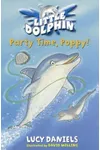
- Party Time, Poppy! (2004) - Poppy the spinner dolphin worries her friends have forgotten her birthday, unaware that they are secretly planning a surprise underwater party.
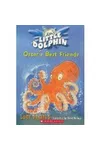
- Oscar's Best Friends (2004) - Oscar the octopus shows off his tricks, but when new friends arrive, feelings of jealousy and exclusion arise, teaching the group about friendship and inclusion.
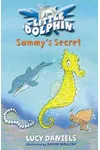
- Sammy's Secret (2005) - Sammy the seahorse and the gang embark on a search for a lost pearl necklace to cheer up Milo's mother.
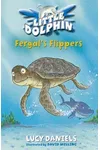
- Fergal's Flippers (2005) - The ocean friends participate in the Great Underwater Race, only to discover that some competitors are not playing by the rules.
Understanding the Continuity and Setting
The entire series is set in the vibrant ecosystem of Urchin Bay, featuring coral reefs, shipwrecks, and diverse marine life. Because the books are geared towards early readers transitioning to short chapter books (typically ages 6 to 8), the narrative continuity is very light. You do not need to worry about cliffhangers or complex multi-book plots. If a child picks up book four before book one, they will not feel lost.
However, starting with Hattie's New House is highly recommended as it introduces the key dynamics between Little Dolphin, Milo, and the secondary characters like Hattie. The gentle environmental lessons and cooperative problem-solving themes develop naturally across the series, making it a wonderful tool for teaching empathy and teamwork.
Behind the Pen Name: Who is Lucy Daniels?
If the name Lucy Daniels sounds familiar, it is because it is a collective pseudonym created by the British packager Working Partners and American author Ben M. Baglio. Baglio, born in 1960, is the mastermind behind other highly successful children's franchises such as Animal Ark and Dolphin Diaries.
To produce the volume of animal-centric stories kids loved in the late 90s and early 2000s, Baglio worked with a team of talented ghostwriters in the UK under the shared Lucy Daniels brand. While Animal Ark dealt with land-based veterinary adventures and Dolphin Diaries focused on a human family researching marine biology, Little Dolphin was created as a simpler, fully animal-perspective series for a slightly younger demographic.
Little Dolphin vs. Dolphin Diaries
Parents and educators often confuse Little Dolphin with Dolphin Diaries since both were published under the Lucy Daniels pen name around the same era. Here is how to tell them grandparent and child apart:
- Little Dolphin: Geared towards ages 6–8. The protagonist is an actual dolphin living in a stylized animal society in Urchin Bay. Features heavy illustrations by David Melling and shorter, simpler sentence structures.
- Dolphin Diaries: Geared towards ages 8–12. The protagonist is a human girl, Jody McGrath, who travels the world on a research vessel with her marine biologist parents. The stories are longer, text-heavy, and follow a continuous timeline across the globe.
If your young reader is just starting to build confidence with chapter books, start with Little Dolphin. Once they are ready for longer books with more complex themes, they can smoothly transition to the world of Dolphin Diaries.