





How to Read the Lone Wolf Books in Order
Before Simon Templar (The Saint) or modern heist capers took over pop culture, there was Michael Lanyard: the Lone Wolf. Created by Louis Joseph Vance in 1914, Lanyard is a suave, English-born orphan who grew up in the underbelly of Paris to become a master jewel thief. His adventures take him from high-society heists to international espionage during World War I, eventually leading him to reform and become a private investigator. With his sharp wit, strict moral code, and knack for escaping tight spots, he remains one of pulp fiction's most enduring characters.
Because the books follow a linear progression in Lanyard's life—covering his crime years, his wartime service, and eventually the introduction of his family—the best way to experience the series is in publication order. Below is the recommended reading path for the entire Lone Wolf saga.
The Recommended Reading Order
- The Lone Wolf (1914): The definitive starting point. This origin story details Lanyard's training under his mentor Bourke in Paris, his rise to infamy, his clash with a sinister gang called "The Pack," and his initial path toward redemption after meeting Lucy Shannon.
- The False Faces (1918): Set against the backdrop of World War I, this novel transitions Lanyard into a master spy. He escapes No Man's Land to help the Allies dismantle a German espionage network run by his nemesis, Karl Ekstrom.
- Alias the Lone Wolf (1921): Trying to retire to the South of France under the alias Monsieur Duchemin, Lanyard's quiet life is shattered when he rescues a woman from bandits, pulling him right back into danger.
- Red Masquerade (1921): Subtitled "Being the Story of the Lone Wolf's Daughter," this installment centers on Lanyard's past catching up with him. A vengeful Russian prince targets Lanyard's daughter, forcing him to navigate a web of high-society deception.
- The Lone Wolf Returns (1923): Lanyard attempts to stay on the straight and narrow, but blackmailers and rivals coerce him into returning to his jewel-thief roots for one more high-stakes job.
- The Lone Wolf's Son (1931): This novel introduces Maurice Lanyard, the son Michael never knew he had. Together, father and son must solve a mystery while clearing their names of police suspicion.
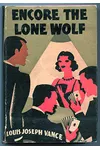
- Encore the Lone Wolf (1933): The spotlight shifts largely to Maurice Lanyard as the protagonist. Maurice takes center stage to retrieve a collection of stolen family jewels and outsmart a ruthless gang.
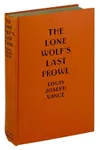
- The Lone Wolf's Last Prowl (1934): Published posthumously after Vance's death in 1933, this is the final original book. Lanyard travels to South America and is forced to investigate a series of shipboard jewel thefts and a sudden murder.
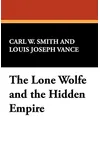
- The Lone Wolf and the Hidden Empire (1947): Written by Carl W. Smith and published by Whitman Publishing, this authorized movie tie-in follows Lanyard in a pulp-adventure format that capitalized on the popularity of the 1940s films.
Understanding the Series Structure and Character Arc
The Lone Wolf books can be split into three distinct eras, charting Michael Lanyard's evolution from a criminal mastermind to a patriotic agent and, finally, a family man:
- The Rogue Era (1914): Focused purely on Lanyard's criminal exploits, master thievery, and his struggles to break free from his Parisian past.
- The Espionage Era (1918–1921): Influenced heavily by World War I, these novels transition Lanyard into a covert operator and spy. His skills are repurposed for national defense and survival.
- The Family and Legacy Era (1921–1934): These later books dive into Lanyard's attempt to settle down, introducing his daughter and later his son, Maurice, who eventually takes up the mantle in Encore the Lone Wolf.
Chronological Order vs. Publication Order
There is no need to rearrange the books into a separate chronological order. The publication order perfectly mirrors Lanyard's aging process, his changing roles, and the historical periods (such as World War I) during which the books were written. Reading them out of order can ruin character developments, such as his transition away from crime or the surprising introduction of his children.
The Carl W. Smith Tie-in and Series Continuity
Readers should note that The Lone Wolf and the Hidden Empire (1947) was not written by Louis Joseph Vance. Published more than a decade after Vance's death, this book was written by Carl W. Smith as a tie-in for the highly successful Columbia Pictures film series starring Warren William. While it features Lanyard, the tone leans closer to standard mid-century pulp mystery rather than Vance's original, atmospheric prose. It is best treated as a fun, standalone companion piece rather than a direct continuation of the main narrative arc.
Practical Reader Advice
If you want to dive into the series, here are a few things to keep in mind:
- Start at the beginning: Unlike many classic mystery series where books can be read completely out of order, The Lone Wolf (1914) is mandatory. It establishes Lanyard's moral code, his backstory, and his relationships which are referred to throughout the rest of the series.
- Tone and Pacing: Vance's style is fast-paced, theatrical, and typical of early 20th-century pulp and sensation fiction. The prose can feel wordy by modern standards, but the action sequences and suspense hold up remarkably well.
- Spelling Variations: Depending on the vintage printing or database you look at, Encore the Lone Wolf is occasionally printed as Encore the Lone Wolfe. Rest assured, these are the exact same book.
- Separating Books from Films: Columbia Pictures produced 24 films based on the Lone Wolf between 1917 and 1949. While entertaining, these movies often strayed far from the plots of the novels, frequently changing characters and simplifying Lanyard's complex backstory. Treat them as separate universes.