









The Recommended Reading Path for the Lonely Lords
For readers diving into the emotionally rich Regency world of Grace Burrowes, the primary question is where to start. The safest and most rewarding path is to read the Lonely Lords series in publication order. While each book is designed to work as a standalone historical romance, the recurring cast, family dynamics, and overlapping character arcs build a shared community that is best appreciated sequentially.
Reading the books in order allows you to follow the complex relationships of the Haddonfield and Grey brothers, as well as the Alexander family, without encountering minor spoilers regarding their marriages, reconciliations, or family secrets. Below is the complete publication order of the main series, including the key subtitles and publication years for each novel.
Lonely Lords Publication Order
- Darius: Lord of Pleasures (2013) — Follows Darius Lindsey, a man carrying deep family grief who enters a scandalous arrangement that leads to true passion.
- Nicholas: Lord of Secrets (2013) — Centered on Nicholas Haddonfield, a viscount entering a marriage of convenience with Leah Lindsey to honor his father's final wishes.
- Ethan: Lord of Scandals (2013) — Explores the story of Ethan Grey, Nicholas's estranged half-brother, who must navigate family scandal and unexpected love.
- Beckman: Lord of Sins (2013) — Focuses on Beckman Haddonfield, Nicholas's brother, as he confronts his past mistakes and finds redemption.
- Gabriel: Lord of Regrets (2013) — Follows Gabriel Wendover, the Marquess of Hesketh, who has spent two years in hiding after being presumed dead.
- Gareth: Lord of Rakes (2013) — The first of the Alexander brothers' stories, focusing on Gareth's journey through emotional vulnerability.
- Andrew: Lord of Despair (2013) — The second Alexander brother story, navigating grief, healing, and romantic redemption.
- Douglas: Lord of Heartache (2014) — The third Alexander brother story, detailing Douglas's tender efforts to heal a wounded heart.
- David: Lord of Honor (2014) — The final Alexander brother story, focusing on honor, duty, and deep affection.
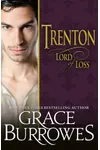
- Trenton: Lord of Loss (2014) — A poignant tale of grief, recovery, and finding hope after devastating loss.
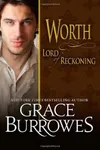
- Worth: Lord of Reckoning (2014) — A story of accountability, family duty, and passionate romantic healing.
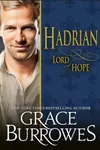
- Hadrian: Lord of Hope (2014) — Follows Hadrian Bothwell's search for peace, introducing key side characters who transition into future works.
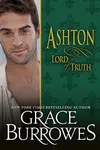
- Ashton: Lord of Truth (2016) — Centered on Ashton "Fen" Fenwick, who first appeared as a supporting character in Hadrian's novel.
Chronological Timelines and the Alexander Brothers Caveat
While publication order is the simplest way to tackle the series, the chronological timeline of Grace Burrowes' Regency universe is famously complex. Burrowes herself has referred to her interconnected series as a "plate of spaghetti." If you prefer to track the absolute flow of events, you will encounter significant timeline overlaps.
The most notable chronological quirk involves books 6 through 9, which center on the Alexander brothers (Gareth, Andrew, Douglas, and David). Burrowes wrote these manuscripts early in her writing career before she began publishing. Chronologically, the events in the Alexander brothers' books take place prior to the events of several novels in her famous Windham series, even though they were published years later as part of the Lonely Lords. Furthermore, the early books in the series (particularly Darius and Nicholas) have overlapping timelines where events occur simultaneously, providing different perspectives on the same social season.
The Windham and True Gentlemen Connections
The Lonely Lords series does not exist in a vacuum; it is a spin-off and companion to other major series by Grace Burrowes. Understanding these connections enhances the reading experience:
- The Windham Series: This is the parent series. Characters from the Windham family cross over frequently into the Lonely Lords. For instance, Darius Lindsey makes an important cameo appearance in the Windham book The Virtuoso. Reading the Windham series first (beginning with The Heir) provides helpful background context on the British nobility circles featured in Lonely Lords, though it is not strictly mandatory.
- The True Gentlemen Series: This series is bridged by the companion book The Duke's Disaster (published in 2015). Although frequently categorized as Book 14 of the Lonely Lords, The Duke's Disaster functions primarily as a prequel (Book 0.5) to the True Gentlemen series, establishing character arcs and thematic threads that carry directly into Tremaine's True Love.
Practical Reader Advice
If you are overwhelmed by the sheer volume of books, here are a few tips to simplify your journey:
Can they be read as standalones? Yes. Each book features a distinct couple and concludes with a definitive happily-ever-after. You will not be left with unresolved romantic cliffhangers if you read them out of order. However, you will miss the gradual progression of family reconciliations, particularly the complex sibling rivalry and eventual healing between Nicholas Haddonfield, Beckman Haddonfield, and their estranged half-brother Ethan Grey.
Best Starting Point: If you want to sample the series, start with Darius: Lord of Pleasures. It establishes the tone, prose style, and emotional depth characteristic of Burrowes' writing. Alternatively, if you want a shorter commitment, the Alexander brothers quartet (Books 6 to 9) can be read as a self-contained family saga.
What to Know Before You Start
Grace Burrowes began writing romance novels as a creative outlet during empty-nest syndrome, drawing on her background as a family law attorney to craft characters dealing with realistic family conflicts, legal disputes, and emotional trauma. Her books stand out in the Regency genre for their focus on quiet intimacy, emotional vulnerability, and heroes who are wounded but fundamentally decent. Expect less emphasis on high-society melodrama and more focus on character development, healing, and interpersonal relationships.