



How to Read the Lost Regiment Series
For readers diving into William R. Forstchen's action-packed military science fiction and alternate history crossover, there is only one way to navigate the saga. Fortunately, the reading order is incredibly straightforward: the series is best read in publication order, which perfectly aligns with the in-universe chronological timeline.
Because the narrative spans continuous years of technological advancement, political alliance-building, and escalating military conflicts on the alien world of Valdennia, skipping or reading books out of order will result in major spoilers and immediate confusion. Every book directly builds upon the social developments, weapon systems, and geopolitical map established in the preceding volume.
The Complete Lost Regiment Book List in Order
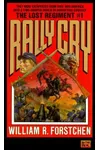
- 1. Rally Cry (1990): The novel that starts it all. Colonel Andrew Keane and the 35th Maine Volunteer Infantry are transported through a mysterious electrical storm at sea, shipwrecking on Valdennia. They discover a medieval Russian-style human society (Rus) terrorized by the massive, horse-riding Tugar horde, who treat humans as herd animals. Keane must introduce 19th-century military tactics, industrialization, and republican ideals to spark a human rebellion.
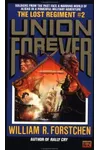
- 2. The Union Forever (1991): As Keane's republic expands, they forge contacts with a Roman-style human civilization. However, they face a new and even more terrifying threat: the Merki, an alien horde that has allied with traitorous human sailors who have brought early steam technology and gunpowder weapons to the enemy side.
- 3. Terrible Swift Sword (1992): Industrial warfare escalates as the aliens adapt to human technology. When a human traitor leaks the secrets of airship and flight technology, Keane and his forces are forced to defend their hard-won democracy against aerial bombardment and massive, synchronized ground assaults.
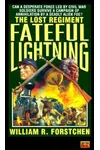
- 4. Fateful Lightning (1993): The war reaches a global scale. The Republic of Valdennia must launch a daring transoceanic expedition to secure resources and establish alliances with distant human civilizations, battling both geographic barriers and relentless nomadic hordes.
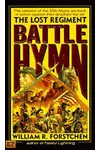
- 5. Battle Hymn (1997): After a brief period of peace, internal political struggles threaten the stability of the human republic. The transition from a wartime dictatorship under Keane to a functioning civilian democracy is tested, even as the shadow of a massive new alien invasion looms.
- 6. Never Sound Retreat (1998): The Bantag, the most technologically capable and organizationally disciplined alien race, mobilize for a final crusade to exterminate the human disease. Andrew Keane must push his industrialized nation to the absolute brink to survive their onslaught.
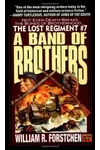
- 7. A Band of Brothers (1999): As the brutal war against the Bantag continues, the focus shifts to localized battlefronts, highlighting the heavy toll of prolonged industrial conflict on the soldiers, their alliances, and the fragile fabric of Valdennian society.
- 8. Men of War (1999): The grand finale of the original story arc. The conflict between the Republic and the combined alien forces culminates in an epic, decisive confrontation that determines whether humanity will finally secure its freedom on Valdennia or be reduced back to cattle.
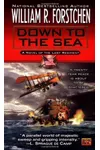
- 9. Down to the Sea (2000): A standalone sequel novel set twenty years after the conclusion of the war in Men of War. The story follows a new generation of characters, specifically naval pilot Lieutenant Michael O'Brien, as he discovers new human and alien factions across the great oceans of Valdennia.
Chronological Order vs. Publication Order
There are no prequels or parallel spin-offs in the Lost Regiment universe. The narrative flows in a straight line from the moment the 35th Maine is transport-stranded in 1865 to the final page of Men of War, followed by the twenty-year time jump in Down to the Sea. Consequently, readers should strictly follow the publication order listed above to experience the series as Forstchen intended.
What to Know Before You Start
Written by historian William R. Forstchen, who holds a Ph.D. in military history, the Lost Regiment series stands out for its realistic depiction of technology progression and logistics. Rather than relying on soft sci-fi magic, the series details how a 19th-century army would actually build steam engines, lay down railways, manufacture gunpowder, and forge muzzle-loading cannons using the limited infrastructure of a medieval world.
Readers should expect heavy themes of military strategy, industrial logistics, and the sociological impacts of sudden technological leaps on feudal societies. Additionally, because the alien hordes are cannibalistic predators who consume humans, the series contains dark elements, graphic battle scenes, and high-stakes tension. While the core eight books form a complete and satisfying narrative arc, the final book, Down to the Sea, opens up a broader world, though it leaves several plot threads unresolved as no further sequels were written.