
Where to Start: The Recommended Reading Path
If you are picking up Dorothy Dunnett's work for the first time, the best place to start is at the absolute beginning of the series: The Game of Kings. Unlike some historical fiction series where books function as standalone adventures, the Lymond Chronicles is a single, continuous, and highly complex narrative. Skipping books or reading them out of order will result in immediate confusion, as the character relationships, political alliances, and overarching mysteries build directly upon the events of previous volumes.
While the prequel series, The House of Niccolò, takes place in the 15th century (roughly a century before Lymond's story begins), it was written later. Dorothy Dunnett herself and the broader fan community strongly recommend reading the Lymond Chronicles first. The prequel series contains subtle callbacks, genealogical revelations, and thematic details that are much more rewarding if you already know the story of Francis Crawford.
The Lymond Chronicles in Publication Order
The six core books of the Lymond Chronicles follow a strict chronological timeline. Reading them in their publication order is the only logical way to experience Francis Crawford's journey from a branded traitor to a legendary figure across Europe and the Mediterranean.
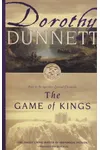
1. The Game of Kings (1961)
Set in 1547, the story begins in a war-torn Scotland during the "Rough Wooing." Francis Crawford of Lymond returns home illegally, outlawed and accused of treason. Stripped of his birthright, he must navigate shifting Scottish loyalties and English invasions to protect his country and clear his name. This book introduces Dunnett's characteristically dense prose, quick-witted dialogue, and layered plotting.
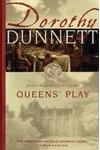
2. Queens' Play (1964)
In 1550, Lymond travels to the lavish and dangerous court of France. Disguised as a decadent Irish nobleman and poet, his true mission is to act as a secret protector to the young Mary, Queen of Scots, who is surrounded by assassins and political conspirators. Here, the scale of the series expands, showcasing Lymond's linguistic brilliance and physical prowess.
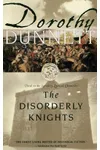
3. The Disorderly Knights (1966)
Moving to 1551, the action shifts to the Mediterranean, specifically the island of Malta. Lymond joins the Knights Hospitaller of St. John as they face Ottoman siege threats. Amidst the grand military conflicts, Lymond faces a deeply personal threat from a corrupt rival who seeks to destroy him and those he loves. This volume marks a darker, more intense turn in the series.
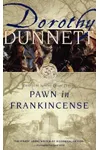
4. Pawn in Frankincense (1969)
Widely considered one of the most intense historical novels ever written, this book takes Lymond across the Ottoman Empire in 1552. Searching for a kidnapped child, he is forced into a deadly, psychological game of human chess in Constantinople. The book's climax is famous for its emotional weight and high-stakes drama.
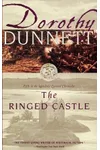
5. The Ringed Castle (1971)
Desperate to escape his past, Lymond travels to the isolated and frozen court of Ivan the Terrible in Russia, where he becomes the commander of the Tsar's armies. Meanwhile, back in Great Britain, his allies work to secure his future. The contrast between the exotic, brutal Russian court and Tudor England highlights Dunnett's meticulous research.
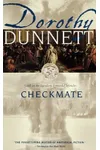
6. Checkmate (1975)
The epic conclusion takes place back in France and Scotland between 1557 and 1558. Lymond leads French military forces in battles against the English, all while the mysteries surrounding his parentage, identity, and destiny finally come to light. It provides a highly satisfying, emotional resolution to the 14-year narrative arc.
The Prequel Connection: The House of Niccolò
Once you finish the Lymond Chronicles, you can dive into The House of Niccolò, an eight-book series set in the 15th century. It follows Nicholas de Fleury, a brilliant young merchant whose trade empire spans the Renaissance world. Dorothy Dunnett structured the two series to form a grand 14-volume epic. Nicholas is eventually revealed to have direct ancestral ties to the Crawford family, making his journey a deep-dive origin story for the world Lymond inherits. The reading order for this series is: Niccolò Rising (1986), The Spring of the Ram (1987), Race of Scorpions (1989), Scales of Gold (1991), The Unicorn Hunt (1993), To Lie with Lions (1995), Caprice and Rondo (1997), and Gemini (2000).
Standalone Works and Reference Companions
For readers who want to explore more of Dunnett's style or require assistance with the series' legendary complexity, a few extra books are highly recommended:
- King Hereafter (1982): A standalone historical novel set in 11th-century Scotland. It reimagines the life of Macbeth (arguing he was the same historical figure as Earl Thorfinn of Orkney). While not connected to Lymond, it features the same dense, brilliant plotting and a similarly complex protagonist.
- The Dorothy Dunnett Companion (Volumes I & II): Compiled by research historian Elspeth Morrison in close collaboration with Dunnett. These volumes do not contain plot spoilers but provide vital historical context, translation of the numerous foreign phrases (Latin, French, Spanish) used by characters, and explanations of Renaissance politics, poetry, and music.
What to Know Before You Start
Dorothy Dunnett's writing is notoriously demanding. She does not spoon-feed the reader; characters often speak in multiple languages, drop literary allusions, and mask their true intentions. A key piece of advice for new readers is to let the prose wash over you in the early chapters of The Game of Kings. You do not need to understand every classical quote or political faction immediately to follow the emotional arc. Using a companion guide or referring to fan-made translations of the foreign passages can significantly enhance your reading experience without spoiling the plot twists.