

How to Read the Milo Weaver Series
For readers diving into the shadowy, morally ambiguous world of Olen Steinhauer’s espionage masterpiece, the path forward is straightforward but contains one crucial hidden gem. Unlike many modern thriller series where entries can be read out of sequence, the Milo Weaver books tell a continuous, deeply personal story of a man trying to escape his past. To fully appreciate the intricate character arcs and geopolitical shifts, you should read them in order of publication.
However, there is an extra piece of the puzzle: a standalone novel that features a surprise cameo, serving as a narrative bridge during the eight-year gap between the original trilogy and the fourth book. Here is the recommended reading path:
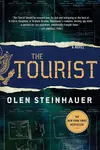
- The Tourist (2009) - Start here. This is the entry point that introduces Milo Weaver, his family in Brooklyn, and the secretive "Department of Tourism" within the CIA.
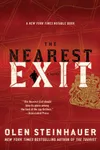
- The Nearest Exit (2010) - The second main entry, which won the 2010 Hammett Prize. Milo is forced back into active duty under grueling terms that test his morality.
- An American Spy (2012) - The climax of the original "Tourist Trilogy," focusing on a high-stakes duel between the remnants of the Department of Tourism and the Chinese Ministry of State Security.
- The Middleman (2018) - Optional but highly recommended. A standalone political thriller that does not focus on Milo, but his surprise cameo in the final pages sets up his return.
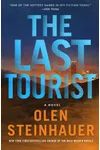
- The Last Tourist (2020) - The fourth main novel, which picks up years later and finds Milo mentoring a new generation of operatives in a rapidly changing global landscape.
The Core Novels in Focus
The Tourist (2009)
This is where Milo’s journey begins. After years working as a "Tourist"—a deep-cover CIA black-ops assassin with no official identity—Milo has finally retired to a desk job, trying to build a normal life in Brooklyn with his wife and stepdaughter. But when a routine arrest of a former colleague goes wrong and uncovers a massive conspiracy, Milo is dragged back into the cold. Steinhauer immediately establishes the tone of the series here: this is not a story about high-tech gadgets or slick fight scenes, but rather the emotional and psychological toll of a life built on lies.
The Nearest Exit (2010)
Following the chaotic events of the first book, Milo is re-enlisted into the newly reformed Department of Tourism. To prove his loyalty to his superiors, he is given an assignment that goes against his core values: targeting an innocent child. Juggling his fracturing family life with increasingly dark missions, Milo must navigate betrayal from within his own agency. Erika Schwartz, a sharp German intelligence officer from the BND, plays a prominent role here, shifting from a skeptical adversary to a critical player in Milo's orbit.
An American Spy (2012)
The third book brings the battle directly to the doorstep of Xin Zhu, the brilliant and ruthless Chinese intelligence spymaster who orchestrated the destruction of the Department of Tourism. Milo, now operating in the wind and seeking vengeance, must coordinate a dangerous counter-operation. The narrative expands to show the perspective of other operatives and the systemic corruption of global intelligence services, bringing the initial trilogy to a explosive, satisfying conclusion.
The Last Tourist (2020)
Published eight years after An American Spy, this novel reflects the modern, post-truth geopolitical era. Milo is no longer the agent on the ground; instead, he is pulling the strings from a UN-affiliated intelligence cell. When a young analyst is sent to interview him about past operations, it triggers a chain reaction of corporate espionage and systemic betrayal. The book shows a matured, battle-weary Milo dealing with the legacy of his choices and a world where corporate interests have replaced national borders.
What to Know Before You Start
A Reluctant, Realistic Hero
If you are expecting a bulletproof superhero like Jason Bourne or a suave playboy like James Bond, you won't find him here. Milo Weaver is scarred, tired, and deeply reluctant. His primary motivation is not patriotism or adventure, but a desperate desire to settle down, eat dinners with his family, and be a good husband and father. This domestic grounding is what makes the high-stakes espionage feel so tense; every time Milo goes abroad, his fragile family life is what is truly at risk.
The "Department of Tourism"
In Steinhauer’s universe, "Tourism" is the colloquial name for a black-ops division of the CIA that handles the dirtiest work. Tourists are agents who do not exist on paper. They have no permanent home, no official records, and operate outside the standard chain of command. The psychological weight of this isolation is a recurring theme throughout the series, defining Milo's identity crisis.
The Standalone Connection: The Middleman (2018)
While Olen Steinhauer has written several standalone thrillers, The Middleman is unique for fans of Milo Weaver. The book is an FBI-centric political thriller set in the United States, dealing with domestic activism and domestic terror threats. While it functions perfectly well on its own, readers who stick around until the final pages are treated to a cameo by Milo Weaver. This cameo bridges the gap between the events of An American Spy and his older, more calculated persona in The Last Tourist, making it a rewarding stop on your reading journey.
Practical Reading Advice
Can you read these books as standalones? Technically, yes—Steinhauer is skilled enough to provide the necessary context in each book. However, doing so will ruin the emotional payoff. The overarching conflict between the CIA and Xin Zhu spans the entire trilogy, and Milo's relationship with his family evolves dramatically from book to book. For the best experience, start with The Tourist and proceed in publication order.