


How to Read the Miss Marple Books
Agatha Christie’s Miss Jane Marple is one of the most famous sleuths in detective fiction. Unlike Hercule Poirot, who travels the world with grand theatricality, Miss Marple is a quiet, sharp-eyed spinster who solves brutal crimes by comparing the suspects to the eccentric residents of her home village, St. Mary Mead. Because the books are largely episodic, you can read them in almost any order. However, following a structured path helps you appreciate the subtle evolution of her character and the village itself.
Path 1: The Publication Order (Recommended)
Reading in publication order is the most satisfying way to experience the series. It lets you watch Miss Marple transition from a slightly gossipy, background figure in the early novels into a formidable, beloved detective. This order also mirrors how Agatha Christie’s writing style and the social backdrop of England changed from 1930 to the 1970s.
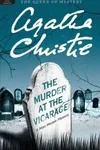
- The Murder at the Vicarage (1930) - Miss Marple's first full-length novel debut.
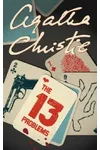
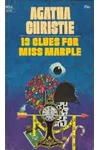
- The Thirteen Problems (1932) - The essential early short story collection.
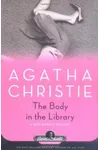
- The Body in the Library (1942) - A classic cozy mystery featuring a body found in a respectable home.
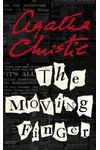
- The Moving Finger (1942) - Miss Marple arrives in a village plagued by poison pen letters.
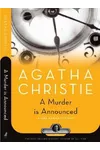
- A Murder is Announced (1950) - A murder is advertised in the local newspaper of a quiet village.
- They Do It with Mirrors (1952) - A mystery set at an estate turned rehabilitation center for delinquent boys.
- A Pocket Full of Rye (1953) - A double-murder case based on a nursery rhyme.
- 4:50 from Paddington (1957) - A witness spots a murder on a passing train, leading Miss Marple to investigate.
- The Mirror Crack'd from Side to Side (1962) - A glamorous film star moves to St. Mary Mead, bringing tragedy with her.
- A Caribbean Mystery (1964) - Miss Marple travels to the West Indies and meets Jason Rafiel.
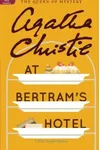
- At Bertram's Hotel (1965) - A London holiday turns dark at a deceptively traditional hotel.
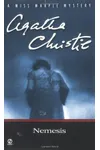
- Nemesis (1971) - Miss Marple solves a posthumous request from Jason Rafiel.
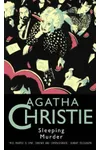
- Sleeping Murder (1976) - Published posthumously; Miss Marple helps a young couple investigate a cold case.
Path 2: The Short Story Entry Route
If you want a quick introduction to Miss Marple's style before committing to a full novel, start with The Thirteen Problems (1932). This collection introduces the Tuesday Night Club, where a group of friends gather to share unsolved mysteries, only for Miss Marple to solve every single one using her quiet knowledge of human nature. Starting here gives you the perfect distillation of her deductive methods.
The Jason Rafiel Subseries: The Only Strict Continuity
While almost all Miss Marple mysteries can be read as standalones, there is one major exception. A Caribbean Mystery (1964) and Nemesis (1971) form a direct, two-part subseries. In the Caribbean, Miss Marple meets the wealthy, grumpy invalid Jason Rafiel. The two form an unlikely alliance to solve a series of murders, and Rafiel affectionately nicknames her 'Nemesis'. In the sequel, Nemesis, Rafiel has passed away and left Miss Marple a posthumous inheritance alongside a request to solve an unnamed injustice. You should absolutely read A Caribbean Mystery before Nemesis to fully understand their relationship and the emotional weight of the story.
Chronological Caveats and the Mystery of 'Sleeping Murder'
The publishing timeline of Miss Marple has one famous quirk: the writing order of the final book. Sleeping Murder was published in 1976 after Agatha Christie's death. However, Christie actually wrote the manuscript during the Blitz in the early 1940s as a safeguard to ensure her heirs had a book to publish in case she did not survive World War II. Because it was written decades before it was printed, Miss Marple appears younger and more active in Sleeping Murder than she does in late-period novels like Nemesis. Despite this chronological discrepancy, most readers prefer to read it last as a final farewell to the character.
Practical Reader Advice
Where is the best starting point?
For your first Miss Marple novel, start with either The Murder at the Vicarage (her introduction to the world) or A Murder is Announced (often considered Christie's finest Miss Marple plot). If you prefer shorter reads, start with the collection The Thirteen Problems.
Can they be read as standalones?
Yes. Aside from the connection between A Caribbean Mystery and Nemesis, each book is a self-contained story. Recurring characters like Inspector Slack and Miss Marple's nephew Raymond West appear occasionally, but their backgrounds are briefly re-explained in each book so you won't feel lost.
How do the short story collections fit in?
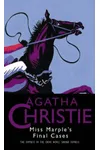
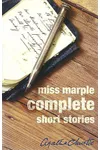
Miss Marple features in 20 short stories. The most complete way to read them is in the anthology Miss Marple: The Complete Short Stories (1985), which compiles the contents of The Thirteen Problems and Miss Marple's Final Cases. These are best read between novels to break up the longer mysteries.