
How to Navigate Alan Furst’s Masterpiece of Historical Espionage
If you are looking for high-octane, gadget-filled spy thrillers where clear-cut heroes save the world in the eleventh hour, Alan Furst’s Night Soldiers series might surprise you. Instead of invincible super-agents, Furst populates his novels with reluctant, ordinary citizens—journalists, film producers, aristocrats, and writers—who find themselves swept up in the dangerous undercurrents of a Europe sliding inexorably toward World War II. Spanning the years 1934 through 1945, these novels are celebrated for their rich, noir-ish atmosphere, lyrical prose, and meticulous historical accuracy.
Because the novels are primarily self-contained stories, readers often wonder about the best path through the series. Below, we break down the recommended reading path, the chronological timeline of the books, and the historical details that bind this dark universe together.
The Recommended Reading Path
For almost all readers, the best way to experience the series is in publication order. There are two primary reasons for this. First, starting with the titular debut, Night Soldiers (1988), establishes the overarching geopolitical landscape and the moral gray zones that define the entire collection. Second, reading the books as they were published allows you to experience the natural evolution of Furst's writing style and atmospheric world-building.
However, because the vast majority of these books function as standalones, you can technically read them in almost any order without losing track of a central plot. The one crucial exception is the Jean Casson Duology. Jean Casson is the only protagonist in the entire series to lead more than one book. You should absolutely read his story in order:
- The World at Night (1996) — Introduces Casson, a Parisian film producer navigating the early days of the German occupation.
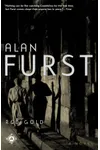
- Red Gold (1999) — Continues Casson’s journey as he is drawn deeper into the active French Resistance.
Night Soldiers Books in Publication Order
The series consists of 15 novels published between 1988 and 2019. Here is the complete list of the books in the order they were released:
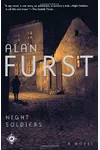
- Night Soldiers (1988) — Follows Khristo Stoianev, a young Bulgarian recruited by the Soviet NKVD in 1934, taking him through the Spanish Civil War and the Parisian underworld.
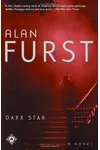
- Dark Star (1991) — Centered on André Szara, a Jewish journalist for the Soviet newspaper Pravda, who becomes an intelligence agent in 1937 Europe.
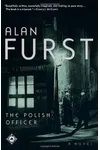
- The Polish Officer (1995) — Follows Captain Alexander de Milja of the Polish land forces as he attempts to smuggle Poland's gold reserves out of the country following the 1939 invasion.
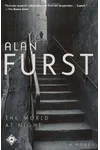
- The World at Night (1996) — Introduces Jean Casson, a wealthy Parisian film producer facing the moral choices of occupied Paris in 1940.
- Red Gold (1999) — The direct sequel to The World at Night, following Casson in 1941 as he goes underground to join the armed resistance.
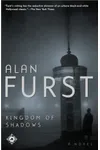
- Kingdom of Shadows (2000) — Set in 1938–1939, focusing on Nicholas Morath, a Hungarian aristocrat and advertising executive in Paris who assists his diplomat uncle in anti-fascist operations.
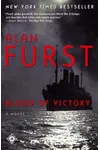
- Blood of Victory (2002) — Follows I.A. Serebin, a Russian emigré writer in 1940 who joins a British-backed conspiracy to block Romanian oil shipments to Germany.
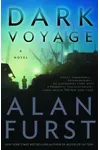
- Dark Voyage (2004) — Set in 1941, following Captain Eric Szabo, a Dutch merchant captain recruited to run clandestine maritime missions for Allied intelligence.
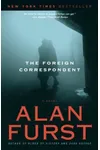
- The Foreign Correspondent (2006) — Set during the winter of 1938–1939, following Carlo Weisz, an Italian journalist in Paris writing for an anti-fascist newspaper while pursued by the secret police.
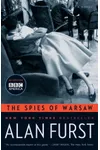
- The Spies of Warsaw (2008) — Follows Lieutenant Colonel Jean-François Mercier, a French military attaché in Poland in 1937–1938, as he investigates Germany's military designs.
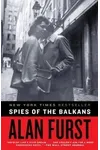
- Spies of the Balkans (2010) — Set in Greece between October 1940 and April 1941, focusing on Constantine Zannis, a police detective in Salonika who coordinates clandestine escape routes for refugees.
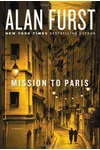
- Mission to Paris (2012) — Follows Frederic Stahl, an Austrian-born Hollywood star filming a movie in Paris in late 1938, who becomes a reluctant agent for the Americans.
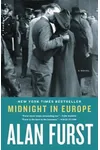
- Midnight in Europe (2014) — Set in 1937–1938, following Cristián Ferrar, a Spanish lawyer in Paris who agrees to help smuggle arms to the Spanish Republic.
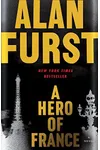
- A Hero of France (2016) — Set in 1941, following Mathieu, the leader of a Parisian resistance cell dedicated to sheltering and smuggling downed Allied airmen.
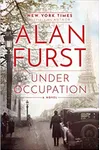
- Under Occupation (2019) — Set in 1942, featuring Paul Ricard, a Parisian thriller writer who gets drawn into the resistance after being handed blueprints for a German military engine.
The Chronological Timeline
If you prefer to read the books based on the historical years in which they take place, the order changes. Because Furst frequently jumped back and forth to fill in the pre-war years, a chronological reading offers a different perspective on the buildup to World War II. Below is how the series lines up chronologically:
- Night Soldiers (Starts in 1934, spans to 1945)
- Dark Star (1937–1941)
- Midnight in Europe (1937–1938)
- The Spies of Warsaw (1937–1938)
- Kingdom of Shadows (1938–1939)
- The Foreign Correspondent (1938–1939)
- Mission to Paris (1938–1939)
- The Polish Officer (1939–1941)
- The World at Night (1940–1941)
- Blood of Victory (1940–1941)
- Spies of the Balkans (1940–1941)
- Red Gold (1941–1942)
- Dark Voyage (1941)
- A Hero of France (1941–1942)
- Under Occupation (1942–1943)
What to Know Before You Start: Tone, Themes, and Easter Eggs
Alan Furst's writing is less about espionage tradecraft and more about the psychological toll of living in a time of crisis. The tone is deeply atmospheric, capturing the textures of 1930s Europe: the smoke of Gauloises cigarettes, the clinking of glasses in dimly lit cafés, the damp fog of Paris, and the looming dread of Nazi expansion.
While the protagonists change from book to book, loyal readers will spot recurring elements that tie the universe together. The most famous of these is the Brasserie Heininger, a fictional Parisian restaurant that serves as a backdrop for clandestine meetings in almost every single novel. Additionally, minor characters weave in and out of the stories. You will occasionally spot figures like the Soviet operative Ilya Goldman, the enigmatic diplomat Count Janos Polanyi, General Bloch, or the British aristocrat Lady Angela Hope passing through the background of a novel, rewarding those who read the books in close succession.
Screen Adaptations
In 2013, the BBC and BBC America co-produced a television miniseries adaptation of The Spies of Warsaw. The four-part drama starred David Tennant as Lieutenant Colonel Jean-François Mercier and Janet Montgomery as Anna Skarbek. The adaptation captured the pre-war tension and romantic melancholy of Furst's novel, providing an excellent visual companion to the literary series.