
How to Read The Nightmare Room Series
Published at the turn of the millennium between 2000 and 2001, The Nightmare Room was R.L. Stine's venture into a slightly darker, creepier realm of children's horror. While it shares the fast-paced, twist-filled DNA of Goosebumps, this series is known for wrapping its stories with grittier endings and psychological chills where the monsters sometimes win.
Because the core series is an anthology, you have complete flexibility in how you approach these stories. Below, we break down the recommended reading path, the corrected publication order, and the essential spin-off trilogy.
The Recommended Starting Point
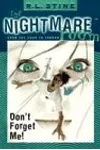
For the best experience, we recommend starting with the book that launched the series: Don't Forget Me!. It establishes the eerie, Twilight Zone-like suburban atmosphere that Stine masterfully crafts for this run. However, since the main 12 books are self-contained standalone stories with different characters and plots, you can read them in any order you choose. The only exception to this rule is the Nightmare Room Thrillogy, which is a serialized, three-part story arc that must be read in sequence.
The Nightmare Room Books in Publication Order
Although some online retail catalogs and database entries incorrectly list early titles as being published in 1983 or 1990, the entire series was actually released within a tight window between 2000 and 2001. Here is the correct chronological publication order for the main series:
- Don't Forget Me! (2000) – Danielle's hypnosis prank goes horribly wrong when her brother forgets who she is and a dark secret in their basement is revealed.
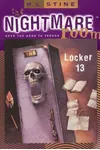
- Locker 13 (2000) – Luke is assigned a cursed school locker and must face the sinister Fate Master to change his luck.
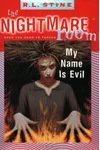
- My Name is Evil (2000) – A carnival palm reader warns Maggie that she is evil, leading to a series of terrifying accidents.
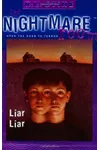
- Liar Liar (2000) – Ross is a habitual liar who suddenly finds that every lie he tells comes true in horrific ways.
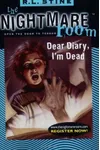
- Dear Diary, I'm Dead (2001) – Alex finds a mysterious diary that predicts the future, including his own demise.
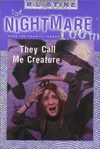
- They Call Me Creature (2001) – Laura suspects her plants are taking over her life, leading to animalistic changes.
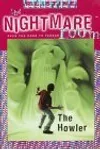
- The Howler (2001) – Spencer receives a device designed to communicate with the dead, unleashing restless spirits.
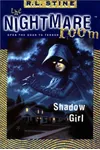
- Shadow Girl (2001) – Selena discovers she has the ability to turn invisible, but she soon learns she might fade away permanently.
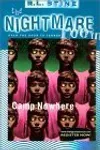
- Camp Nowhere (2001) – A summer camp turns into a nightmare when the campers realize their counselors might not be human.
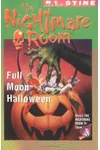
- Full Moon Halloween (2001) – A creepy Halloween night turns dangerous when a local boy is suspected of being a werewolf.
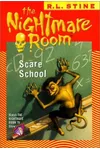
- Scare School (2001) – Sam discovers a hidden room in his new school that leads to a dimension of lost kids.
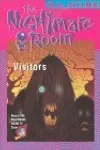
- Visitors (2001) – Ben finds himself abducted by strange entities, only to realize he may never return to his normal life.
The Nightmare Room Thrillogy
In 2001, R.L. Stine released a three-part spin-off sub-series. Unlike the episodic nature of the main series, the Thrillogy forms a continuous, serialized narrative. It must be read in the following order:
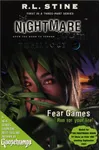
- Fear Games (2001)
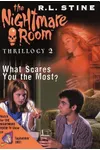
- What Scares You the Most? (2001)
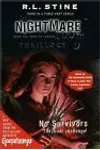
- No Survivors (2001)
The story follows a group of twelve competitive teenagers who travel to a remote tropical island to participate in a survival reality show called Life Games. They quickly discover that they aren't just competing for a cash prize—they are fighting to survive an ancient, malevolent supernatural force haunting the island.
The Nightmare Room TV Series Adaptation
Following the books' release, The Nightmare Room was adapted into a 13-episode television anthology series that aired on Kids' WB from 2001 to 2002. Hosted and narrated by James Avery, the show is fondly remembered for casting future Hollywood stars early in their careers. Notable guest stars included Amanda Bynes, Shia LaBeouf, Kaley Cuoco, Frankie Muniz, Drake Bell, Brenda Song, and the Sprouse twins. Additionally, horror veterans like Robert Englund (known for playing Freddy Krueger) and Tippi Hedren made guest appearances.
What to Know Before You Start
Is it connected to Goosebumps?
No. While written by the same author and sharing a similar demographic (ages 8–12), The Nightmare Room is an entirely independent universe. It features darker psychological horror, tenser stakes, and endings that do not always resolve happily for the protagonists.
Are there any co-authored books?
No, R.L. Stine wrote all 12 of the main books and the 3 Thrillogy books solo. There are no co-authored works or ghostwriters officially credited in the primary run.