
The Recommended Reading Order
For the best experience, readers should follow the publication order of the main trilogy. Hamilton's universe is incredibly complex, and diving into the core narrative first provides the necessary grounding to appreciate the prequel short stories and companion reference guides later. Reading the prequels first is not recommended because they assume the reader already has a baseline understanding of the universe's technologies, factions, and slang.
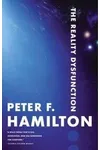
- The Reality Dysfunction (1996) — The epic starting point where an encounter with an alien entity on the colony world of Lalonde triggers the return of the deceased from a nightmarish 'beyond'.
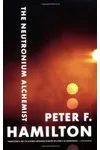
- The Neutronium Alchemist (1997) — The crisis escalates across the galaxy as the possessed spread their influence, and the race begins to control a weapon capable of destroying stars.
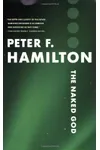
- The Naked God (1999) — The massive conclusion to the trilogy, tracing the desperate search for an ancient sentient alien entity that may hold the key to saving humanity.
Chronological Order vs. Publication Order
If you want to read the stories in the order they occur within the universe's timeline, you will start with the short stories before launching into the novels. However, this is best reserved for a re-read, as the prequels spoil several key mysteries regarding the nature of biotechnology, the origin of the Edenist culture, and how humanity developed telepathic empathy.
Here is how the timeline unfolds chronologically:
- 'Sonnie's Edge' (2070) — A short story focusing on beast-hybrid arena battles on Earth, introducing early biological engineering. Set centuries before the main trilogy.
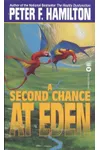
- 'A Second Chance at Eden' (2090) — A novella detailing the construction of the first sentient habitat in orbit around Jupiter and the birth of the Edenist culture.
- 'New Days Old Times' (2205) — Chronicling the migration of traditionalists (Adamists) to new star systems to escape the telepathic influence of Edenists.
- 'Candy Buds' (2366) — A tale exploring the monopolization of bitek sensory-enhancing drugs on a colony world.
- 'Deathday' (2432) — A story set on a dead planet, dealing with the remnants of an extinct alien race.
- 'The Lives and Loves of Tiarella Rosa' (2447) — A romance-tinged look at how life-extending technologies and memories affect relationships across generations.
- 'Escape Route' (2586) — Taking place roughly 30 years before the core trilogy, this story follows Marcus Calvert (father of trilogy protagonist Joshua Calvert) as he encounters a mysterious derelict alien starship.
- The Reality Dysfunction (2610–2611)
- The Neutronium Alchemist (2611–2615)
- The Naked God (2615)
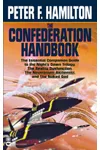
- The Confederation Handbook (Non-fiction companion guide)
Navigating the US Split-Volume Releases
Due to the massive page counts of the original UK editions, US publishers initially split each of the three main books into two separate paperback releases to make them easier to print and read. While modern editions have restored the single-volume format, you may still encounter these split titles in used bookstores or digital platforms. If you are reading the split editions, the order is as follows:
The Reality Dysfunction Splits
- Part 1: Emergence — Covers the initial colonizations, the introduction of the major characters, and the outbreak of the crisis on Lalonde.
- Part 2: Expansion — Details the early spread of the possession crisis to other star systems.
The Neutronium Alchemist Splits
- Part 1: Consolidation — Focuses on the various factions grouping together to respond to the spreading threat.
- Part 2: Conflict — Highlights the open warfare and the chase for the ultimate superweapon.
The Naked God Splits
- Part 1: Flight — Explores the search for the mythical Sleeping God across the galaxy.
- Part 2: Faith — The final resolution to the possession crisis and the ultimate fate of humanity's Confederation.
What to Know Before You Start
Peter F. Hamilton’s universe is built on a grand scale, presenting a highly detailed view of 27th-century humanity organized under the 'Confederation'. To ease your entry into the series, keep these core concepts in mind:
- Adamists vs. Edenists: Humanity has split into two main cultural groups. Adamists reject telepathic genetic engineering and rely on standard mechanical technology. Edenists utilize 'bitek' (biotechnology) to build living spaceships, sentient habitats, and a telepathic network known as 'affinity' that connects their minds and allows them to transfer their consciousness upon death.
- The Possessed: The supernatural threat in the series is not a typical alien invasion. Instead, the spirits of deceased humans find a way back from a dark, vacuum-like afterlife, possessing the bodies of the living and granting them reality-bending psychic powers.
- World-Building Detail: Hamilton is famous for his extremely dense exposition. The series features dozens of point-of-view characters, deep dives into planetary economics, and technical breakdowns of how interstellar flight works. Patience is key during the first half of the first book.
Spin-Offs and Adaptations
While the Night's Dawn trilogy concluded the main storyline, the universe has entered popular culture through other mediums:
- Love, Death & Robots: The short story 'Sonnie's Edge' was adapted into the very first episode of the popular Netflix animated anthology series, showcasing Hamilton’s dark, biotechnology-driven underworld to a massive television audience.
- The Confederation Handbook: This companion guide compiles the fictional history, planetary profiles, and technical specifications of the setting. It is an excellent post-series resource but should be avoided until after reading the novels to prevent major plot spoilers.