

The Recommended Reading Order
For the best reading experience, it is highly recommended to read The Nora Notebooks in its publication order. The trilogy follows a clear chronological timeline as Nora Alpers navigates fourth grade at Plainfield Elementary School. Reading the books sequentially allows young readers to appreciate Nora's social development, her evolving relationships with classmates, and her growing maturity.
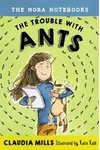
- The Trouble with Ants (2015)
- The Trouble with Babies (2016)
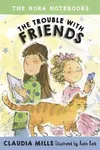
- The Trouble with Friends (2017)
Nora's Roots: The Mason Dixon Prequel Series
Before Nora Alpers starred in her own trilogy, author Claudia Mills introduced her as a supporting character in the companion series, Mason Dixon. In these books, Nora serves as the sensible, science-minded contrast to the pessimistic main character, Mason Dixon, and his optimistic best friend, Brody Baxter. While not mandatory to enjoy Nora's standalone adventures, reading the Mason Dixon series provides excellent context and extra time with Nora in her classroom element.
If you want to read Nora's entire story from her very first appearance, here is the order of the Mason Dixon books:
- Mason Dixon: Pet Disasters (2011)
- Mason Dixon: Fourth-Grade Disasters (2011)
- Mason Dixon: Basketball Disasters (2012)
Book-by-Book Breakdown of The Nora Notebooks
The Trouble with Ants (Book 1)
Published in 2015, the series opener introduces us to ten-year-old Nora Alpers, an aspiring myrmecologist (ant scientist). While her classmates are interested in typical fourth-grade fads, Nora is completely devoted to her ant farm and recording observations in her trusty notebook. The central conflict arises when Nora must deliver a persuasive speech to her class. Determined to show everyone how fascinating ants are, Nora faces classmate indifference and must find a way to make her scientific passion relatable and exciting to others. This volume establishes Nora's unique voice and set the foundation for the series' heavy STEM emphasis.
The Trouble with Babies (Book 2)
In the 2016 sequel, Nora faces a double dose of trouble. First, she becomes a ten-year-old aunt when her older sister has a baby, forcing Nora to adjust to new family dynamics. Second, she is paired with Emma, a cat-loving classmate, for the school science fair. The girls struggle to find common ground as Emma wants to focus their project on cats, while Nora remains steadfastly loyal to her beloved ants. This book beautifully explores themes of compromise, collaboration, and the realization that different interests can complement each other.
The Trouble with Friends (Book 3)
The final book in the trilogy, published in 2017, focuses heavily on social dynamics. Nora is comfortable in her routine and reluctant to step out of her comfort zone. When a classmate tries to initiate a friendship for a school project, Nora has to decide if she is willing to open up her circle. Through trial and error, Nora learns that while observing ants is a solitary pleasure, human friendships require active engagement, vulnerability, and a willingness to try new things.
Publication Order vs. Chronological Order
Fortunately for readers, there are no complicated timeline jumps in Nora's main series. The chronological order matches the publication order exactly. The narrative moves linearly through Nora's fourth-grade year, beginning with her initial ant farm observations and leading into winter projects and spring friendships. If you choose to integrate the parent Mason Dixon series, those books should be read first, as they take place slightly before the events of the Nora Notebooks, setting up the classroom environment and the social hierarchy that Nora navigates.
What to Know Before You Start
Written by children's author and philosophy professor Claudia Mills, the series is specifically tailored for readers aged 7 to 10. Each book is around 120 to 140 pages, making them highly accessible chapter books for transitional readers who are graduating from early readers but are not yet ready for dense middle-grade novels.
A major highlight of the physical books is the artwork. Illustrator Katie Kath provides charming black-and-white drawings throughout the text, bringing Nora's scientific diagrams, facial expressions, and ant farm details to life with whimsical humor. The series is widely praised by educators for its strong STEM themes, representing a female protagonist who is unashamedly enthusiastic about science, math, and analytical thinking.
Practical Reader Guidance and Standalone Potential
Can these books be read as standalones? Yes. Claudia Mills writes each volume with enough context that a reader can pick up The Trouble with Babies or The Trouble with Friends without feeling lost. The books recap Nora's scientific hobby and school setup quickly. However, reading them in order is still the best path to fully enjoy Nora's gradual growth from a slightly isolated science enthusiast into a more socially well-rounded classmate.
For educators and parents, the books serve as excellent classroom read-alouds. They offer natural tie-ins for elementary science lessons on insects, the scientific method, and data collection, while also addressing universal social challenges like group work, sibling changes, and making friends.