




The Recommended Reading Order: Why Publication Order is Key
When diving into Lillian O’Donnell's classic police procedural series, the best path for readers is the publication order. Because the books follow the chronological progression of Norah Mulcahaney’s career and personal life, the publication order and chronological order are identical. Reading the novels in this sequence allows you to experience Norah’s evolution from an inexperienced rookie to a seasoned lieutenant, alongside her deep personal transformations, marriages, losses, and triumphs.
Norah Mulcahaney Series in Publication Order
The series consists of 17 novels published over a span of twenty-six years. Here is the complete order to follow:
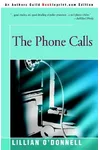
- The Phone Calls (1972) – Norah is introduced as a rookie policewoman assigned to look into a series of obscene calls targeting vulnerable widows.
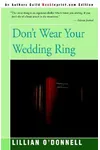
- Don't Wear Your Wedding Ring (1973) – Norah goes undercover in a high-stakes prostitution ring to solve a complex murder case.
- Dial 577 R-A-P-E (1974) – A landmark procedural addressing sexual assault, following Norah as she works passionately to bring a rapist to justice.
- The Baby Merchants (1975) – Norah investigates the dark and illegal world of black-market baby adoptions.
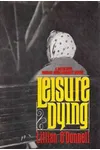
- Leisure Dying (1976) – Norah tackles a series of murders targeting elderly citizens in New York City.
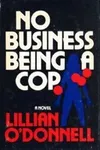
- No Business Being a Cop (1978) – A case hits close to home as Norah investigates serial killings targeting female police officers.
- The Children's Zoo (1981) – Norah deals with a disturbing wave of random violence and murder involving teenagers in Central Park.
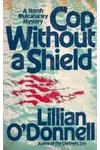
- Cop Without a Shield (1983) – A devastating turning point in the series where Norah's husband, Joe Capretto, is killed, leading her to temporarily leave the NYPD.
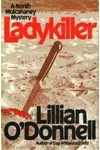
- Ladykiller (1984) – Norah returns to the police force, adjusting to life as a widow while hunting down a lethal criminal.
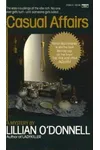
- Casual Affairs (1985) – Norah is drawn into a complex web of corporate corruption, drugs, and murder.
- Shadow in Red (1986) – Norah investigates a high-society murder that leads her into the dark secrets of New York's elite.
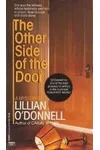
- The Other Side of the Door (1988) – A tense procedural where Norah faces a stalker case that escalates into murder.
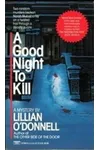
- A Good Night to Kill (1989) – Norah deals with two seemingly unrelated homicides occurring on the same stormy winter night.
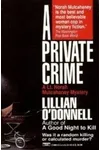
- A Private Crime (1991) – A mass shooting in a public park forces Norah to hunt down a sniper.
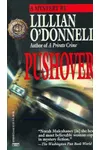
- Pushover (1992) – Norah investigates a suspicious fatal fall onto subway tracks that points to a calculated murder.
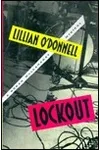
- Lockout (1994) – Norah faces a locked-in crisis during a city-wide strike, dealing with high-stress negotiations and homicide.
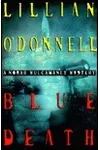
- Blue Death (1998) – The final entry in the series, featuring Norah as a Lieutenant investigating a suspicious cluster of NYPD officer suicides.
What to Know Before You Start
Lillian O’Donnell’s Norah Mulcahaney series was highly progressive for its time. When the series debuted in 1972, women in the NYPD were not allowed to serve in the homicide division—a restriction that was not officially lifted until 1978. Through Norah, O’Donnell envisioned a world where a woman could not only enter this male-dominated space but also thrive through sheer grit, empathy, and intelligence.
As you read, you will notice that the books are as much a character study as they are crime procedurals. Norah’s relationship with fellow detective Joe Capretto, her struggles with miscarriages, and her adoption of her son Mark are core threads that run parallel to the criminal investigations. Skipping books or reading them out of order will spoil major life events, particularly the tragic loss of her husband in Cop Without a Shield.
The TV Adaptation and Related Works
In 1989, Norah Mulcahaney made the leap to television with the movie Prime Target, starring Angie Dickinson. The film was based on the sixth novel, No Business Being a Cop. However, fans of the books should note a key difference: the screenwriters changed the protagonist's first name from Norah to Sgt. Kelly Mulcahaney.
Lillian O'Donnell also wrote two other mystery series: the Mici Anhalt series (about an investigator for the Crime Victims Compensation Board) and the Gwenn Ramadge series (featuring a Manhattan private investigator). While they share a similar gritty New York setting and focus on strong female leads, there are no crossovers or shared cases between these characters. Each series stands entirely on its own.