

The Recommended Reading Order for November Man
If you want to experience the full weight of Bill Granger’s gritty spy thrillers, the recommended path is simple: read the books in publication order. The series follows the career, personal struggles, and slow aging of protagonist Peter X. Devereaux chronologically. Since Granger did not write prequels or jump around in time, the publication sequence matches the chronological timeline perfectly. Reading them in order allows you to see the shifting geopolitical landscape of the Cold War and the emotional toll the spy game takes on Devereaux and his allies over nearly two decades.
The November Man Publication Order
Here is the complete sequence of the 13 November Man novels by publication date. You may notice some title variations depending on the edition you find, which we have noted below:
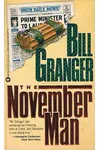
- The November Man (1979) – Originally published under the title Code Name November in some markets. This book introduces Devereaux, who is pulled out of retirement to stop an assassination plot by the IRA.
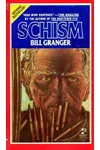
- Schism (1981) – A Vatican-focused intrigue where Devereaux must track a priest who has emerged from the Soviet Union after decades with a dark secret.
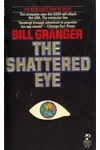
- The Shattered Eye (1982) – R Section is drawn into a high-stakes conspiracy involving an advanced computer system designed to predict and manipulate global political crises.
- The British Cross (1983) – Sometimes listed without the article as simply British Cross. This story centers on a defector who holds secrets that could devastate British and American intelligence.
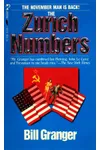
- The Zurich Numbers (1984) – Devereaux deals with financial conspiracies, Swiss bank accounts, and the trafficking of human lives across borders.
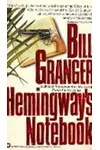
- Hemingway's Notebook (1986) – A search for a lost manuscript by Ernest Hemingway turns into a deadly race involving the CIA and old secrets.
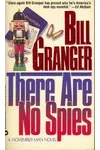
- There Are No Spies (1986) – The seventh novel, which served as the loose basis for the 2014 movie. Following the film's release, this book was frequently republished under the title The November Man, which can cause confusion for new readers.
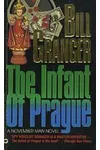
- The Infant of Prague (1987) – A complex plot surrounding a defector from Czechoslovakia who is also a famous counter-intelligence asset.
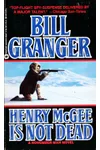
- Henry McGee Is Not Dead (1988) – Devereaux is sent to track down a former agent who was presumed dead but is now suspected of running a private intelligence network.
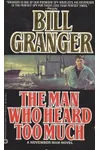
- The Man Who Heard Too Much (1989) – Set during the twilight of the Cold War, this entry follows Devereaux as he deals with a secret recording of US-Soviet treaty negotiations.
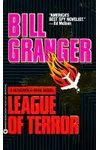
- League of Terror (1990) – Devereaux goes up against a sinister international syndicate of terrorists and mercenaries.
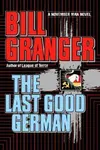
- The Last Good German (1991) – A story set against the backdrop of a newly reunited Germany, dealing with the aftermath of Stasi secrets and espionage.
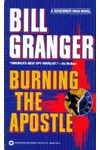
- Burning the Apostle (1993) – The final novel in the series, shifting away from Cold War tensions to focus on eco-terrorism and a nuclear conspiracy near Chicago.
What to Know Before You Start
Before diving into Bill Granger’s world, it helps to understand the unique elements that set this series apart from other espionage thrillers of the era:
- The Protagonist: Peter X. Devereaux is codenamed "November" because "nothing lives after it." He is a highly efficient, cynical, and emotionally isolated agent. Unlike romanticized spies, Devereaux is fully aware of the moral compromise required by his job.
- Section R: Devereaux works for Section R, a fictional, ultra-secret agency. According to the lore, Section R was created by President John F. Kennedy after the Bay of Pigs disaster. Distrustful of the CIA, Kennedy wanted an independent watchdog organization to monitor intelligence reports and verify their accuracy.
- Rita Macklin: A recurring journalist who investigates Devereaux and eventually becomes his love interest. Their relationship adds a rare layer of vulnerability to Devereaux, as Rita represents the civilian world he is constantly forced to protect yet keep at arm's length.
- The Atmosphere: Granger, a Chicago journalist, used his reporting background to ground the series in realism. The prose is lean, sharp, and journalistic, focusing on bureaucratic infighting, dirty tricks, and the psychological decay of operatives rather than gadget-laden action.
The 2014 Film Adaptation vs. the Books
In 2014, Pierce Brosnan starred in a movie adaptation titled The November Man, directed by Roger Donaldson. While the movie uses the overall title of the series, the script is actually a loose adaptation of the seventh book, There Are No Spies. Readers should note that the film diverges significantly from the tone and plot of the novels. The books are slow-burning, psychological thrillers heavily rooted in Cold War geopolitics. The film, by contrast, was modernized into a fast-paced, high-action blockbuster featuring Hollywood action sequences and simplified character dynamics. For the true experience of Granger's vision, the original novels remain the gold standard.