




How to Read Bill Granger: The Recommended Reading Path
For readers diving into the suspenseful world of journalist-turned-novelist Bill Granger, there are three distinct paths you can take. Because Granger wrote across multiple genres—specifically high-stakes international espionage, gritty metropolitan police procedurals, and sports-related crime fiction—your best starting point depends on what style of thriller you prefer.
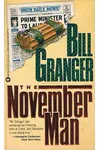
For Spy Thriller Fans: Start with The November Man (1979). This introduces Peter Devereaux (codename: November), a cynical, highly competent CIA operative navigating a morally gray Cold War landscape. This is Granger's signature series and should be read in publication order to appreciate Devereaux's evolution and the shifting geopolitical backdrop.
For Police Procedural Fans: Start with the Edgar Award-winning Public Murders (1981). This kicks off the Flynn and Kovac series, set on the rough streets of Chicago. These books offer a street-level view of urban crime and police politics, drawing heavily on Granger's real-life experience as a Chicago news reporter.
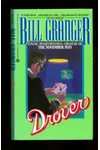
For Sports and Betting Crime Fans: Start with Drover (1991). This shorter, fast-paced trilogy follows Jimmy Drover, a former sports journalist who finds himself entangled in the shadowy world of illegal sports betting, fixing, and underworld deals.
The November Man Series (Publication & Chronological Order)
The November Man books are best read in the order they were written. The narrative moves chronologically, tracking the aging Devereaux as he repeatedly tries to escape the spy game, only to be dragged back by his ruthless handler, Hanley. Reading out of order will spoil major character developments, shifts in alliance, and key plot resolutions.
Note that the fourth book, The British Cross (sometimes published simply as British Cross), is the same title and counts as a single entry in the series chronology.
- The November Man (1979) – Devereaux is pulled out of retirement to monitor a defecting Soviet general. The plot famously mirrored real-life events involving Lord Mountbatten's assassination.
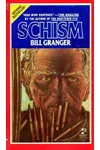
- Schism (1981) – A missionary priest emerges from the Siberian wilderness after twenty years, carrying a secret that could trigger a global crisis.
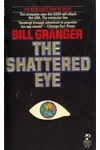
- The Shattered Eye (1982) – Devereaux must stop a computer-driven conspiracy that threatens to manipulate the intelligence agencies of both the US and USSR.
- The British Cross (1983) – Also published as British Cross. A defector from a Soviet labor camp holds the key to a legendary double agent.
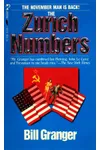
- Zurich Numbers (1984) – Devereaux investigates a series of mysterious financial transactions in Switzerland that target agents on both sides of the Iron Curtain.
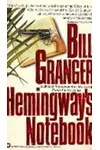
- Hemingway's Notebook (1986) – A search for a lost manuscript by Ernest Hemingway turns into a deadly chase through the Caribbean.
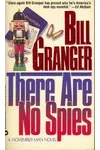
- There Are No Spies (1986) – Devereaux is target number one when his old colleagues begin dying under mysterious circumstances. This novel served as the basis for the 2014 feature film adaptation.
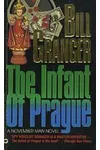
- The Infant of Prague (1987) – A defection plot involving a counter-intelligence agent turns into an intricate trap set in the heart of Europe.
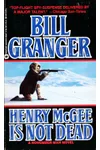
- Henry McGee Is Not Dead (1988) – Devereaux tracks a rogue agent who was presumed dead but is now operating in the Pacific Northwest.
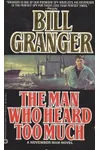
- The Man Who Heard Too Much (1989) – The spy game goes high-tech as Devereaux tries to secure a secret recording that could destroy the global balance of power.
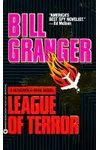
- League of Terror (1990) – A personal vendetta forces Devereaux into a confrontation with his deadliest enemies in the spy world.
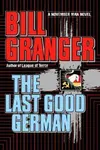
- The Last Good German (1991) – Set during the collapse of the Berlin Wall, Devereaux deals with the fallout of the changing world order.
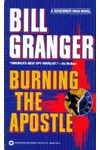
- Burning the Apostle (1993) – The final novel in the series sees Devereaux tracking a nuclear threat within the borders of the United States.
The Flynn and Kovac Police Procedurals (The "Joe Gash" Books)
Many readers are unaware that several of Bill Granger's standalone crime novels actually form a tight, consecutive police procedural series focusing on Chicago detectives Terry Flynn and Karen Kovac. To make matters more confusing, Granger published two of these books under the pseudonym Joe Gash. Reading them in order allows you to follow the developing professional and romantic relationship between the cynical veteran Flynn and the sharp-witted Kovac.
- Public Murders (1981) – The debut novel that won the 1981 Edgar Award for Best Paperback Original. Detectives Flynn and Kovac hunt a serial killer terrorizing Chicago under intense media and political scrutiny.
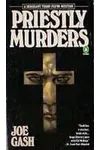
- Priestly Murders (1984) – Published under the pseudonym Joe Gash. The detectives investigate the high-profile murder of a prominent church official.
- Newspaper Murder (1985) – Published under the pseudonym Joe Gash. Flynn and Kovac probe the killing of a journalist, a story closely reflecting Granger's own background in newsrooms.
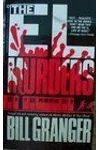
- The El Murders (1987) – Published under Granger's own name. The detectives return to investigate a homicide occurring on Chicago's famous elevated train system.
The Jimmy Drover Trilogy
In the early 1990s, Granger introduced Jimmy Drover, a protagonist who mirrored his own background as a Chicago sportswriter. Drover is a cynical, street-smart observer who works as an investigator for a sports federation, uncovering corruption, point-shaving, and betting syndicates. These books are lighter on global politics but heavy on athletic intrigue and Chicago atmosphere.
- Drover (1991) – Drover is hired to investigate anomalous betting patterns and soon finds himself targeted by powerful sports syndicates.
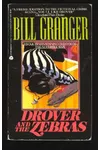
- Drover and the Zebras (1992) – Drover dives into the world of sports officiating (the "zebras"), uncovering a system of blackmail and fixed games.
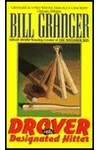
- Drover and the Designated Hitter (1994) – The final book focuses on professional baseball, where a star player becomes the center of a high-stakes conspiracy.
Standalone Novels
Outside of his main character series, Bill Granger wrote several standalone thrillers that showcase his versatility in capturing the media, political landscapes, and daily life in Chicago. These can be read in any order.
- Sweeps (1980) – A thriller set inside the cutthroat world of television network ratings wars and media manipulation.
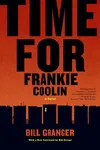
- Time for Frankie Coolin (1982) – Originally published under the pseudonym Bill Griffith. This is a gritty, character-driven look at a Chicago neighborhood landlord caught in financial and personal crises.
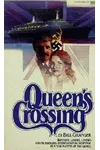
- Queen's Crossing (1982) – A standalone adventure thriller that deviates from Granger's typical urban settings.
What to Know Before You Start
Granger's style is heavily influenced by his decades as a newspaper reporter. His prose is lean, pragmatic, and devoid of unnecessary melodrama. Unlike the high-tech, action-heavy blockbusters of modern spy thrillers, the November Man series focuses on tradecraft, bureaucratic betrayal, and the psychological toll of espionage. Devereaux is a protagonist who values survival and professionalism above all else, often making him feel like an American cousin to John le Carré's George Smiley.
For fans of the 2014 movie adaptation starring Pierce Brosnan and Luke Bracey, it is worth noting that the film is a very loose adaptation of the seventh novel, There Are No Spies. The movie injects much more action and explosion-heavy set pieces than are present in Granger's original, cerebral novels.