
The Sanguinist's Path: Recommended Reading Order
For readers ready to plunge into the shadowy world of religious conspiracies and vampiric priests, the best way to read the series is in publication order. Because the narrative timeline aligns neatly with the order in which the books were released, this path allows you to experience the overarching mystery exactly as the authors intended. You will meet the characters, discover the rules of this supernatural universe, and follow the escalating stakes of the apocalyptic plot without spoiling any major twists.
Here is the recommended reading path for the series:
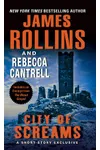
- City of Screams (Prequel Novella, 2012)
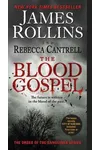
- The Blood Gospel (Book 1, 2013)
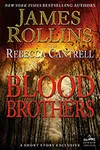
- Blood Brothers (Novella 1.5, 2013)
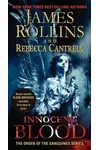
- Innocent Blood (Book 2, 2013)
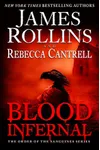
- Blood Infernal (Book 3, 2015)
The Complete List of Books in Detail
1. City of Screams (2012)
Though only a short novella, City of Screams serves as the official prelude to the series. Set in the war-torn landscape of Afghanistan, the story follows Sergeant Jordan Stone, a military forensic investigator, and Father Gary, a Vatican priest. When an ancient archaeological dig site is uncovered, Jordan is sent to inspect what looks like an impossible tomb. Instead of a routine excavation, he finds himself trapped in a subterranean nightmare where science and religious mythology collide. Reading this first introduces Jordan Stone's character and establishes the eerie, atmospheric tension that defines the entire series.
2. The Blood Gospel (2013)
As the first full-length novel in the trilogy, The Blood Gospel kicks the main plot into high gear. An earthquake at Masada in Israel reveals a hidden tomb containing the mummified remains of a young girl. To investigate the site, the Vatican dispatches Father Rhun Korza, a member of a secret priesthood, who is joined by military expert Jordan Stone and brilliant archaeologist Dr. Erin Granger. Together, they uncover a sarcophagus that holds the key to an ancient book written in Christ's own blood—the Blood Gospel. They must race against a ruthless sect of rogue vampires (strigoi) to secure the artifact, forcing the trio into an uneasy alliance.
3. Blood Brothers (2013)
Published between the first and second novels, Blood Brothers is a bridging novella that shifts focus to the backstory of Christian, a key Sanguinist character. Moving back in time to the 1960s, this story explores how Christian transitioned from a regular mortal into a Vatican-sanctioned Sanguinist priest. It details his struggles with his newfound condition, his training under the strict laws of the Order, and the personal sacrifices required to serve the Church while fighting off the monstrous instincts of the strigoi. While not strictly mandatory to understand the main plot, it adds profound emotional weight to Christian's character arc before he appears in the sequels.
4. Innocent Blood (2013)
Picking up after the dramatic events of the first book, Innocent Blood raises the stakes from a local archaeological puzzle to a global crisis. Erin, Jordan, and Rhun reunite to protect a young boy who is believed to be an angel incarnate—the chosen one prophesied to either save humanity or bring about its downfall. The group must decipher clues hidden in historic art, ancient manuscripts, and holy sites across the globe, all while being hunted by both the demonic strigoi and political factions within the Vatican itself. The novel digs deeper into the history of the Sanguines, explaining how the order was founded in the wake of Christ's resurrection.
5. Blood Infernal (2015)
The epic conclusion to the Sanguines trilogy, Blood Infernal, pits the protagonists against the ultimate source of darkness: Lucifer himself. The gates of Hell are opening, and the apocalypse is actively unfolding across the globe. Erin Granger must decipher the final secrets of the Blood Gospel to prevent the earth from being engulfed in eternal darkness. To succeed, she must make desperate deals with ancient entities, confront betrayal from within her closest circle, and journey to the very edge of the underworld. This fast-paced finale ties up the character arcs of Erin, Rhun, and Jordan, bringing the supernatural war to a definitive and dramatic close.
Chronological Order vs. Publication Order
For most of the series, chronological order and publication order are identical. The main trilogy—The Blood Gospel, Innocent Blood, and Blood Infernal—tells a continuous, sequential story where each book begins shortly after the previous one ends. However, the placement of the two novellas is where readers have some choice.
City of Screams is chronologically the first story, occurring before the events of the Masada excavation. Because it acts as an introduction to Jordan Stone and the series' supernatural elements, reading it first is a great way to ease into the world. However, if you prefer starting with a full-length book, you can read The Blood Gospel first and treat City of Screams as a flashback story later.
Blood Brothers is set in the 1960s, making it chronologically the earliest story in terms of the main narrative timeline. Despite this, it is highly recommended to read it in its publication position (after The Blood Gospel). Reading it before Book 1 would spoil the mystery surrounding the Sanguinist order and Christian's role, as the main trilogy initially presents the Vatican's vampires as an enigmatic secret. Reading it as a mid-series interlude allows you to fully appreciate Christian's backstory when it is most relevant to the ongoing plot.
What to Know Before You Start
The Order of the Sanguines is the result of a close collaboration between two master storytellers: James Rollins, famous for his fast-paced, scientifically grounded Sigma Force action thrillers, and Rebecca Cantrell, known for her atmospheric, gothic historical mysteries. The authors combined their strengths by using a shared "World Bible" to outline the complicated mythology, resulting in a series that blends high-octane action with rich, emotionally resonant character relationships.
The central concept of the series is a unique twist on traditional vampire lore: the Sanguinists. In this universe, the first vampire was Judas Iscariot, cursed for his betrayal. However, Christ offered a path of redemption. The Sanguinists are Vatican-sanctioned priests who have been infected with the vampiric virus but choose to control their bloodlust by consuming consecrated wine that has undergone transubstantiation into the actual blood of Christ. This allows them to retain their humanity and serve as protectors of the Church against the strigoi—vampires who rejected redemption and embrace their demonic, predatory natures. The series deals heavily with themes of faith, redemption, sacrifice, and the gray areas between good and evil, making it an excellent choice for fans of Dan Brown's religious conspiracies and Anne Rice's gothic vampire dramas.