



Where to Start Reading the Oregon Files
For most readers, the best place to start is the first official book in the series, Golden Buddha (2003). This novel establishes the formula that defines the series: a team of brilliant mercenaries executing complex, high-stakes covert operations from a high-tech masterpiece of a ship disguised as a rusty, run-down tramp steamer.
However, if you want the absolute beginning of Juan Cabrillo's journey, you need to step outside the series. The ship and its crew were actually introduced in the 1997 Dirk Pitt novel, Flood Tide. In that book, Cabrillo plays a supporting role and suffers the traumatic battle injury where he loses his leg—a defining physical characteristic throughout the spin-off series. While reading Flood Tide is not strictly necessary to enjoy the Oregon Files, it provides excellent backstory for completionists.
The Oregon Files Publication Order
Following the publication order is the most natural way to read the series. Because the technology, political backdrops, and character relationships evolve linearly, reading them in the order they were written ensures you do not encounter spoilers or confusing technological regressions. The publication sequence is as follows:
- Golden Buddha (2003) – co-authored with Craig Dirgo
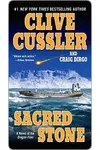
- Sacred Stone (2004) – co-authored with Craig Dirgo
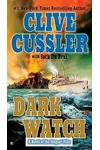
- Dark Watch (2005) – co-authored with Jack Du Brul
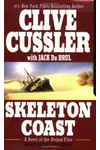
- Skeleton Coast (2006) – co-authored with Jack Du Brul
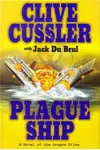
- Plague Ship (2008) – co-authored with Jack Du Brul
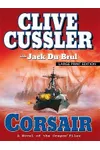
- Corsair (2009) – co-authored with Jack Du Brul
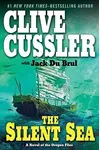
- The Silent Sea (2010) – co-authored with Jack Du Brul
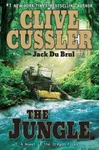
- The Jungle (2011) – co-authored with Jack Du Brul
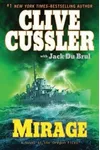
- Mirage (2013) – co-authored with Boyd Morrison
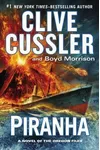
- Piranha (2015) – co-authored with Boyd Morrison
- The Emperor's Revenge (2016) – co-authored with Boyd Morrison
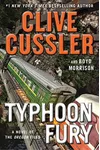
- Typhoon Fury (2017) – co-authored with Boyd Morrison
- Shadow Tyrants (2018) – co-authored with Boyd Morrison
- Final Option (2019) – co-authored with Boyd Morrison
- Marauder (2020) – co-authored with Boyd Morrison
- Hellburner (2022) – written by Mike Maden
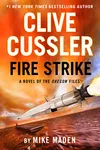
- Fire Strike (2023) – written by Mike Maden
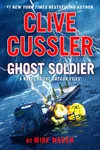
- Ghost Soldier (2024) – written by Mike Maden
- Quantum Tempest (2025) – written by Mike Maden
Chronological Order and Continuity Caveats
The internal timeline of the Oregon Files progresses chronologically along with the publication order. Unlike other thriller series that frequently employ prequels, the Oregon Files moves steadily forward in time. However, there are a few minor continuity discrepancies that fans have noted over the years:
First, the description and capabilities of the ship Oregon shift slightly between its introduction in Dirk Pitt's Flood Tide and its reintroduction in Golden Buddha. Clive Cussler modified aspects of the ship's layout and the Corporation's business structure to better support a standalone spin-off. Second, while the books flow sequentially, the real-world passage of time means the technology utilized by the Corporation updates dramatically—jumping from early-2000s tech to advanced drone warfare and modern artificial intelligence in the later books. Reading the books out of order can make these technological leaps feel jarring.
The Co-Authors and Series Evolution
Clive Cussler was famous for collaborating with co-authors to expand his literary universe. The Oregon Files highlights how different co-writers brought unique flavors to Juan Cabrillo's adventures:
The Craig Dirgo Era (Books 1–2): These early entries established the foundational lore of the Corporation, focusing heavily on political intrigue, espionage, and maritime operations.
The Jack Du Brul Era (Books 3–8): Du Brul ramped up the pacing and added a stronger techno-thriller edge, introducing wilder scientific concepts and larger-than-life action sequences.
The Boyd Morrison Era (Books 9–15): Morrison brought his background as an engineer to the series, infusing the plots with highly detailed, realistic technology, high-concept weapons, and intricate puzzle-solving elements.
The Mike Maden Era (Books 16–Present): Following Cussler's passing in 2020, Mike Maden took the reins. Maden has successfully modernized the series by introducing cutting-edge themes like cyber warfare, advanced AI, and contemporary global threats, keeping the spirit of Cussler's original vision alive.
Practical Reader Advice
Can these books be read as standalones? Yes. Each novel features a self-contained mission with a definitive ending, meaning you won't be left on a cliffhanger. However, reading the books in sequence is highly recommended because the crew members grow, experience personal losses, and form relationships that carry over from book to book.
Additionally, keep an eye out for crossovers. The Oregon Files exists within the shared Cusslerverse, meaning you will occasionally find references to Dirk Pitt, the National Underwater and Marine Agency (NUMA), and Kurt Austin. These nods do not impact the plot of the Oregon Files but serve as delightful easter eggs for longtime Cussler fans.