









How to Read the Superintendent Otani Series
The Superintendent Otani series, written by Roy Peter Martin under the pen name James Melville, consists of 13 novels published between 1979 and 1992. Set in Kobe, Japan, the series follows Tetsuo Otani, a Superintendent in the Hyogo Prefectural Police, as he navigates complex murder cases alongside a changing society. The books are best read in chronological publication order, as this allows you to experience the gradual evolution of Otani's team and the changing cultural landscape of post-war Japan.
The Superintendent Otani Recommended Reading Order
To follow the character development and the shifting relationships within the Kobe police department, we recommend reading the novels in their original chronological order. Note that The Death Ceremony is sometimes listed at the end of lists due to later paperback releases or regional publication discrepancies, but it was originally published in 1985 and fits best as the seventh book in the sequence.
- The Wages of Zen (1979) - Superintendent Otani investigates the murder of an Irish priest at a Zen Buddhist temple near Kobe, initiating readers into the series' signature blend of crime and culture.
- The Chrysanthemum Chain (1980) - A case involving the death of a prominent foreigner embroils Otani and his team in a web of local politics and historical secrets.
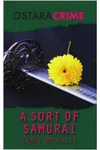
- A Sort of Samurai (1981) - An earthquake in Kobe leads to the discovery of a body, setting off an investigation into corporate greed and ancient ideals.
- The Ninth Netsuke (1982) - Otani's wife, Hanae, purchases a rare ivory carving that accidentally links her to an investigation involving a high-profile national scandal.
- Sayonara, Sweet Amaryllis (1983) - A sudden death at a gathering of amateur singers brings Otani into contact with a mystery involving foreign residents and cultural clashes.
- Death of a Daimyo (1984) - Otani travels abroad to England, where he finds himself unexpectedly entangled in a murder mystery involving a wealthy Japanese businessman.
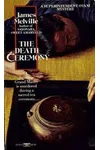
- The Death Ceremony (1985) - A grand master of the traditional tea ceremony is poisoned in front of witnesses, forcing Otani to decode the rigid social structures of high society.
- Go Gently, Gaijin (1986) - When a young foreign resident is killed in a hit-and-run, the investigation threatens to disrupt delicate diplomatic and local relations.
- Kimono for a Corpse (1987) - The glittering world of high fashion becomes a crime scene when a top designer is murdered at a show in Kobe.
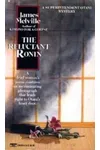
- The Reluctant Ronin (1988) - The death of a German businessman leads Otani's team into the tense worlds of international trade and underworld operations.
- A Haiku for Hanae (1989) - Set on the scenic island of Awaji, Otani visits a local shrine where a murder investigation forces him to look closely at local folklore and family ties.
- The Bogus Buddha (1990) - An archaeological dig turns up modern remains, prompting a complex look at historical preservation and greed.
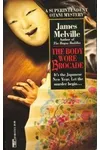
- The Body Wore Brocade (1992) - In the poignant finale of the series, a semi-retired Otani reflects on his career while solving a murder tied to traditional Noh theater.
What to Know Before You Start
Author Roy Peter Martin was a British diplomat who worked for the British Council in Japan during the mid-20th century. Writing as James Melville, he drew directly on his firsthand knowledge of Japanese customs, language, and philosophy to create an authentic setting that avoided the typical orientalist tropes of western crime fiction. The series is widely praised for its nuanced look at the tension between ancient Japanese traditions (such as tea ceremonies, Zen Buddhism, and Noh theatre) and the rapid westernization and economic boom of post-war Japan.
The Core Police Cast: Otani's Team
While the mysteries themselves are engaging, the true heart of the series lies in the interactions between Otani and his loyal assistants. Rather than acting as a lone-wolf detective, Otani relies heavily on a specialized team that behaves like an extended family:
- Superintendent Tetsuo Otani: The patriarch of the department. He is a traditionalist at heart, devoted to his wife Hanae, and possesses an intuitive, analytical mind.
- Inspector Jiro Kimura: A flamboyant, Western-style dandy who loves fashionable clothes, women, and alcohol. Because of his English language skills, Kimura is always assigned to cases involving gaijin (foreigners).
- Inspector "Ninja" Noguchi: A disheveled, streetwise investigator who is a master of blending into crowds and gathering intelligence. Noguchi has deep connections to the local underworld and the yakuza, making him invaluable for gritty street-level work.
- Hanae Otani: Tetsuo's observant and traditional wife. She provides a warm domestic anchor for Otani and frequently offers common-sense observations that help him crack his most difficult cases.
Standalones vs. Continuity
Every novel in the Otani series features a self-contained mystery that is fully resolved by the final chapter. You can technically pick up any book in the series and enjoy it as a standalone procedural. However, the relationships, domestic life, and professional careers of Otani, Kimura, and Noguchi develop chronologically. Reading the series in order is highly recommended to appreciate the subtle, long-term character arcs and the historical transition of Kobe from the late 1970s to the early 1990s.