
The Recommended Reading Order: Start at the Beginning
When diving into Ben Bova's Orion series, the absolute best path is to follow the publication order. While Orion jumps wildly across the timeline of Earth and the cosmos, his character arc, his realization of his true nature, his rebellion against the godlike Creators, and his complex romance with Anya all build sequentially from book to book. Reading them out of order will ruin the overarching narrative progression and spoil key character developments.
Here is the recommended reading list in publication order:
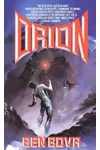
- Orion (1984): Introduces John O'Ryan as a seemingly ordinary man working on a nuclear fusion project who is thrust into prehistory (specifically the Neanderthal era) and the Mongol Empire, awakening to his true identity as a genetically engineered warrior.
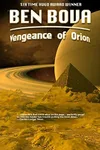
- Vengeance of Orion (1988): John finds himself in the middle of the legendary Trojan War, rowing alongside Odysseus, fighting Achilles, and dealing with Greek deities who are actually highly advanced, manipulative extraterrestrial Creators.
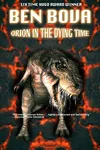
- Orion in the Dying Time (1990): Sends Orion back sixty-five million years to the Cretaceous period to confront Set, a reptilian alien Creator attempting to wipe out mammals and secure the dinosaurs' dominance.
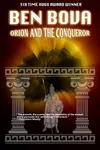
- Orion and the Conqueror (1994): Marooned in ancient Macedonia, Orion witnesses the rise of King Philip II and his son, Alexander the Great, navigating political intrigue and military campaigns.
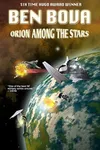
- Orion Among the Stars (1995): A hard shift to military space opera where Orion is sent to the far future to lead cloned soldiers in an interstellar conflict, directly confronting the Creator Aten.
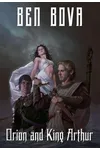
- Orion and King Arthur (2011): The final chapter of the saga, placing Orion in sixth-century Britain during the reign of King Arthur, tasking him with guiding the legendary king and securing the future of humanity.
The Chronological Chaos: A Timeline of Eras
Because Orion is a time-traveler who is constantly resurrected and displaced by his Creators, the historical settings of the books do not align with the order in which they were published. For curious readers, here is how the eras align chronologically, from the ancient past to the far future:
- The Cretaceous Period (65 Million Years Ago): Featured in Orion in the Dying Time (Book 3).
- The Neolithic / Neanderthal Era (Prehistory): Featured in parts of Orion (Book 1).
- The Trojan War (c. 1200 BC): Featured in Vengeance of Orion (Book 2).
- Alexander the Great's Era (4th Century BC): Featured in Orion and the Conqueror (Book 4).
- Arthurian Britain (6th Century AD): Featured in Orion and King Arthur (Book 6).
- The Mongol Empire (13th Century AD): Featured in parts of Orion (Book 1).
- The Near-Future (Fusion Project Era): The initial frame story in Orion (Book 1).
- The Far-Future (Interstellar War): Featured in Orion Among the Stars (Book 5).
Trying to read the series chronologically by historical era is highly discouraged. Because Bova wrote the books with the assumption that readers are familiar with Orion's past memories and failures, chronological reading would cause severe confusion. For example, Orion's understanding of the Creators' true nature is developed in the first two books, and this knowledge is crucial to understanding his actions in Orion in the Dying Time, despite it taking place millions of years earlier.
What to Know Before You Start: The Creators and the Cosmic Game
Before stepping into Bova's saga, it is helpful to understand the mythological and cosmological framework. The series draws heavily from Zoroastrian dualism. Orion is created by Ormazd (the Golden One, representing light and creation) to fight Ahriman (the Dark One, representing destruction and chaos). However, as the series progresses, Bova subverts this simple good-versus-evil dichotomy. Orion learns that he and Ahriman are both pawns of a highly advanced, godlike race known simply as the Creators, who exist outside of normal time and manipulate human history like a giant chessboard for their own selfish power struggles.
Another central pillar of the series is the character of Anya, a goddess-like Creator whom Orion loves. Anya's role shifts constantly; she acts as his guide, his lover, and sometimes his adversary, depending on which Creator is pulling the strings. This relationship provides the emotional core of the series, offsetting the otherwise action-oriented and historical-military plots.
Practical Reader Advice and Standalone Potential
Can the Orion books be read as standalones? Yes and no. The first three novels (Orion, Vengeance of Orion, and Orion in the Dying Time) are tightly bound together and form a cohesive trilogy that should not be separated. However, the later books—specifically Orion and the Conqueror and Orion and King Arthur—operate more like standalone historical science fiction adventures. They focus heavily on the real-world historical figures of Alexander and Arthur, making them highly enjoyable for historical fiction enthusiasts, even if they aren't fully caught up on the cosmic lore.
Additionally, readers should be prepared for major shifts in genre and tone. The series begins as a blend of hard science fiction and prehistoric fantasy, transitions into mythological fantasy in ancient Greece, detours into a creature-feature style dinosaur epic, morphs into detailed historical fiction, and suddenly jumps to military space opera in Orion Among the Stars. Embracing this eclecticism is key to enjoying Ben Bova's ambitious experiment.