
Where to Start Your Journey in the Oxford Universe
Connie Willis’s Oxford Time Travel series is one of the most celebrated runs in science fiction history, sweeping the Hugo, Nebula, and Locus Awards. The series centers on a near-future Oxford University (typically set in the 2050s and 2060s) where the history department uses time-travel portals to conduct primary research. However, because the books are largely self-contained narratives linked by their shared universe and recurring characters, choosing a starting point depends on your personal taste.
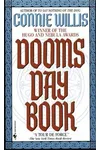
If you want the classic, most immersive entry point, start with Doomsday Book. This Hugo and Nebula award-winning novel establishes the rules of the universe, introduces the core cast of characters at Oxford, and delivers an emotionally devastating, meticulously researched story of the Black Death. It remains the community’s consensus recommendation for where to begin.
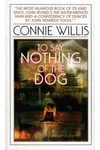
If you prefer a lighter, more comedic introduction, you can start with To Say Nothing of the Dog. This entry is a brilliant, laugh-out-loud tribute to Victorian screwball comedies and Jerome K. Jerome’s classic travelogue, Three Men in a Boat. While it references events from Doomsday Book, it functions perfectly well as a standalone and represents the lighter side of Willis’s writing style.
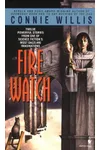
If you want to sample the universe before committing to a full novel, start with the award-winning novelette Fire Watch. It is a short, poignant look at WWII London that introduces the time-travel mechanics and recurring characters like Mr. Dunworthy in a concise format.
Oxford Time Travel Publication Order
Reading the series in publication order is highly recommended. It allows you to watch Connie Willis refine the universe’s rules, slowly escalate the stakes, and transition between vastly different tones. Below is the list of works in their order of release:
- Fire Watch (1982) – A Hugo and Nebula award-winning novelette. It follows a student historian sent to St. Paul's Cathedral in London during the Blitz of 1940. Note: This story was also published as the title track of Willis's 1984 short story collection, Fire Watch.
- Doomsday Book (1992) – The first full-length novel in the series. It features historian Kivrin Engle as she travels back to 14th-century England, only to find herself stranded during the outbreak of the Black Death.
- To Say Nothing of the Dog (1998) – The second novel. A comedic romp through Victorian England (1888) following Ned Henry as he attempts to fix a time-travel paradox involving a bishop’s bird stump and a star-crossed romance.
- Blackout (2010) – The first half of a massive World War II epic. It follows three historians (Michael, Merope, and Vivian) trapped in different parts of 1940s England as the time portals fail to open.
- All Clear (2010) – The direct conclusion to the story started in Blackout. This volume resolves the cliffhanger and details the historians' struggle to survive the Blitz and find a way back home.
Publication Order vs. Chronological Travel Order
In time-travel fiction, readers often wonder if they should read the books in the chronological order of the historical eras visited. For the Oxford Time Travel series, a chronological historical reading order is highly discouraged. Here is the chronological sequence of the historical settings:
- 1348 (Medieval England) – Doomsday Book
- 1888 (Victorian England) – To Say Nothing of the Dog
- 1940 (World War II London/Dunkirk) – Fire Watch, Blackout, and All Clear
Attempting to read the series in this order ruins the narrative flow of the "present-day" Oxford framing stories. The future framing narrative (set in the 2050s and 2060s) progresses chronologically with each publication. For example, characters like Professor James Dunworthy age, and the department's administrative challenges evolve over the course of the real-world publication timeline. Furthermore, the technology and the historians' understanding of the space-time continuum develop sequentially from Doomsday Book through to the Blackout/All Clear duology.
The Tonal Spectrum: Plagues, War, and Screwball Comedy
One of the most unique aspects of the Oxford Time Travel series is how drastically the tone shifts between installments. Willis famously uses two distinct writing styles: tragic realism and frantic screwball comedy. Understanding this before you dive in will help manage your expectations:
The Tragedies: Doomsday Book and Blackout/All Clear
Doomsday Book is a dark, heavy, and deeply emotional novel. It parallel-tracks a deadly influenza outbreak in future Oxford with the horrors of the Bubonic Plague in 1348. It is a story about human resilience, isolation, faith, and tragedy. Similarly, the Blackout/All Clear duology is a suspenseful, long-form historical drama. While it features Willis's characteristic humor, it focuses on the daily grind of survival during the Blitz, the trauma of war, and the quiet heroism of ordinary people.
The Comedy: To Say Nothing of the Dog
In stark contrast, To Say Nothing of the Dog is a chaotic, lighthearted comedy of manners. It features heavy elements of romance, mystery, and literary parody. The plot moves at a breakneck speed, filled with missed connections, eccentric Victorian characters, cats, dogs, boating trips, and frantic attempts to prevent the collapse of history. If you find the tragedy of Doomsday Book too heavy, this book serves as a perfect, refreshing palate cleanser.
Rules of the Oxford Universe: What to Know Before You Start
Willis's time-travel mechanics are unique and govern how the plots unfold. Before starting, it helps to understand these three core concepts of her universe:
- Slippage: The space-time continuum actively protects itself from paradoxes. When a historian attempts to travel to a specific date and location, the portal will automatically open at a slightly different time or place—known as "slippage"—to ensure they cannot alter major historical events.
- Divergence: Portals will completely refuse to open if a historian's presence would cause a significant change to the timeline. If the portal opens, it means history is safe from being altered by the historian.
- The Present-Day Bureaucracy: The 2050s Oxford is not a sleek, high-tech utopia. Instead, it is a place of endless administrative red tape, budget cuts, scheduling conflicts, and blue-law holidays that constantly make life difficult for the time-traveling historians and their anxious mentor, Mr. Dunworthy.
Essential Caveat: The Blackout and All Clear Duology
It is critical to treat Blackout and All Clear as a single, continuous story. Originally written as one massive manuscript, the book was split into two volumes for publication due to its sheer length. Blackout ends on a sudden, unresolved cliffhanger. Do not attempt to read All Clear without reading Blackout first, and make sure you have both volumes ready before you start, as they function as two halves of a single novel.