


How to Read Connie Willis: The Recommended Starting Path
Connie Willis is one of the most decorated authors in science fiction and fantasy history, known for her ability to seamlessly blend meticulous historical research, screwball comedy, and heartbreaking human drama. If you are new to her work, diving straight into her bibliography can feel a bit daunting due to the sheer variety in tone—ranging from bleak tragedies to chaotic farce.
For the best experience, we recommend starting with her famous Oxford Time Travel universe, which is the perfect showcase of her storytelling range. Here is the ideal pathway for readers starting out:
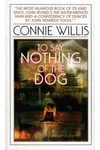
- Start with: To Say Nothing of the Dog (1998). Although it is technically the second full-length novel in the Oxford series, it is a delightful, lighthearted Victorian comedy of manners filled with chaotic misadventures, romance, and three-men-in-a-boat references. It is highly accessible and serves as an excellent introduction to Willis's witty dialogue and time-travel mechanics without the emotional heavy lifting of her darker works.
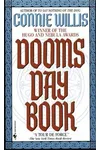
- Next, read: Doomsday Book (1992). Once you are comfortable with how time travel works in this universe, transition to this masterpiece. Set during the Black Death in medieval England, it is a deeply moving, suspenseful, and ultimately tragic tale that won both the Hugo and Nebula Awards. It stands in stark contrast to the comedic tone of To Say Nothing of the Dog, showing the full emotional depth of Willis's writing.
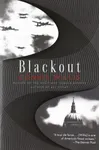
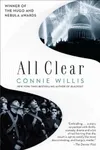
- Move on to: the Blackout and All Clear duology (2010). These two books form a single, massive narrative detailing historians trapped in World War II London during the Blitz. Because they are a continuous story, they must be read in order.
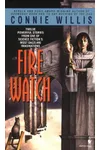
- Circle back to: the short story "Fire Watch" (1982) in her collection of the same name. This Hugo and Nebula-winning novella is the seed that started the entire Oxford universe. While it can be read first, reading it after the novels gives you a deeper appreciation of how the setting evolved.
The Oxford Time Travel Series: Publication Order
The Oxford Time Travel universe operates on a simple premise: in the mid-21st century, time travel is controlled by the history department at Oxford University, who use it to study the past firsthand. However, the universe has a way of protecting itself from paradoxes—slipping travelers slightly off-target in time or space if their presence would alter history. While most stories are standalone, they share characters like the long-suffering department head Mr. Dunworthy and a shared set of rules. Here is the series in publication order:
- "Fire Watch" (1982 / collected in 1984): Introduces the concept of Oxford historians traveling back in time. The protagonist, Bartholomew, is sent to London during the Blitz to watch over St. Paul's Cathedral.
- Doomsday Book (1992): Historian Kivrin Engle travels back to the 14th century, but a translation error and a mysterious illness in the present day leave her stranded in a village ravaged by the Black Death.
- To Say Nothing of the Dog (1998): A exhausted historian, Ned Henry, is sent back to the Victorian era to recover a hideous piece of church decor called the Bishop's Bird Stump, leading to a comedy of errors.
- Blackout (2010): The first half of a massive World War II epic, following three historians stranded in 1940 England during the Blitz and the Dunkirk evacuation.
- All Clear (2010): The direct conclusion to Blackout, where the stranded historians must survive the war and find a way back home as time-travel portals fail.
Chronological Caveats and Universe Continuity
Because the main characters are time-traveling historians going to different historical eras, readers often wonder if a chronological order based on the destination periods makes sense. The short answer is: no. Reading the books chronologically by historical era is not recommended because the "present-day" framing segments at Oxford progress sequentially from the 2050s through the 2060s, showing character relationships and technological adjustments over time. Furthermore, the narrative arcs and emotional weight build much better when experienced in the order they were published.
For reference, the historical destinations in the series are:
- 14th Century (1348): Doomsday Book
- Victorian Era (1888): To Say Nothing of the Dog
- World War II (1940): "Fire Watch" and the Blackout / All Clear duology
Connie Willis's Standalone Novels
Outside of her time-travel stories, Connie Willis has written several highly acclaimed standalones that range from screwball romantic comedies to hard science fiction and political satire. These can be read in any order:
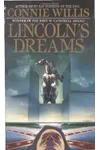
- Lincoln's Dreams (1987): A haunting, romantic novel exploring historical memory, empathy, and dreams linked to the American Civil War.
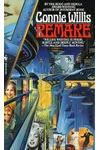
- Remake (1994): A short, cynical look at a future Hollywood where digital editing has replaced live actors and movies are endlessly recycled.
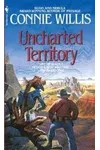
- Uncharted Territory (1994): A witty sci-fi novella set on a foreign planet, satirizing bureaucratic regulations and gender dynamics during planetary exploration.
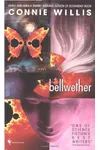
- Bellwether (1996): A lighthearted, humorous look at the nature of scientific research, corporate bureaucracy, and how fads start and spread.
- Passage (2001): A major, suspenseful novel exploring the science behind near-death experiences (NDEs) and what happens to the human brain at the moment of death.
- Crosstalk (2016): A modern romantic comedy that satirizes our hyper-connected social media age when a medical procedure intended to foster empathy accidentally triggers telepathy.
- The Road to Roswell (2023): A fast-paced, comedic alien abduction story filled with classic Willis tropes, including eccentric characters, western highway chases, and a lovable, bubble-wrap-shaped alien.
Co-Authored Novels with Cynthia Felice
Willis has also collaborated on several science fiction novels with author Cynthia Felice. These combine Willis's character-driven style with traditional space opera and planetary romance:
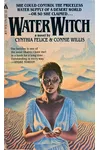
- Water Witch (1982): Set on a desert planet where water-diviners hold immense political power, following a young girl navigating political schemes.
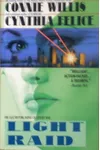
- Light Raid (1989): A young-adult-friendly space opera set during a future civil war between western Canada and the western United States.
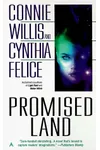
- Promised Land (1996 / 1997): A story of inheritance, alien farming rights, and complex legal conflicts on a dusty, remote colony planet.
Short Stories and Holiday Collections
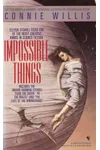
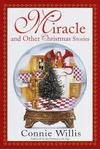
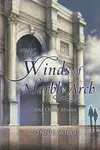
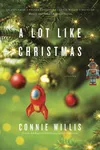
Willis is a prolific short fiction writer, having won multiple awards for her novellas and short stories. She has a particular love for Christmas, publishing several festive-themed collections like Miracle and Other Christmas Stories (1999) and A Lot Like Christmas (2017), which are filled with warmth, humor, and occasional holiday ghosts. Other notable collections containing her award-winning short stories include Impossible Things (1993) and her comprehensive retrospective, The Winds of Marble Arch and Other Stories (2007).