


The Recommended Reading Order for P Division
If you want to experience the raw atmosphere of late 20th-century Glasgow police work, the recommended way to read Peter Turnbull's P Division series is simple: read them in publication order. Because the books follow a linear chronological timeline, the publication order is also the chronological order. Reading the books sequentially allows you to watch the operational dynamics of the Glasgow CID change and follow the personal and professional lives of the ensemble cast as they age and evolve.
P Division Books in Publication Order
The P Division series consists of ten core novels published between 1981 and 1998. Below is the complete list of books in the order they were published, along with brief plot highlights to guide your reading journey:
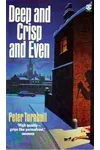
- 1. Deep and Crisp and Even (1981)
Set during a freezing Glasgow winter, a heavy snowfall complicates the hunt for a killer targeting citizens on the white-blanketed streets. This debut introduces DI Fabian Donoghue and DS Ray Sussock, and was nominated for the CWA New Blood Dagger in 1981.
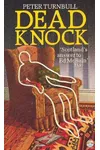
- 2. Dead Knock (1982)
The second installment continues the series' focus on meticulous, realistic police work. The detectives of P Division are forced to navigate the complicated social hierarchies and dark corners of Glasgow to solve a puzzling homicide.
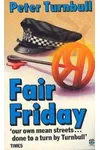
- 3. Fair Friday (1983)
Set during Glasgow's annual Fair Friday summer holiday. When a man named Bill McGarrigle is brutally beaten and murdered in a back alley, the remaining detectives must work under pressure to track down the culprit before the city shuts down for the vacation.
- 4. Big Money (1984)
A highly planned, flawlessly executed post office robbery leaves the P Division team with virtually no forensic clues or leads. The search for the perpetrators turns into an all-consuming case that tests the detectives' patience.
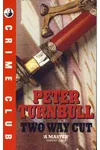
- 5. Two Way Cut (1988)
PC Phil Hamilton stumbles upon a headless corpse dumped on Maryhill Road with not a single drop of blood at the scene. To identify the victim, the team must untangle a web of secrets surrounding the local Zambesi Club and a Chinese restaurant that burned down shortly after.
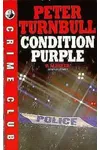
- 6. Condition Purple (1989)
When a young sex worker is murdered in Glasgow's commercial sector, the police are left with very few leads. However, a distinctive, mysterious tattoo on the victim's body becomes the focal point of the investigation.
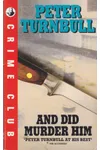
- 7. And Did Murder Him (1991)
Shane Dodemaide is arrested for the murder of Eddie Wroe after his fingerprint is found on the weapon. While it initially looks like an open-and-shut case, DI Fabian Donoghue discovers anomalies in the post-mortem movement of the body, triggering a much deeper investigation.
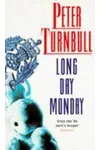
- 8. Long Day Monday (1992)
The team is called to a rural area outside the city where a young woman's body is discovered in a shallow grave. The post-mortem reveals that she was starved and restrained, prompting P Division to track down a calculating killer.
- 9. The Killing Floor (1994)
The murder of a dedicated Glasgow social worker shocks the community. As P Division digs into her life and her work, they uncover a decades-old mystery and long-buried secrets that someone was desperate to keep hidden.
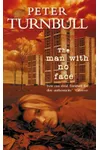
- 10. The Man with No Face (1998)
The final novel in the series. Just hours after his release from prison, small-time criminal Ronnie Grenn is found dead with his face blown off. The detectives must identify the body, reconstruct Grenn's final hours, and find out who wanted him silenced.
Chronological Order and Caveats
Unlike many modern crime series that feature frequent prequels, flashbacks, or spin-off novellas, Peter Turnbull kept the timeline of P Division completely straightforward. There are no timeline deviations or chronological surprises. The story begins in 1981 with Deep and Crisp and Even and concludes in 1998 with The Man with No Face.
The primary caveat for readers is the pacing of character growth. Because P Division operates as an ensemble rather than focusing on a single "super-cop," the changes in the characters' personal and professional lives are subtle but continuous. For instance, Detective Sergeant Ray Sussock starts the series as a seasoned, aging officer, and his growing weariness and physical decline play out realistically across the seventeen-year publication span. Skipping books won't ruin the mystery plots, but it will make you miss the natural progression of the division's staff.
What to Know Before You Start
Peter Turnbull's P Division series is a cornerstone of the Scottish police procedural, yet it is often overshadowed by later works like Ian Rankin's Inspector Rebus or Val McDermid's novels. Here is what you should know before diving in:
- Social Work Realism: Peter Turnbull worked as a government social worker in Glasgow from 1978 to 1995. This experience heavily informed his writing. Instead of romanticizing the police or the criminals, he writes with an authentic, unglamorous, and deeply empathetic eye for Glasgow's working class and marginalized communities.
- The Ensemble Cast: While DI Fabian Donoghue leads the CID team, the series is a true team procedural. Detectives like DS Ray Sussock, PC Phil Hamilton, and WPC Elka Willems all share the spotlight. Crimes are solved through teamwork, painstaking routine, and door-to-door inquiries rather than flashes of individual genius.
- The Glasgow Setting: Glasgow is a central character in the series. Turnbull vividly captures the cold rain, the winter snows, the local slang, and the grit of the city's streets during the 1980s and 1990s.
- Comparisons to Ed McBain: Crime fiction critics frequently compare the P Division series to Ed McBain's 87th Precinct due to its emphasis on the daily routine of a local police station and the natural chemistry of its officers.
The BBC Radio Adaptations
P Division's gritty realism and sharp dialogue made it perfect for radio. Between 1991 and 2004, BBC Radio 4 broadcast a highly acclaimed series of adaptations under the titles of the novels as well as a broader series named Code Four One (the Glasgow police radio code for assistance). Adapted by Stephen Mulrine and directed by Hamish Wilson, the radio plays consisted of 18 total episodes and captured the tense, rain-soaked atmosphere of the books.
The radio dramas featured a stellar Scottish cast, including Crawford Logan as DI Fabian Donoghue, Jake D'Arcy as DS Ray Sussock, Martin McCardie as PC Phil Hamilton, and Eliza Langland as WPC Elka Willems. Many fans of the radio series eventually sought out the books, noting that the dramatizations stayed remarkably true to the tone and social commentary of Turnbull's original novels.
Practical Reader Advice
If you are planning to read P Division, keep these practical tips in mind:
Can the books be read as standalones? Yes. Each book features a self-contained murder investigation that is resolved by the final chapter. You can pick up any middle entry, such as Two Way Cut or Condition Purple, and fully enjoy the mystery without being confused about the plot. However, to appreciate the slow-burning character arcs and the evolving office dynamics, starting at the beginning with Deep and Crisp and Even is highly recommended.
Are there spin-offs or crossovers? No. While Peter Turnbull has written other successful crime series—most notably the Hennessey & Yellich police procedurals set in York and the Harry Vicary series set in London—there are no crossovers, shared characters, or spin-offs connecting them to P Division. They exist in completely separate literary universes.
Where to find the books: Since the series was published in the 1981-1998 window, physical copies can sometimes be hard to track down in local bookstores. Fortunately, many of the books have been re-released as ebooks and audiobooks by publishers like Severn House and Allison & Busby, making them readily accessible to modern readers.