


Where to Begin Your Parker Journey
If you want to experience the criminal underworld at its absolute coldest, you must start at the very beginning with The Hunter (1962). This book introduces Parker—a ruthless, professional heist planner who has no first name, no soft edges, and an unwavering commitment to his own survival and code. In this debut novel, Parker returns from a near-fatal double-cross to track down his duplicitous partners and reclaim his share of a heist. Starting here is essential because it establishes the formula that author Donald E. Westlake (writing under the pseudonym Richard Stark) perfected: meticulous heist preparation, sudden betrayal, and relentless, calculated vengeance.
While many of the books in the series are self-contained heists, reading them in publication order is highly recommended. The character relationships, Parker's reputation, and the recurring pool of criminal accomplices build sequentially. As the series progresses, the stakes grow from local bank robberies to confrontations with an entire national crime syndicate known as "The Outfit."
The Core Classic Era (1962–1974)
The first 16 novels form a tight, continuous narrative arc that represents the golden era of the series. During this period, Westlake wrote at a breakneck pace, releasing up to three books a year. Here is the publication sequence for the classic era:
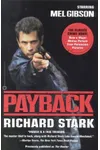
- The Hunter (1962) – Also published under the movie tie-in titles Point Blank and Payback.
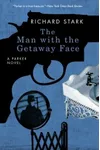
- The Man With The Getaway Face (1963) – Also known as The Steel Hit. Parker undergoes plastic surgery to hide from the syndicate.
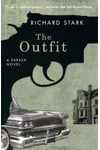
- The Outfit (1963) – Parker takes the fight directly to the mob.
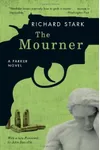
- The Mourner (1963) – A rare case of Parker being blackmailed into a heist.
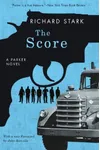
- The Score (1963) – Parker and a massive crew attempt to rob an entire mining town; introduces partner Alan Grofield.
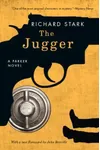
- The Jugger (1965) – Parker investigates the death of an associate who knew too much about his past.
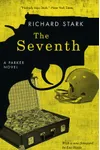
- The Seventh (1966) – A stadium heist goes perfectly until the loot is stolen from the getaway house.
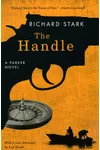
- The Handle (1966) – Parker and Grofield raid an illegal offshore casino.
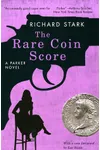
- The Rare Coin Score (1967) – A clean heist planning guide that shows Parker at his most professional.
- The Green Eagle Score (1967) – A daring theft from a military base.
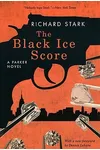
- The Black Ice Score (1968) – Parker gets dragged into a complex diamond theft involving African revolutionaries.
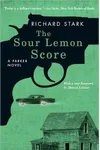
- The Sour Lemon Score (1969) – A bank job goes south, leading to another hunt for a traitor.
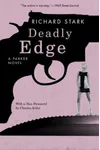
- Deadly Edge (1971) – Parker robs a rock concert, but the aftermath threatens his quiet life.
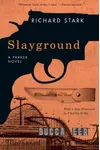
- Slayground (1971) – Trapped in a closed amusement park in winter, Parker fights corrupt cops and mobsters.
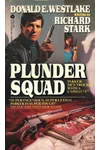
- Plunder Squad (1972) – Parker struggles to pull off an art heist when his associates keep making mistakes.
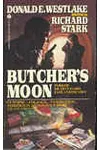
- Butcher's Moon (1974) – The epic, double-length culmination of the classic era where Parker returns to settle a score in Tyler.
Weaving in the Alan Grofield Spin-offs
One of the most fascinating aspects of Westlake's bibliography is the inclusion of actor-thief Alan Grofield. Introduced in The Score, Grofield is the charming, talkative foil to Parker's silent, icy demeanor. Grofield received four solo spin-off novels under the Richard Stark name. If you want a complete view of the universe, you should read these spin-offs alongside the main series. The timelines overlap in brilliant ways:
- The Damsel (1967) – This book begins in a Mexico City hotel room immediately following the conclusion of The Handle (1966), where Grofield was left to recover from gunshot wounds. Read this right after The Handle.
- The Dame (1969) – Grofield takes a solo security job that turns into a murder mystery in Puerto Rico. Read this after The Sour Lemon Score.
- The Blackbird (1969) – This is a parallel novel that shares its opening armored car heist with Parker's Slayground. While Parker escapes into the amusement park, Grofield is captured and forced into international espionage. Read this concurrently with or right before Slayground.
- Lemons Never Lie (1971) – Grofield's final solo outing, showing him planning his own heist. Read this after Slayground but before Plunder Squad.
By inserting the Grofield books, you gain crucial context for the massive reunion of thieves in Butcher's Moon (1974), which acts as a grand finale for both characters' early runs.
The Modern Comeback Era (1997–2008)
After a 23-year hiatus during which Westlake focused on other projects, Richard Stark returned with eight final novels. The tone of the modern era remains incredibly consistent with the classic books, though it reflects updated technology, such as cell phones and modern security systems. Parker remains unchanged, a man outside of time.
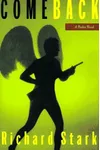
- Comeback (1997) – Parker returns to hit a religious crusade's earnings.
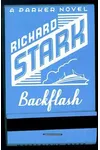
- Backflash (1998) – A heist targeting a riverboat casino.
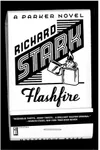
- Flashfire (2000) – Parker seeks revenge on associates who took his shares; adapted into the movie Parker.
- Firebreak (2001) – A high-stakes heist involving stolen computer software.
- Breakout (2002) – Parker escapes custody and orchestrates a new robbery on the run.
- Nobody Runs Forever (2004) – A bank truck heist with a lingering threat from the law.
- Ask The Parrot (2006) – Parker is forced to hide out in a small town after a heist goes wrong.
- Dirty Money (2008) – The final published Parker novel, bringing the long-running pursuit by a persistent detective to a close.
Adaptations and Crossovers
While Donald E. Westlake never wrote a direct crossover between Parker and his comedic caper protagonist, John Dortmunder, they are intimately connected. The first Dortmunder novel, The Hot Rock (1970), was originally written as a Parker novel. When Westlake realized that having the protagonist repeatedly lose the stolen gem and have to re-steal it was too funny for Parker, he created Dortmunder to fit the comic tone.
For visual media, the late Darwyn Cooke adapted four of the classic novels (The Hunter, The Outfit, The Score, and Slayground) into award-winning graphic novels. These are highly praised for capturing the exact mid-century retro grit of the original texts and serve as an excellent companion to the prose series.