

















Where to Start Your Donald E. Westlake Journey
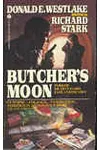
Donald E. Westlake was a literary chameleon. With over a hundred books written under a dozen names, his catalog can feel overwhelming. Fortunately, finding the right starting point depends entirely on what kind of crime fiction you enjoy. The two most famous entry points represent opposite sides of the same coin: hard-boiled professional heists and comedic capers.
For Gritty, Cold-Blooded Noir: The Parker Series
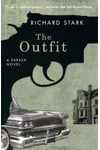
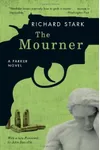
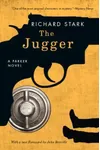
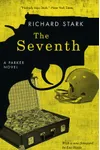
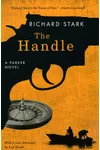
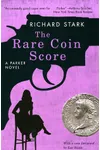
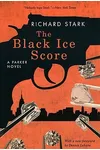
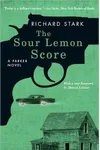
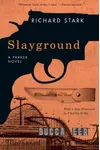
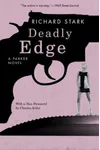
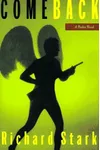
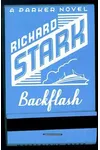
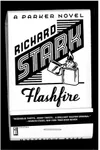
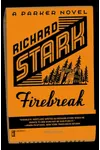
If you prefer lean, mean crime fiction, start with the Parker series, written under Westlake's most famous pseudonym, Richard Stark. The best place to start is the very first novel, The Hunter (1962). This book introduces Parker, a ruthless, efficient professional thief who is double-crossed by his partner and wife and stops at nothing to get his share of the money. Reading this series in publication order allows you to see how Westlake developed Parker from a cold-hearted criminal into a classic, unforgettable antihero.
For Laugh-Out-Loud Capers: The Dortmunder Series
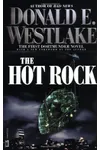
If you prefer comedy, witty banter, and heists where everything that can go wrong does, start with the John Dortmunder series. The perfect entry point is the first book, The Hot Rock (1970). The premise is simple: Dortmunder and his luckless crew must steal the same emerald over and over again because they keep losing it in increasingly absurd ways. It is a masterclass in comic timing and clever plotting.
For Self-Contained Thrillers: Standalone Novels
If you want a complete story without committing to a series, start with one of Westlake's standalone novels. A modern masterpiece is The Ax (1997), a dark, satirical thriller about a laid-off paper mill manager who decides to eliminate his competition for a job opening by systematically murdering them. It is a chilling yet darkly funny look at corporate downsizing.
The Richard Stark Universe: Parker & Alan Grofield
The Parker series consists of 24 novels. Westlake wrote the first 16 books between 1962 and 1974, took a 23-year hiatus, and returned to write eight more from 1997 until his death in 2008. Because the books build on Parker's criminal network and reputation, they should be read in publication order.
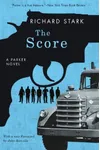
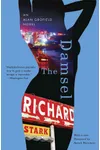
An essential companion to the Parker series is the Alan Grofield spin-off. Grofield is a theater-loving professional thief who first appeared as Parker's associate in The Score (1963). Westlake spun him off into his own four-book series, beginning with The Damsel (1967). While Grofield's books are lighter and more romantic than Parker's, they take place in the same universe. To get the full picture, you can read Grofield's books alongside Parker's, particularly around their original late-1960s publication slots.
The Dortmunder Capers
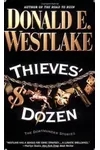
Comprising 14 novels and the short story collection Thieves' Dozen (2004), the John Dortmunder books are the perfect antidote to traditional hard-boiled fiction. Dortmunder is the mirror image of Parker: while Parker is deadly and precise, Dortmunder is a pessimistic mastermind who hates violence and is plagued by bad luck. The series is best enjoyed in publication order to appreciate the recurring crew members, such as the gadget-loving Andy Kelp, the driver Stan Murch, and the massive muscle-man Tiny Bulcher.
The Pseudonymous Series: Tucker Coe & Samuel Holt
Westlake used other pseudonyms to explore different subgenres of mystery and crime:
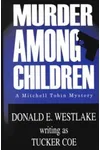
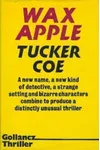
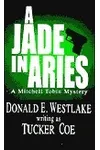
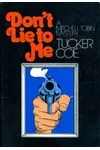
- Mitch Tobin (as Tucker Coe): This five-book series starting with Kinds of Love, Kinds of Death (1966) follows a disgraced, guilt-ridden former NYPD detective who was caught in bed with a woman while his partner was killed. Tobin is an introspective, deeply psychological protagonist, making these books much darker and more dramatic than Westlake's typical work.
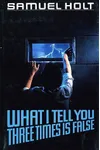
- Sam Holt (as Samuel Holt): A lighter, meta-fictional four-book series starting with One of Us Is Wrong (1986). Sam Holt is an actor who became famous for playing a television detective and now finds himself forced to solve real-life murders because everyone expects him to have his character's skills.
The Famous Literary Crossovers
While Parker and Dortmunder never meet face-to-face, Westlake played with his different universes in clever ways. In the Dortmunder novel Jimmy the Kid (1974), the crew decides to kidnap a wealthy child using a blueprint from a pulp crime novel. The book they use is a fictional novel written by none other than "Richard Stark," allowing Westlake to parody his own gritty style through the bumbling actions of Dortmunder's crew.
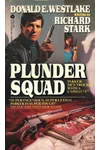
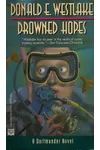
Even more fascinating are the real-life crossovers Westlake engineered with his close friend and fellow crime writer, Joe Gores. In Gores's private investigator novel Dead Skip (1972) and Westlake's Parker novel Plunder Squad (1972), both books feature the exact same scene—a meeting between investigator Dan Kearny and Parker—written from their respective perspectives. They repeated this trick decades later in Westlake's Drowned Hopes (1990) and Gores's 32 Cadillacs (1992), crossing Dortmunder's path with Gores's investigators.
What to Know Before You Start
Westlake did not worry too much about strict chronological timelines; he focused on writing engaging, self-contained capers. You do not need to read every single book to understand the next, but following the publication order for Parker and Dortmunder ensures you do not miss character development and inside jokes. Remember that Richard Stark's books are violent and cold, while Donald E. Westlake's name on a cover usually promises a lighter, more satirical, and humorous tone. Choose your starting point based on your mood, and prepare to enjoy one of the greatest masters of the genre.