


How to Read E.V. Seymour’s Paul Tallis Series
If you are looking for a spy thriller series that swaps the high-tech gadgets and glossy glamour of James Bond for raw realism, domestic clutter, and gritty urban backdrops, E.V. Seymour’s Paul Tallis series is the perfect fit. Following a former police firearms officer thrust into the covert and morally grey world of off-the-books intelligence work, this four-book saga offers a gripping journey across Europe and beyond.
Because the series follows a continuous character arc where Paul Tallis’s personal relationships, professional paranoia, and family dynamics develop over time, the recommended way to read the series is in its original publication order. Fortunately, the publication order matches the internal chronological timeline, making it straightforward to follow.
The Recommended Reading Order
To experience the full progression of Paul Tallis's career and his complicated relationship with his intelligence handlers, read the books in the following sequence:
- The Last Exile (2008) – Introduces Paul Tallis after a fatal police shooting incident ends his career in disgrace. Suspended and desperate, he is recruited by a shadowy MI5 handler to track down illegal immigrants who have slipped through the cracks.
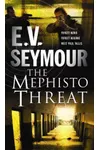
- The Mephisto Threat (2009) – Undercover and deep in danger, Tallis is sent to investigate the execution of crime journalist Garry Morello in Istanbul. The assignment pulls him into a complex web connecting international terrorism with domestic organized crime.
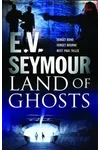
- Land of Ghosts (2010) – Tallis is seconded to the Secret Intelligence Service (SIS/MI6) and dispatched to the hostile mountains of Chechnya. His mission is to locate a rogue undercover operative who happens to be his old school friend, Graham Darke.
- Resolution to Kill (2012) – What starts as a personal favor for his mother to locate a missing family friend in the Balkans escalates into a nightmare. Tallis is abducted by an elite American Special Ops unit known as "The Alliance" and must fight to survive.
What to Know Before You Start
Before diving into the Paul Tallis books, there are several key elements that set this series apart from conventional espionage thrillers:
- A Relatable, Unconventional Hero: Unlike sleek cinematic agents, Paul Tallis lives in a run-down bungalow, drives an old car, and has to manage his ordinary domestic life. His own mother has no idea he works as a covert MI5 spook.
- Gritty Realism: Author E.V. Seymour (Eve Seymour) draws heavily on detailed research into police tactics, firearms, and intelligence services, giving the action scenes and operational procedures a highly authentic, grounded feel.
- Continuous Character Development: While each book features a self-contained mission—ranging from human trafficking to international terror networks—Tallis’s personal evolution, growing cynicism, and distrust of his handlers run throughout the narrative.
- A Finished Arc: Currently, the series stands as a completed four-book run. Although E.V. Seymour has moved on to other thriller series (such as the Hex series and the Kim Slade books), the Tallis quartet provides a satisfyingly intense snapshot of modern espionage.
Publication Order vs. Chronological Order
There are no prequels or standalone spin-off novellas in the Paul Tallis universe. The chronological timeline follows the publication dates exactly, beginning in the late 2000s and wrapping up in 2012. Readers do not need to worry about adjusting the sequence; starting with The Last Exile and finishing with Resolution to Kill is the only way to read the series.
Practical Reader Advice
Here is some practical advice for readers looking to pick up the series:
- Can the books be read as standalones? While the core plot of each book (the specific investigation or extraction) is resolved by the final page, reading them out of order is not recommended. The emotional baggage Tallis carries, his changing alliances within MI5, and key character deaths or betrayals are carried forward between novels.
- Tone and Style: Expect a fast-paced, edgy urban tone. The series frequently references modern pop culture, political corruption, and the complex ethics of 21st-century spying. It is best suited for fans of Mick Herron’s Slough House or Lee Child’s Jack Reacher who appreciate flawed, blue-collar protagonists.