













Where to Begin Your Perry Rhodan Journey
With over six decades of history and more than 3,300 weekly novellas in its native German, tackling the "Perryverse" can feel like navigating an asteroid field. Fortunately, English-speaking readers have a few distinct entry points depending on their reading preferences.
Path 1: The Classic English Translation Run (Issues 1–135)
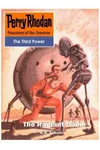
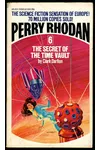
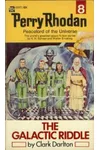
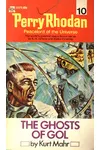
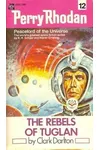
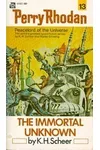
For those who want to experience the original pulp sci-fi magic, the best place to start is at the very beginning with Enterprise Stardust. In the 1970s, Ace Books translated and published issues 1 through 118 in paperback format. When Ace canceled the series, Masters Publishing briefly continued the translations via subscription, releasing issues 119 through 137 (with the local database list capturing up to issue 135, The Robot Invitation).
This run introduces Perry Rhodan, a 1971 astronaut who discovers a crashed alien starship on the Moon. Using their advanced technology, he unites a divided Cold War Earth under the "Third Power" and launches humanity into the stars. Reading these in numerical order is highly recommended, as they form a continuous, episodic narrative that lays the groundwork for the entire franchise.
Path 2: Perry Rhodan NEO (The Modern Reboot)
If 1960s pulp style feels too dated, Perry Rhodan NEO is your best alternative. Launched in Germany in 2011, NEO is a complete reimagining of the original series, updated for modern sensibilities, technology, and social contexts. In 2021, J-Novel Club began translating NEO into English under their J-Novel Pulp imprint.
J-Novel Club released 19 digital volumes, each collecting two of the original German novellas, before officially canceling the English translation project. Despite being cut short, these 19 volumes offer a cohesive, high-quality, and modernized entry point into the early arcs of the Perry Rhodan mythos.
Path 3: The Lemuria Miniseries (Standalone E-books)
If you want a self-contained story without committing to a massive saga, seek out the Lemuria miniseries. First published in English in print in 2006 and later released as a complete six-book e-book set in 2015 by Perry Rhodan Digital, this series is set 3,000 years in the future. It is a highly acclaimed, standalone adventure that does not require prior knowledge of the main series, making it the perfect trial run for new readers.
Understanding the Structure: Cycles and Silberbände
To understand how Perry Rhodan is structured, it is helpful to look at how the series has been organized over the decades.
Story Cycles
The core series is not just a random sequence of weekly novellas; it is structured into narrative arcs called Cycles. Each cycle spans between 50 and 100 issues and focuses on a specific cosmic threat, mystery, or conflict. This structure makes the massive library digestible. For example:
- The Third Power (Issues 1–49): Humanity makes first contact, establishes a unified Earth, and fends off early alien threats.
- Atlan and Arkon (Issues 50–99): Introduces Atlan, an immortal Arkonide who has lived on Earth for millennia, expanding the lore and scale of the cosmos.
- The Posbis (Issues 100–149): Deals with the threat of biological-mechanical robot hybrids (Posbis) and pushes the boundaries of the universe.
The German Silberbände (Silver Editions)
In Germany, the primary way readers collect the classic series is through the Silberbände (Silver Editions). These are thick hardcover volumes, published since 1978, that compile five to eleven weekly magazine novellas into a single cohesive book. Crucially, the editors revise the text to smooth out contradictions, update dated language, and remove filler. While these are the gold standard for German readers, they have never been fully translated into English, leaving English fans to rely on the vintage Ace paperbacks and digital releases.
Publication Order vs. Chronological Order
In the Perryverse, publication order is the chronological order. The timeline of the universe moves steadily forward, spanning thousands of years as Perry Rhodan and his companions gain relative immortality. Because the narrative is built upon layers of history, technology, and cosmic revelations, trying to read cycles out of order will ruin the overarching continuity. Stick to reading the translated runs in order, starting with the early Ace paperbacks, and use community wikis to fill in the gaps for untranslated cycles.
What to Know Before You Start
Before blasting off, keep these practical tips in mind:
- Translation Gaps: Only a small fraction of the 3,300+ novellas have been translated into English. After the classic 135-issue run, there is a massive gap in English availability.
- Pulp vs. Philosophy: The early 1960s issues are heavy on action, space battles, and Cold War military themes. As the series progresses (especially under later authors like William Voltz), it transitions into deep, pacifistic philosophy, cosmic hierarchies, and abstract concepts.
- The Perrypedia: Because of the translation gaps, the fan-maintained wiki Perrypedia is an invaluable resource for English readers who want to follow the plot of untranslated cycles.